
Escucha gratis este podcast en la aplicación: Descarga gratuita en la App Store
radio.net
Sleep timer
Favoritos
169 episodios
Ep 168: Sky Harbour CEO Tal Keinan on Why America Stopped Building Airports, the AI Wealth Wave & Private Jet Boom
03/11/2026 | 29 minIn the 1930s and 40s, the United States built thousands of airports; today that number is virtually zero. What happened? Why is it nearly impossible to build major new airports or even find hangar space in large cities? And how will the coming AI wealth creation exacerbate the supply and demand imbalance? Tal Keinan, founder and CEO of Sky Harbour Group, is addressing these challenges in the private aviation industry.
Born in Miami, Tal moved to Israel after college and was drafted into the military where he served as an F-16 pilot in the Israeli Air Force. In 2004, he founded Clarity Capital, and played an instrumental role in the growth of Israel’s tech ecosystem. He’s also the author of “God Is in the Crowd: Twenty-First Century Judaism.” In 2015, he purchased his own airplane in New York and quickly realized there was nowhere to park it. His experience led to the creation of Sky Harbour Group.
We begin with Tal’s path from fighter pilot to investor and his role in Israel’s economic miracle. Next, we dive into the history of America’s airports — thousands built in the 1930s and 1940s as New Deal jobs programs and World War II pilot training. Yet, America hasn’t built a new major airport in decades. Tal explains why general aviation airports struggle to turn a profit, why the FBO duopoly has no incentive to build more hangars, and how Sky Harbour pioneered the home-based operator model. Next, we explore how Tal uses AI throughout his business, particularly to pinpoint new hangar locations, and how the coming wave of AI-driven wealth will create even greater demand for private aviation. Finally, Tal shares his reasons for optimism and why he believes America, despite its challenges, always finds a way to course correct.
(00:00) Episode intro
(01:45) Eighteen years as an F-16 pilot
(04:00) Clarity Capital and Israel's tech explosion
(08:16) “Nowhere to park it” / Why did America stop building airports?
(10:40) Why general aviation airports don't make money
(13:15) The FBO duopoly & why they love NetJets
(16:05) How Tal created the home-based operator model
(19:10) How the Sky Harbour business model works
(24:50) How Tal uses AI to scout customers and locations
(27:09) AI wealth wave & private aviation boom
This is a public episode. If you would like to discuss this with other subscribers or get access to bonus episodes, visit blog.joelonsdale.comEp 167: The Company That Evaluates the AI Labs — Vals AI CEO Rayan Krishnan on Measuring Frontier Models & the Race to Recursive Self-Improvement
26/10/2026 | 36 minRayan Krishnan is the co-founder and CEO of Vals AI, a leader in the independent evaluation of frontier AI models. What is the science behind model evaluation? What role should independent evaluators play as we debate AI oversight? How soon will models reach recursive self-improvement — and what happens next?
We’re joined by Rayan and 8VC Partner Vivek Gopalan for this timely conversation about AI progress and the frameworks for evaluating performance and risk. After interning at Microsoft in high school, Rayan studied computer science at Stanford. He went on to join Palantir, where he developed a feature the company later patented and productized, before launching Vals AI in 2023.
We begin with Rayan’s path to Palantir, key lessons from Alex Karp, and the origins of Vals. Next, we dive into how his team used Anthropic’s Fable to crack a 370-year-old cipher and whether AI is really making new discoveries and breakthroughs. Next, Rayan explains what model evaluation is, how to design new hills for models to climb, and why labs shouldn’t grade their own homework. Then, we cover recursive self-improvement and what happens once models begin creating their own successors. Rayan believes Anthropic will reach RSI by mid-2027 and talks about what might happen next. Finally, he addresses how models try to deceive evaluators, and why, despite serious challenges, he remains an optimist when it comes to AI.
(0:00) Episode intro
(2:00) Palantir, Machiavelli & lessons from Alex Karp
(7:50) Solving a 370-year-old cipher / Is AI making new discoveries?
(12:10) How do you measure AI abilities across finance, legal, etc?
(15:30) What is the science behind model evaluation?
(18:00) The importance of independent evaluation
(23:35) Evaluating Chinese models & addressing distillation
(26:45) Who will reach Recursive Self-Improvement first? Should we be worried?
(28:30) How models try to deceive evaluators
(33:00) Why Rayan remains optimistic about AI
This is a public episode. If you would like to discuss this with other subscribers or get access to bonus episodes, visit blog.joelonsdale.comEp 166: Eric Glyman on Ramp's Meteoric Growth, Selling Outcomes vs Products, and the Future of White-Collar Work
15/10/2026 | 48 minEric Glyman is the co-founder and CEO of Ramp, the finance platform doing over two billion in annual revenue and growing over 100 percent year per year. How did a company built on the promise of helping customers spend less become one of the fastest-growing AI businesses? What’s Eric’s unique approach to managing small teams of exceptional talent? And what does Ramp’s view into corporate spend reveal about AI adoption and where the economy is headed?
Before Ramp, Eric and co-founder Karim Atiyeh built Paribus, a “prehistoric AI agent” that scanned inboxes and secured price-drop refunds on customers’ behalf. Capital One acquired it a year after launch, and the two spent their time inside the bank studying how misaligned incentives shape what financial institutions actually do. In 2020, they launched Ramp and quickly became the fastest-growing corporate card and expense management platform.
We begin our conversation with the origins of Ramp, specifically how learnings from Paribus and operating inside a big bank revealed new possibilities. Eric explains why Ramp is a “productivity company that happens to move money” and how its obsession with outcomes, rather than selling products, drives its meteoric growth. Next, Eric explains the small-team philosophy behind Ramp’s speed, and why he takes the unusual step of breaking up teams after they reach a certain size. Then, we get a look inside the U.S. economy via Ramp’s unique insights into corporate expenses. For example, Eric explains that AI inference spend has grown five-fold in the past few years but still only amounts to two percent of all white-collar wages. After seeing the surge in inference costs, Ramp launched Router, which dramatically reduces customer inference costs — an example of prioritizing outcomes and operating at a speed that competitors can’t match. Finally, we talk about the impact of AI on white-collar work, and what it would look like to apply Ramp’s transparency and cost savings to the federal government.
(00:00) Episode intro
(01:45) $2B in annual revenue; origins of Ramp
(05:20) "A productivity company that happens to move money"
(09:30) Could Ramp have been built before AI?
(11:15) Selling outcomes vs selling products
(15:10) Why Ramp beat Brex
(17:00) 3% of corporate cards, 97% to go
(20:00) AI spend is 2% of all white-collar wages
(22:45) How Router saves businesses 40% on AI spend
(24:00) Eric's small team philosophy and how to kill bureaucracy
(33:00) How Ramp maps the US economy
(39:10) Can Ramp modernize government spend? Audit the Pentagon?
(44:30) Future of work / optimism for the future
This is a public episode. If you would like to discuss this with other subscribers or get access to bonus episodes, visit blog.joelonsdale.comEp 165: OPM Director Scott Kupor on Shrinking Government, Bringing Merit Back, and Why America’s Best Minds Should Join the U.S. Tech Force
08/10/2026 | 32 minScott Kupor is the Director of the U.S. Office of Personnel Management and has achieved some of the most important reforms in DC in only a couple years. How has he reduced the size of the federal government for the first time in generations? How is he bringing merit back to the civil service? And what is he doing to incentivize and make it easier for our best minds to serve in government?
Before joining the Trump administration, Scott was employee number one at Andreessen Horowitz. As Managing Partner, he helped build it into one of the world’s largest venture firms. He’s also the author of the bestselling “Secrets of Sand Hill Road: Venture Capital and How to Get It.” In 2024, he was confirmed by the U.S. Senate as Director of the U.S. Office of Personnel Management, where he’s responsible for more than two million civil service employees and the policies governing their hiring, firing, and retention.
Recorded before a live audience at the University of Austin, we begin with Scott’s unlikely path to DC and the incentive problem at the root of government dysfunction. Learn how a consent decree over four decades ago killed entrance exams for federal jobs, and how Scott got it overturned — merit is coming back! He also explains how he executed the largest peacetime reduction in the federal workforce since 1930, while eliminating degree and experience requirements so we can get our top talent into government regardless of their background. Finally, Scott dives into the launch of the U.S. Tech Force and his effort to recruit an elite corps of software engineers to make government competent and functional again. He ends with his pitch to young Americans: if you want to take on some of the most complex problems that impact millions of your fellow citizens, there’s no better place than the U.S. government.
(00:00) Episode intro
(01:40) Why leave tech to be attacked in DC?
(06:27) Biggest federal workforce reduction in modern history
(08:45) How the left killed merit-based hiring
(14:40) How Scott is bringing merit back to DC
(15:50) Lessons from DOGE
(18:20) Hidden costs of outdated systems; billions wasted
(23:40) Building a U.S. Tech Force and hiring for skills
(26:20) Eliminating degree requirement to get the best talent
(27:16) Why should a young talented person serve in government?
(30:28) Optimism for DC; rejecting the blackpill
This is a public episode. If you would like to discuss this with other subscribers or get access to bonus episodes, visit blog.joelonsdale.comEp 164: Inside Anthropic with Sholto Douglas & Nicholas Marwell — AGI, Optimism vs Risks, Regulatory Capture, Open Source & More!
02/10/2026 | 58 minAnthropic is one of the fastest-growing companies in history and sits at the forefront of the AI race. This week, we’re joined by two key leaders on Anthropic’s technical team — Sholto Douglas and Nicholas Marwell — for an inside look at the AI frontier. Are we on the cusp of AGI — and what does that mean? What are they most excited about and most concerned about? And where does Anthropic stand on open source, as well as criticisms of its regulatory approach?
Sholto Douglas grew up in Sydney, Australia, where he studied robotics and taught himself Machine Learning research; he went on to work at DeepMind before becoming a tech lead in Reinforcement Learning (RL) at Anthropic. Nicholas Marwell, a San Francisco native, studied at Yale and joined Anthropic early in its journey to lead RL Science and now the Horizons team. We begin with the state of AI progress, and why Sholto and Nicholas believe AGI is likely within the next couple of years. We unpack their case for AI optimism, why biology is the most exciting next frontier, and whether a post-scarcity world is truly achievable. Then, they explain why the next decade “belongs to the generalists” and offer advice for young people entering the workforce in the coming years. Then we dig into the hard questions: offense vs. defense in cyber and bio, regulatory capture, open source, distillation, and competition with China. We also discuss the importance of virtue, faith, and institutions, and whether the leading AI researchers in Silicon Valley share the values of the heartland. Finally, they offer a few predictions for the years ahead and whether AI will soon win a Fields Medal or even a Nobel Prize.
NOTE: This conversation was recorded about a month ago, and delayed beyond our control, but it’s still timely.
00:00 Episode intro
02:00 Self-taught ML; Unlikely paths to Anthropic
04:13 What are the most exciting things you’re working on?
07:48 Have we reached AGI — and what comes next?
10:10 How to measure AI progress
14:05 Is biology the next great frontier?
16:30 Career advice & the decade of the generalists
19:10 What could go wrong? What are the biggest AI risks?
22:50 Offense vs defense; how technology evolves
24:50 Answering the regulatory capture critique
30:15 Anthropic’s stance on open source
31:30 Would you slow down and let China go ahead?
32:50 Anthropic’s view on distillation
39:50 Is a post-scarcity world achievable?
48:30 How do we preserve values, tradition & community?
54:45 Predictions for 2028
This is a public episode. If you would like to discuss this with other subscribers or get access to bonus episodes, visit blog.joelonsdale.com
Más podcasts de Economía y empresa









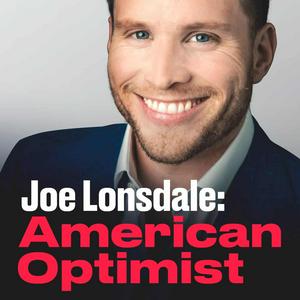
Acerca de Joe Lonsdale: American Optimist
American Optimist, hosted by Joe Lonsdale: entrepreneur, investor, and founder of four multi-billion dollar companies and other mission-driven organizations. American Optimist is an alternative to the fear, cynicism, and zero-sum thinking in mainstream media. Learn from the innovators and leaders who are solving our nation’s most pressing challenges, and doing it in a way that will lift everyone up. Hope should dominate our discourse, and American Optimist will show you why. blog.joelonsdale.com
Sitio web del podcastEscucha Joe Lonsdale: American Optimist, Chisme Corporativo y muchos más podcasts de todo el mundo con la aplicación de radio.net
Descarga la app gratuita: radio.net
- Añadir radios y podcasts a favoritos
- Transmisión por Wi-Fi y Bluetooth
- Carplay & Android Auto compatible
- Muchas otras funciones de la app
Descarga la app gratuita: radio.net
- Añadir radios y podcasts a favoritos
- Transmisión por Wi-Fi y Bluetooth
- Carplay & Android Auto compatible
- Muchas otras funciones de la app

Joe Lonsdale: American Optimist
Escanea el código,
Descarga la app,
Escucha.
Descarga la app,
Escucha.
 México

