
Escucha gratis este podcast en la aplicación: Descarga gratuita en la App Store
radio.net
Sleep timer
Favoritos
613 episodios
670: Why food quality matters more than calories | Dariush Mozaffarian, M.D.
18/10/2026 | 53 min“The food industry is experimenting on us without data and knowledge,” says Dariush Mozaffarian, M.D., DrPH.
Mozaffarian is a cardiologist, Director of the Food is Medicine Institute at Tufts University, and author of the book, Food is Medicine (Holt/Macmillan). He serves as Distinguished Professor, Dean Emeritus, and Jean Mayer Professor; and is clinically active in cardiology at Tufts Medical Center. His work aims to create the evidence and translation for a food system that is nutritious, equitable, and sustainable. He has authored nearly 700 scientific publications, and has served in numerous advisory roles. His work has been featured in leading media outlets, and Thomson Reuters has named him as one of the World’s Most Influential Scientific Minds. Dr. Mozaffarian received his B.S. in biological sciences from Stanford, M.D. from Columbia, Doctorate in Public Health from Harvard, and clinical training in internal medicine at Stanford and in cardiology at the University of Washington. He is married, has three children, and actively trains as a Fourth Degree Black Belt in Taekwondo.
00:00 - The last century of nutrition science
07:03 - The single-nutrient mistake
10:50 - Pellagra & the birth of enriched flour
13:45 - Macros vs. food quality
17:05 - The 3 buckets of food
21:56 - What’s the deal with red meat
24:46 - Episode break
27:14 - Cholesterol absorbers & plant sterols
31:05 - How low-fat & Big Tobacco fueled ultra-processing
33:24 - The truth about seed oils
38:06 - Sweeteners & additives
41:41 - Flipping the script on the food system
47:28 - The problem with calorie counting
52:16 - Inside a cardiologist's shopping cart
Referenced in the episode:
Buy Mozaffarian’s book here: https://www.amazon.com/dp/1250394287
Visit the Food Is Medicine Institute website: https://tuftsfoodismedicine.org/
We hope you enjoy this episode, and feel free to watch the full video on YouTube! Whether it's an article or podcast, we want to know what we can do to help here at mindbodygreen. Let us know at: podcast@mindbodygreen.com.
Learn more about your ad choices. Visit megaphone.fm/adchoices669: The latest on how to prevent Alzheimer’s | Kellyann Niotis, M.D.
11/10/2026 | 52 min"What we know for sure is that Alzheimer's is a preventable disease. It's not destiny,” says Kellyann Niotis, M.D.
Niotis is the world’s first fellowship-trained preventive neurologist. She is a Clinical Assistant Professor of Neurology at Weill Cornell Medicine, the Director of Parkinson’s and Lewy Body Dementia Prevention Research at the Institute for Neurodegenerative Diseases (IND) and runs a private preventive neurology practice in New York City focused on early detection and personalized risk reduction strategies for diseases like Alzheimer’s, Parkinson’s and Dementia with Lewy Bodies. Her research has been published in notable medical journals and presented at national and international conferences. Her expertise has been featured in media outlets such as CNN and NBC, and she has received numerous honors and awards recognizing her work. She is passionate about advancing the field of preventive neurology—not only through clinical care and research but also through advocacy for policy change and expanding access to education and treatment.
00:00 - Your genes are not your destiny
05:06 - Why prevention starts in your 30s
06:44 - Cholesterol management for brain health
11:06 - Explaining amyloid & p-tau 217
17:17 - How viruses & your cycle affect tau
19:37 - Dr. Niotis’s research
23:41 - What movement reveals about your brain
30:37 - Why motor reserve matters
34:47 - Why variety is key when exercising for brain health
37:38 - Elen’s story with two APOE4 copies
44:37 - ApoA1: the brain's cholesterol exception
47:42 - The future of Alzheimer's treatment
50:43 - The statin study she'd love to run
Referenced in the episode:
Visit Niotis’s website: http://www.drkellyannniotis.com/
Visit Niotis’s practice: http://www.preventive-neuro.com/
For more about Beth Lewis: https://www.instagram.com/bethlewisfit/
Listen to our episode with Richard Isaacson: https://open.spotify.com/episode/4uW7V9qfeD2vj2m56MZlYB
We hope you enjoy this episode, and feel free to watch the full video on YouTube! Whether it's an article or podcast, we want to know what we can do to help here at mindbodygreen. Let us know at: podcast@mindbodygreen.com.
Learn more about your ad choices. Visit megaphone.fm/adchoicesWhy 70% of American kids quit sports by age 13
04/10/2026 | 23 minYouth sports has become a multi-billion-dollar industry built on one unspoken promise: specialize early, and your kid has a shot. In this solo episode, we dig into what the research really says about early specialization. We also looks at how Norway built a youth sports system around play instead of competition, and why it's keeping kids in the game at nearly triple the US rate.
00:00 - The myth of sports specialization
04:29 - How youth sports became a billion-dollar industry
05:10 - My own path to Division I basketball
06:52 - Higher risk of overuse injuries
09:42 - The weaker case for burnout
10:41 - Junior stars & adult pro athletes are different people
12:28 - Deliberate play & the sampling years
15:00 - 3 honest caveats
16:10 - How Norway keeps kids playing
20:29 - What every parent should actually do
Referenced in the episode:
2022 meta-analysis from Jean Côté’, Ph.D.: https://doi.org/10.1177/19417381211056301
2015 study from Neeru Jayanthi, M.D.: .https://pubmed.ncbi.nlm.nih.gov/25646361/
Research from David Bell, Ph.D.: https://pubmed.ncbi.nlm.nih.gov/31633411/
Research from Tim McGuine, Ph.D: https://pubmed.ncbi.nlm.nih.gov/28735552/
We hope you enjoy this episode, and feel free to watch the full video on YouTube! Whether it's an article or podcast, we want to know what we can do to help here at mindbodygreen. Let us know at: podcast@mindbodygreen.com.
Learn more about your ad choices. Visit megaphone.fm/adchoices668: What 200K full-body scans reveal about how we age | Andrew Lacy, Founder & CEO at Prenuvo
28/09/2026 | 42 min"I hope in 20 or 30 years time, a clinical diagnosis is something that's rarely given because most everything has been caught before it rises to that stage,” says Andrew Lacy.
Lacy is the CEO and founder of Prenuvo, the company pioneering proactive whole-body imaging for the early detection of cancer and other diseases. Under Lacy’s leadership, the company has expanded across North America, establishing Prenuvo as a recognized and trusted proactive healthcare service to both patients and referring clinicians. A seasoned entrepreneur, he scaled transformative products (including Tapulous, acquired by Disney) and grew Prenuvo into a global leader. He actively serves as an advisor and investor across a diverse portfolio of startups. He received an MBA from Stanford University and a JD from the University of Melbourne. He is currently based in Los Angeles.
This podcast was created in partnership with Prenuvo. Their whole-body MRI scans 33 organs for hundreds of conditions in as little as an hour, finding a potentially life-saving diagnosis in 1 in 20 people.* Prenuvo can help give you a broader understanding of what’s happening in your body–before symptoms appear. Get a $300 discount on comprehensive and executive memberships, along with a standalone whole-body scan at prenuvo.com/MINDBODYGREEN.
00:00 - What's changed in the last two years of scanning
03:58 - The importance of establishing a baseline
06:15 - The average scan turns up nine findings
07:55 - Ageotypes: why everyone ages differently
09:19 - Inside the new body composition report
11:47 - 4 ways AI is changing medical imaging
15:44 - NeuroQuant & catching dementia decades early
18:07 - Building a comprehensive, preventative healthcare system
24:10 - Busy Philipps’s story & what people actually fear
25:17 - The case for peace of mind over avoidance
30:46 - Skin health as the next imaging frontier
37:27 - Why people worry most about the brain
39:21 - Changing the approach to healthcare
Referenced in the episode:
Read about Jason’s experience first Prenuvo scan here: https://www.mindbodygreen.com/articles/full-body-mri-scan-review
We hope you enjoy this episode, and feel free to watch the full video on YouTube! Whether it's an article or podcast, we want to know what we can do to help here at mindbodygreen. Let us know at: podcast@mindbodygreen.com.
*Based on our internal data analysis, 5% of Prenuvo scans have helped detect a potentially life-saving condition. This reflects in particular the combined prevalence of radiologically-suspected pre-cancerous/cancerous-findings or brain-aneurysms in our whole body MRI screening practice.
Learn more about your ad choices. Visit megaphone.fm/adchoices667: Why this doctor stopped fearing sugar, ice cream, & alcohol | Keshav Grover, D.O, M.S.
20/09/2026 | 50 min"What is the lowest dose of intervention that can have the maximum effect to help the body heal itself?” asked Keshav Grover, D.O., M.S., IFMCP.
Grover is the founder of Grover Health and Wellness, PLLC. He is a physician, keynote speaker, and champion of functional/integrative medicine and of eating a whole foods, plant-based diet. He holds a Doctorate in osteopathic medicine from Michigan State University College and a Master of Science from Wayne State University School of Medicine. He completed the prestigious Andrew Weil Center of Integrative Medicine fellowship at the University of Arizona and is a certified functional medicine practitioner by the Institute for Functional Medicine. He has spoken to leading organizations about holistic health and has been featured on CBS and Fox News as a wellness expert. His first book, Wellness Bridge, was published this August.
00:00 - The "Wellness Bridge"
05:37 - Why medicine doesn't have to be either/or
08:55 - A simple at-home gut health check
11:21 - There’s no universal cure
13:37 - Peptides 101
19:30 - Who should avoid peptides entirely
22:21 - Smallest dose, maximum effect
24:27 - Grover’s approach to testing
30:29 - Where health testing is headed next
33:38 - The connection between glyphosate & cancer
40:38 - His brother's warts & a homeopathy win
44:37 - Why he stopped being the ingredient police
47:31 - Gut health & food sensitivity
49:55 - Why genetics isn't your destiny
Referenced in the episode:
For more about Grover, visit: https://www.drkeshavgrover.com/
Buy Grover’s book: https://www.amazon.com/dp/B0GZMP5BQX/ref=as_li_qf_sp_asin_il_tl?tag=mind0a3-20
We hope you enjoy this episode, and feel free to watch the full video on YouTube! Whether it's an article or podcast, we want to know what we can do to help here at mindbodygreen. Let us know at: podcast@mindbodygreen.com.
Learn more about your ad choices. Visit megaphone.fm/adchoices
Más podcasts de Medicina alternativa







Podcasts a la moda de Medicina alternativa




Acerca de The mindbodygreen Podcast
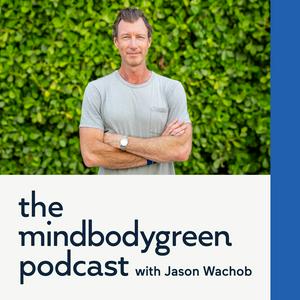
The mindbodygreen podcast explores the infinite possibilities of health & well-being. Hosted by founder and co-CEO Jason Wachob, each episode features a thought-provoking interview with a leader in the health space. Whether you’re thinking about changing what’s on your plate, how you move, or how you think, these conversations are sure to offer solutions in whole-body health.
Sitio web del podcastEscucha The mindbodygreen Podcast, Sabiduría Psicodélica y muchos más podcasts de todo el mundo con la aplicación de radio.net
Descarga la app gratuita: radio.net
- Añadir radios y podcasts a favoritos
- Transmisión por Wi-Fi y Bluetooth
- Carplay & Android Auto compatible
- Muchas otras funciones de la app
Descarga la app gratuita: radio.net
- Añadir radios y podcasts a favoritos
- Transmisión por Wi-Fi y Bluetooth
- Carplay & Android Auto compatible
- Muchas otras funciones de la app

The mindbodygreen Podcast
Escanea el código,
Descarga la app,
Escucha.
Descarga la app,
Escucha.
The mindbodygreen Podcast: Podcasts del grupo
 México