
Escucha gratis este podcast en la aplicación: Descarga gratuita en la App Store
radio.net
Sleep timer
Favoritos
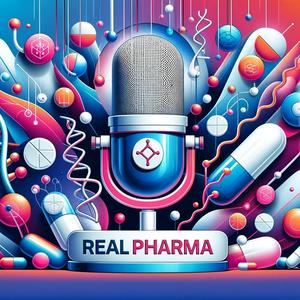
RealPharma: Conversations with Pharma Pathfinders
RealPharma
Último episodio
62 episodios

Bridging the Gap: Market Access From Three Sides of the Table with Vidhya Segar
19/10/2026 | 43 minBridging the Gap: Market Access From Three Sides of the Table - with Vidhya Segar
Real Pharma, hosted by Na-Ri Oh and Ian Wendt, with intern Amos Fung
Episode Summary
Health technology assessment is usually described as a system. Vidhya Segar describes it as a negotiation between people who are each asking a different question. When she worked in government, the question was always why: why this drug, why now, why this population. In industry, it became why not. In this episode, Na-Ri, Ian, and Amos talk with Vidhya, a pharmacist who has worked as a hospital clinician, as an evaluator at Singapore's national HTA agency, and now in market access at Ipsen. Using Singapore as the working example, the conversation covers how a drug gets from approval to reimbursement, what the US most favored nation (MFN) policy looks like from Southeast Asia, how agencies handle rare disease evidence, and what each side of the table could do to make the other's job easier.
About Vidhya Segar
Vidhya Segar is a pharmacist turned national health policy expert turned market access strategist. She began as a hospital pharmacist in Singapore's public health system, working across inpatient and outpatient settings and designing training programs for early career pharmacists. She then moved to the Agency for Care Effectiveness (ACE), Singapore's national health technology assessment body, where she was Senior Assistant Director in the Technology Access Division and led the national rollout of medical device subsidies. Today she is Market Access Manager for Singapore and Malaysia at Ipsen. She is also a regular speaker and moderator at regional pharmacy and health policy conferences and an active voice on LinkedIn on health economics, HTA, and the evolving role of the pharmacist.
What We Cover
[00:00] Intro: The show open and the guest introduction, read in alternating paragraphs by Na-Ri and Ian.
[02:05] Three chairs, one problem: Amos opens with Vidhya's path from acute care pharmacist to national HTA agency to industry. Her version: it was not a grand plan, but sitting on three sides of the access problem changed how she sees it, including the discomfort of realizing that funding one thing means not funding another.
[05:06] There are no bad guys: Why Vidhya thinks most access fights get adversarial, and why people who spend an entire career on one side of the fence tend to lose the ability to see the other side's constraints.
[06:23] A day in the life of a market access manager: What the job actually involves, from dossier submissions to patient access programs to securing tenders, and why the role looks different in a fully reimbursed market than in a partially reimbursed one like Singapore.
[09:30] Why versus why not: The double agent question. What it is like to carry a payer mindset into a business, and why Vidhya thinks the space between "why" and "why not" is where negotiation, and growth, happens.
[10:34] How Singapore's system works: Ian sets the scene with Singapore's reputation for efficient care, then Vidhya walks through the path from regulatory approval to reimbursement: the Health Sciences Authority, the self-pay option inside the government channel, the advisory committees that make the funding decision, and why there is no such thing as 100% reimbursement when everyone is means tested.
[14:04] Real-world evidence and what HTA actually is: ACE's new guidelines on real-world data, why randomized trials remain the gold standard, and Vidhya's argument that people confuse an assessment with a funding decision. Na-Ri adds the US parallel: an FDA approval that cannot find its way onto the market.
[16:25] ACE compared with NICE and ICER: Is ACE stricter than its peers? Vidhya says no, but Singapore's tight link between assessment, funding, and a defined go-live window changes what "access" means in practice.
[18:23] Price, reference baskets, and MFN: How reference pricing works in Singapore, what MFN looks like from Southeast Asia, and Vidhya's concern that industry could overcorrect and underprice drugs for lower-affordability markets. Ian's follow-up: what happens when MFN pressure pushes up the prices Singapore references.
[22:18] Rare disease, cell and gene therapy, and thin evidence: How ACE has approached therapies where robust data is hard to generate, why Vidhya expects case-by-case decisions to continue for the foreseeable future, and what a company can do when reimbursement may not be the answer.
[25:02] Living with uncertainty: Ian asks how a company decides between more randomized trials and a real-world evidence package when the agency's reception is unclear. Vidhya's reframe: both sides want certainty, and certainty is itself a negotiation.
[28:42] What would you change? Vidhya's wish for industry (bring access voices into trial design, because you cannot retrofit evidence) and for agencies (a way to revisit reimbursement decisions as new evidence arrives), plus the resource reality that keeps agencies from doing it.
[32:03] What ACE wished industry understood: Three things: know how the health system you are working in actually funds care, build both a sponsor-friendly and a realistic payer case, and remember it is a long partnership. The elephant hiding behind a pole makes an appearance.
[34:29] Advice for pharmacists thinking about industry: Access work is meaningful even on the industry side, and the best access professionals are corporate polyglots who can speak sales, marketing, medical, and policy. Ian and Na-Ri add their own take on moving from clinical roles into pharma and translating technical work for cross-functional teams.
[38:54] Why she is still in healthcare: Amos closes with the question of what inspires her. Vidhya shares two stories: a clinician's reply to a thank-you email about a rare disease patient group in Singapore, and her grandmother's experience of Parkinson's, which is how she first became curious about drugs.
[42:07] Wrap: Thank yous, and Ian's note that the show is usually very US focused, with some requests to widen the aperture.
Notable Moments
On the premise of the whole conversation: "There are no bad guys in this problem. We're all just operating from different constraints with different motivations and different incentives."
On the two questions that frame the negotiation: "When I was in the government, we were always trained to ask why. Why this drug? Why now? Why this population? Why, why, why? On the business side of things, I'm asking, why not?"
On what HTA is and is not: "It is a rigorous assessment. It is a noble assessment, but it is an assessment."
On designing trials with access in mind: "You cannot retrofit evidence."
On keeping the relationship healthy: "Any reimbursement decision that's won with more tension than is required is a Pyrrhic victory, because we're all humans at the end of the day. We remember things."
On communicating across the business: "If you are not accessible to your business partners, you are of no use."
Mentioned in This Episode
Agency for Care Effectiveness (ACE), Singapore's national HTA body
Health Sciences Authority (HSA), Singapore's regulator
NICE and ICER, as points of comparison for ACE
Singapore's Drug Advisory Committee and Medical Technology Advisory Committee
ACE's guidelines on real-world evidence and real-world data
The US most favored nation (MFN) pricing policy
Living HTA
Bloomberg Health-Efficiency Index
IpsenLet’s Talk About Mold - with Ariana Thacker
08/09/2026 | 49 minThe Mold Blind Spot: Ariana Thacker on Building the First Scalable Model of Care for CIRS
Real Pharma, hosted by Na-Ri Oh and Ian Wendt
Episode Summary
Somewhere between one in four Americans carries a genetic profile that makes it hard to clear biotoxins from the body, and there is still no dedicated ICD-10 code for the illness that can follow. In this episode, Na-Ri and Ian talk with Ariana Thacker, founder and CEO of MoldCo, about how a mystery illness and a mold inspection turned a venture capitalist into the person building a scalable care model for a condition mainstream medicine still mostly misses. Ariana walks through her own diagnostic odyssey, the case for treating mold exposure as a public health issue rather than a niche one, and the treatment philosophy that has put MoldCo at odds with some other providers in the space.
About Ariana Thacker
Ariana Thacker is the founder and CEO of MoldCo, a digital health company building a scalable, evidence based virtual clinic for mold related illness and Chronic Inflammatory Response Syndrome (CIRS). She trained as a chemical engineer with a focus on biology and spent years in early stage and deep tech investing, building a portfolio of more than 70 companies through her venture firm, Conscience VC. In 2022, an unexplained health crisis, chronic fatigue, brain fog, night sweats, and a cluster of symptoms that resisted diagnosis across a dozen physicians, led her to discover toxic mold in her Miami apartment. She founded MoldCo in 2023. The company has raised $11 million to date, including an $8 million seed round co-led by Cantos and Collaborative Fund, and is now live in 48 states.
What We Cover
[00:00] Intro — Framing the episode: a condition Thacker says affects tens of millions of Americans, with almost no infrastructure in mainstream medicine built to catch it.
[02:03] Ariana's origin story — An unexplained illness, months of inconclusive testing, and the mold inspection that finally connected the dots.
[08:42] From patient to founder — Why Ariana spent time trying to recruit someone else to be CEO before deciding to take the job herself, and the biobank findings that convinced her the opportunity was bigger than her own case.
[09:33] The scale of the problem — Water damage data, the genetic susceptibility angle, and Ariana's estimate of how many Americans are affected.
[11:02] Why mold related illness slips through the cracks — No dedicated ICD-10 code, and a set of biomarkers most primary care and specialist panels never run.
[12:09] The diagnostic odyssey — A dozen specialists, a friend's tip, and the Shoemaker-certified physician who finally confirmed a diagnosis.
[16:20] Three policy fixes — An HHS-level mold commission, an environmental screening question at the annual physical, and a new ICD-10 code for the inflammatory response to mold.
[18:37] Inside the Shoemaker Protocol — How MoldCo built its clinical model in collaboration with Dr. Ritchie Shoemaker, and what "90% of patients get 70 to 90% better" looks like in practice.
[21:17] Why access is so limited — Roughly 30 Shoemaker-certified providers nationwide, wait lists, and a pricing landscape Ariana calls inconsistent to the point of price gouging.
[23:08] The policy case — MoldCo's economic impact report, and early conversations with HHS, CMS, and ARPA-H.
[27:02] How MoldCo actually works — The three questions behind the model (am I being exposed, is mold making me sick, how do I get better), and how a $150 to $300 a month price point pencils out.
[31:50] Clinical quality control — Full-time staff physicians, weekly clinical huddles, and why Ariana says the price point doesn't mean corners get cut.
[33:09] Treating patients still in the environment — What happens when remediation or relocation isn't realistic, and why re-exposure doesn't always mean starting over.
[39:31] Where MoldCo draws the line — Why the team advises against antifungal treatment for CIRS, the research behind that position, and how it differs from the antifungal and naturopathic camps elsewhere in the field.
[44:54] The HLA haplotype connection — Why some patients get hit much harder than others, and what having the genetic marker does and doesn't predict.
[47:14] What's next — A forever chemicals program targeting PFAS, and the research behind it.
[52:50] Closing — The middle school teacher who put Ariana on a path toward science, and where to find MoldCo.
Notable Moments
On not wanting the job she ended up taking: "I actually did not want to be CEO. I was interviewing multiple CEOs for this role. I just wanted to make sure that this was built and created, whether that was through me or, even more ideally at the time, someone else."
On the hair loss that came with her diagnosis: "I actually had the most gratitude for the hair loss, because it anchored me in reality. There is something wrong here. There's an actual physical sign that something is wrong, versus a lot of the gaslighting and doubt I was getting through mainstream medicine."
On why MoldCo won't budge on antifungals: "We're not a Shoemaker company, we're MoldCo. In light of new data and evidence, we're happy to change our opinion and our approach. But for now, what we're doing is working, and it's working great."
On pricing: "There's no reason this can't be affordable and accessible for patients... there's no reason it should include a $13,000 price tag. I just think that's absurd."
Mentioned in This Episode
The Shoemaker Protocol, and the work of Dr. Ritchie Shoemaker and Dr. Scott McMahon
MoldCo's economic impact report on the healthcare cost burden of mold related illness
LabCorp, where MoldCo's lab panel is processed
Conscience VC, Ariana's venture firm prior to founding MoldCo
MoldCo's free environmental exposure guide and self-assessmentFrom Patient Involvement to Patient Leadership - Donna Cryer, JD and Chief Patient Officer
17/08/2026 | 48 minFrom Patient Involvement to Patient Leadership: A Conversation with Donna Cryer, JD
Real Pharma, hosted by Na-Ri Oh and Ian Wendt
Episode Summary
As AI moves deeper into drug development, from trial design to evidence generation, the more pressing question isn't what the technology can do. It's who has the authority to decide how it's used. In this episode, Na-Ri and Ian sit down with Donna Cryer, JD, founder of the Global Liver Institute, longtime FDA patient representative, and the person credited with creating the Chief Patient Officer role in Pharma. Donna draws a hard line between patient involvement and patient leadership and makes the case that one changes outcomes while the other is often just theater.
About Donna Cryer
Donna Cryer is a lawyer, patient advocate, and two-time (arguably four-time, counting interim roles) CEO who has spent decades pushing patients from the margins of drug development into governance roles with real authority. She was diagnosed with inflammatory bowel disease at 13, which led to a rare autoimmune liver disease and a liver transplant in her twenties. She founded and led the Global Liver Institute for a decade, serves as an FDA patient representative on advisory committees, sits on the board of PathAI, and built the framework that became the pharmaceutical industry's Chief Patient Officer role.
What We Cover
[00:00] Intro — Framing the episode: patient leadership in a moment when pharma is becoming more data-driven and AI-enabled, and why the real question is one of authority, not just capability.
[02:19] What shaped Donna's philosophy — How a decade building the Global Liver Institute, and a career of being one of the only people in the room who knows where the liver actually is, shaped her approach to patient leadership.
[05:33] Liver disease and stigma — Why most of what people think they know about liver disease is wrong, how stigma shows up differently across hepatitis B, hepatitis C, and cirrhosis, and how Donna worked to change CPT coding so mash patients weren't buried under cardiovascular or diabetes diagnoses.
[07:34] Donna's own story — Diagnosed with IBD at 13, an autoimmune liver disease in her twenties, and a transplant that gave her a kind of authority no amount of professional training can substitute for.
[11:22] Defining patient centricity — Donna's litmus test: did something actually change because a patient was in the room? If nothing changed, it wasn't patient engagement, no matter what the meeting deck says.
[17:47] From involvement to leadership — Why one patient out of twenty on a P&T committee isn't leadership, and what it actually takes for patient input to carry weight in a decision rather than just being collected.
[23:14] Building the Chief Patient Officer role — The origin story, why nearly every CPO hire ended up being a physician despite Donna's original intent, and the trust gap she thinks still needs to close: can a patient leader be trusted with fiduciary and business responsibility, not just advocacy.
[30:09] FDA patient representative: voice vs. vote — What it's actually like sitting on an FDA advisory committee with a vote, not just a comment period, and how that changed the outcome of specific drug approval decisions.
[36:50] Culture and acceptance — The uneven reception patient reps still get in rooms full of physicians and biostatisticians, and Donna's approach to turning skepticism into buy-in, plus her case for clinician training on working with patients as peers rather than problems.
[44:24] AI in pharma — Donna's board role at PathAI, and a guiding principle she credits to a colleague: if a task doesn't require your judgment, your license, or your network, AI can probably do it. Where that leaves the parts of the job that still require a human.
[50:06] Where AI helps, and where it doesn't yet — The problem of patient data missing from the sources most models are trained on, and why patient registries, patient communities, and even patient co-authorship on publications matter for closing that gap.
[51:51] Patient skepticism about AI and health data — Why concerns about data governance and security are real, but patients in genuine medical need are often more willing to adopt AI tools than the industry assumes.
[55:05] Closing advice for pharma CEOs — Donna's ask: don't just bring a patient in to solve "a patient problem." Bring a patient in to help solve the biggest problem facing the company.
Notable Moments
On what patient centricity actually requires: "My favorite definition of patient centeredness, and certainly patient engagement, is: did something change because a patient was there? If nothing changed, then it wasn't patient... it certainly wasn't patient engagement."
On the difference a vote makes: "The difference between a voice and a vote. A vote is so much better."
On AI and professional judgment: "If it doesn't need my judgment, my license, or my network, I shouldn't be doing it. AI can probably do it."
Mentioned in This Episode
Global Liver Institute
PathAI
Advanced Advocacy Academy
Cutting for Stone by Abraham Verghese
PatientsLikeMeGood Intentions, Bad Outcomes: Rethinking Healthcare Policy with Deborah Williams
10/07/2026 | 58 minWhen Healthcare Policy Incentives Backfire: 340B, Hospital Pricing, MFN, and Drug Affordability with Deborah Williams
Healthcare policies are often evaluated by what they are intended to accomplish. But what happens when the incentives created by those policies produce very different results?
In this episode of RealPharma, Ian Wendt and Dr. Na-Ri Oh speak with longtime health policy expert Deborah Williams about the unintended consequences embedded in the U.S. healthcare system—from hospital reimbursement and industry consolidation to the 340B Drug Pricing Program, biosimilars, most-favored-nation pricing, and pharmaceutical innovation.
Deborah argues that healthcare policy must be judged not by its stated purpose, but by the behaviors, financial incentives, and measurable outcomes it creates. The discussion examines why transparency alone may not lower healthcare costs, how hospital systems use their political and economic influence, and why policies designed to improve affordability can sometimes contribute to higher prices.
The conversation also explores the practical and constitutional uncertainties surrounding most-favored-nation drug pricing, the Trump administration’s GARD, GLOBE, and GENEROUS models, and the potential downstream effects of pricing reform on research, development, manufacturing, and patient access.
Topics Discussed
Why healthcare policy should be evaluated by results rather than intentions
The history and limitations of diagnosis-related groups, or DRGs
Why MACRA has failed to create an effective physician payment system
Whether healthcare price transparency can meaningfully reduce costs
The effects of hospital consolidation and certificate-of-need laws
Why hospital systems have become so politically difficult to challenge
Indiana’s effort to cap hospital prices relative to Medicare rates
The widening divide between large health systems and rural hospitals
How nonprofit hospitals deploy capital and justify tax-exempt status
The role of hospital employment in local political influence
Why 340B purchasing incentives can favor higher-priced branded products
How 340B spreads may undermine biosimilar adoption
Whether 340B savings are reaching vulnerable patients
Alternatives to funding safety-net and uncompensated-care services through drug discounts
Why policymakers may need to separate hospital support from pharmaceutical pricing
The rationale behind most-favored-nation drug pricing
Whether European countries are likely to pay more for pharmaceuticals
How Medicaid best-price rules affect commercial contracting
The relationship between direct-to-consumer pricing and 340B exposure
GARD, GLOBE, and GENEROUS drug-pricing models
The legal and constitutional questions surrounding mandatory drug rebates
Pharmaceutical manufacturing reshoring and national economic policy
How interest rates and global reimbursement policies affect drug development
The need to measure the quality—not merely the quantity—of pharmaceutical innovation
Why every healthcare payment system has both intended and unintended consequences
Key Takeaways
Policy intentions do not guarantee beneficial outcomes
Even carefully designed reimbursement systems can produce distortions once stakeholders respond to the incentives. Deborah emphasizes that policymakers must continuously measure what happens after implementation rather than assuming a program is working because its goals are admirable.
Transparency is necessary, but not sufficient
Publishing hospital prices may help patients and purchasers compare costs, but transparency has limited value when every available option is still unaffordable. Meaningful reform may also require addressing hospital concentration, market power, and state certificate-of-need restrictions.
Hospitals possess considerable economic and political power
Large health systems are often among the biggest employers in a congressional district or state. That employment base, combined with campaign contributions and community influence, makes hospital payment reform politically difficult—even when prices and capital spending appear difficult to justify.
The 340B program can create incentives that conflict with affordability
The discussion examines how hospitals may earn substantial spreads between the discounted acquisition cost of a drug and the amount ultimately reimbursed. Those spreads can influence product selection, encourage use of higher-priced brands, and weaken the competitive position of lower-cost biosimilars.
Safety-net funding should be tied to services society wants to support
Rather than indirectly subsidizing hospitals through drug-pricing spreads, Deborah suggests that policymakers consider more direct support for uncompensated care, emergency services, obstetrics, psychiatric care, and other socially valuable services.
Most-favored-nation pricing remains highly uncertain
MFN policies may be politically attractive because Americans pay more for many medicines than patients in other developed countries. However, other countries may be unwilling or unable to increase their spending, leaving manufacturers to absorb much of the financial impact in the United States.
Drug-pricing rules interact in complicated ways
Best-price requirements, 340B discounts, Medicare reimbursement, direct-to-consumer models, and international reference pricing cannot be evaluated in isolation. A change in one area can cascade through the rest of the pharmaceutical pricing system.
Innovation should be measured by scientific and clinical value
Deborah argues that policy analysis should move beyond simply estimating how many drugs might be lost under a pricing reform. The more important question is whether policies reduce the development of first-in-class therapies, novel mechanisms, and clinically meaningful advances.The New Biopharma Talent Market: AI, M&A, and a K-Shaped Recovery
20/04/2026 | 53 minEpisode Summary
In this episode of Real Pharma, hosts Na-Ri Oh and Ian Wendt sit down with Kristiaan Rawlings, Executive Director at EPM Scientific, to unpack what is really happening in the biopharma talent market right now. From the surprising resurgence of market access hiring to the growing influence of AI in recruiting and candidate preparation, this conversation explores the forces reshaping commercial talent strategy in 2026. The group also digs into salary inflation, title compression, M&A-driven hiring shifts, hybrid work expectations, and why communication skills and executive presence may matter more than ever.
What We Cover
Why market access has re-emerged as one of the hottest hiring areas in biopharma
How companies are responding to policy shifts, competition, and launch pressure
What the current K-shaped hiring market means for candidates in high-demand vs. lower-demand functions
Why specialists in forecasting, analytics, and insights may need to broaden their skill sets
How AI is affecting interviews, candidate prep, and recruiting workflows
The continued importance of presentation skills, executive presence, and storytelling
How M&A activity is influencing hiring, retention packages, and future job movement
What’s happening with salary growth, especially at the director, senior director, and VP levels
Why hybrid work is still the norm and fully remote roles remain limited
What candidates should know before making a move in 2026
Key Takeaways
Biopharma hiring is not following a single trend. Some functions are seeing intense demand and rising compensation, while others are consolidating under broader roles. Kristiaan explains that market access, select commercial operations roles, and experience in competitive therapeutic areas are commanding a premium right now. At the same time, he notes that professionals who can combine technical skill with strong communication and leadership presence are consistently outperforming others in the interview process.
The episode also highlights a more nuanced view of AI: it is not simply replacing jobs, but it is changing how work gets done. Used well, AI can improve recruiting efficiency, candidate prep, and search precision. Used poorly, it can make candidates sound generic, underprepared, or overly scripted.
Más podcasts de Ciencias









Podcasts a la moda de Ciencias




















Acerca de RealPharma: Conversations with Pharma Pathfinders
For biopharma pros seeking insightful discussions and a deeper understanding of the pharma world, join Dr. Na-Ri Oh and Ian Wendt as they talk with industry leaders and luminaries to delve into biotechnology, pharmaceuticals, and healthcare. RealPharma podcast aims to challenge your viewpoints, deepen your understanding of the pharma world beyond the headlines, and explore emerging trends in medical innovation.
Sitio web del podcastEscucha RealPharma: Conversations with Pharma Pathfinders, The Nature Of with Willow Defebaugh y muchos más podcasts de todo el mundo con la aplicación de radio.net
Descarga la app gratuita: radio.net
- Añadir radios y podcasts a favoritos
- Transmisión por Wi-Fi y Bluetooth
- Carplay & Android Auto compatible
- Muchas otras funciones de la app
Descarga la app gratuita: radio.net
- Añadir radios y podcasts a favoritos
- Transmisión por Wi-Fi y Bluetooth
- Carplay & Android Auto compatible
- Muchas otras funciones de la app

RealPharma: Conversations with Pharma Pathfinders
Escanea el código,
Descarga la app,
Escucha.
Descarga la app,
Escucha.
 México