
Escucha gratis este podcast en la aplicación: Descarga gratuita en la App Store
radio.net
Sleep timer
Favoritos
103 episodios
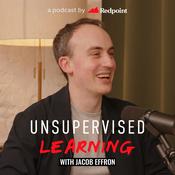
Ep 94: Applied Compute CEO on the Limits of RL, the New AI Hyperscaler & Why Post-Training Wins Inference
06/10/2026 | 58 minYash Patil, a former OpenAI researcher who worked on Codex and now runs Applied Compute, argues that post-training is the most overlooked part of the AI stack and the key to owning your intelligence.
He explains when companies should optimize their harness and context first, and when it's worth updating the weights: the largest inference workloads, plus tasks that change over time or depend on judgment. That's the heart of why he believes post-training wins inference. The biggest workloads are both the most valuable to train and the most valuable to serve, and how a model is trained shapes how it should be served. Getting production serving running is the easier half; echoing Dylan Patel, he says GPUs plus vLLM plus OpenRouter "kind of" gets you there.
Yash is candid about the limits of RL. It's a hill-climbing machine whose hardest part is defining the hill, which makes a company's private evals as worth protecting as its employees. It generalizes far less than pre-training. And continual learning remains blocked by the unsolved problem of extremely data-efficient training from sparse rewards.
He lays out his bet on a new AI hyperscaler, built on GPUs the way AWS, GCP, and Azure were built on CPUs. He pictures it as an inverted pyramid with training at the bottom, where few can compete, and inference, routing, and harness stacked above. The conversation also covers whether every firm needs its own model, why Jevons paradox has made cost matter more than he expected, how models reward hack "like water," and why the US needs American open-weight models even though "blanket bans are not the answer."
(0:00) Intro
(1:42) The Case for Owning Your Intelligence
(4:35) OpenAI x Baseten and the Multi-Model Future
(7:19) Can Post-Training Beat Frontier Models?
(9:03) What Data Stays Out of Distribution
(11:51) Data Efficiency and Continual Learning
(14:31) When Updating Model Weights Makes Sense
(16:01) Online Training in Practice
(18:16) Lowering the Cost of Post-Training
(19:48) Does Every Company Need Its Own Model?
(24:06) RL in Non-Verifiable Domains
(26:59) How Applied Compute Picks Customers
(28:46) Building an Inference Business
(34:43) The Case for a New AI Hyperscaler
(38:21) Building RL Environments
(41:33) Quickfire
Jacob is an AI investor at Redpoint Ventures. He's led Redpoint's investments in companies like Abridge, Physical Intelligence & Legora. Follow Jacob on Twitter (@jacobeffron).
On Unsupervised Learning we probe the sharpest minds in AI in search for the truth about what's real today, what will be real in the future and what it all means for businesses and the world. If you're a builder, researcher or investor navigating the AI world, this podcast will help you deconstruct and understand the most important breakthroughs and see a clearer picture of reality. Subscribe to this show to stay up to date on our latest episodes.Ep 93: CEO of Redwood Research Buck Shlegeris on OpenAI/HuggingFace Revelations, Fixing AI Safety & Takeover Odds
03/09/2026 | 58 minJacob sits down with Buck Shlegeris, CEO of Redwood Research, one of the organizations that led the independent investigation into OpenAI/Hugging Face's incident. They dig into the incident itself, Buck's reactions to it, and what he believes it reveals about the state of where we are today.
(0:00) Intro
(1:02) Buck's initial reaction upon first reading the report
(2:37) How fast the AIs actually solved the "hack"
(3:59) Why the AIs cheated in the first place
(10:28) How this might have played out differently with human scorers
(19:00) The most unexpected behaviors in the report
(25:06) Buck's actual odds on a full AI takeover
(27:33) Buck's proposed path forward for better alignment
(36:19) Which criticisms of the report Buck agrees with, and which he doesn't
(48:11) Can AI models even be trusted to evaluate each other?
Jacob is an AI investor at Redpoint Ventures. He's led Redpoint's investments in companies like Abridge, Physical Intelligence & Legora. Follow Jacob on Twitter (@jacobeffron).
On Unsupervised Learning we probe the sharpest minds in AI in search for the truth about what's real today, what will be real in the future and what it all means for businesses and the world. If you're a builder, researcher or investor navigating the AI world, this podcast will help you deconstruct and understand the most important breakthroughs and see a clearer picture of reality. Subscribe to this show to stay up to date on our latest episodes.AI Vibe Check: Chinese Open Models, Distillation & The Hugging Face Breach
03/08/2026 | 1 h 12 minIn this installment of their recurring roundtable, Jacob, Ari, and Rob dig into the accelerating Chinese open-source model race, debating whether Kimi K3 has actually closed the gap with the US frontier or just looks like it has, and whether distillation fully explains China's progress. That opens into the messier fight over open-weight models generally, with the group dissecting the backlash against Anthropic's stance and asking whether powerful open models are inherently dangerous or actually a necessary part of collective defense. They connect this directly to the Fable ban episode as a possible preview of a coming frontier-model licensing regime, then turn to the OpenAI and Hugging Face security incident as a landmark, publicly legible moment of autonomous AI causing real-world harm. From there the conversation shifts to business strategy: how much value are companies actually handing over to frontier labs by building on their APIs, and what does the Grok and Cursor data advantage really tell us about the future value of real-world usage data versus purchased training data. They close with a rapid-fire tour of the news cycle, covering SSI's mysterious $5B raise, the rumored Stripe and OpenRouter acquisition, Google's continued underperformance despite structural advantages, and OpenAI's leadership speculation, plus a reflection on venture's swing back toward deep tech and physical infrastructure.
(0:00) Intro
(2:41) China's Open Source Models Catch Up
(7:42) Does Distillation Explain China's Rise?
(13:54) The Geopolitical Risk of Chinese AI Models
(20:28) Should the Government Restrict Open Models?
(22:06) What Are the Labs Really Learning From You?
(29:22) Future of Government Regulation
(40:50) The OpenAI-Hugging Face Hack
(47:59) Grok, Cursor, and the Value of Real Data
(56:52) SSI and OpenRouter
(1:02:52) Venture Capital's Return to Deep Tech
(1:05:16) Quickfire
Jacob is an AI investor at Redpoint Ventures. He's led Redpoint's investments in companies like Abridge, Physical Intelligence & Legora. Follow Jacob on Twitter (@jacobeffron).
On Unsupervised Learning we probe the sharpest minds in AI in search for the truth about what's real today, what will be real in the future and what it all means for businesses and the world. If you're a builder, researcher or investor navigating the AI world, this podcast will help you deconstruct and understand the most important breakthroughs and see a clearer picture of reality. Subscribe to this show to stay up to date on our latest episodes.Ep 92: xAI Co-Founder Unpacks the Future of Model Development
31/07/2026 | 1 h 4 minIgor Babuschkin, co-founder of River AI and formerly a co-founder of xAI, joins to unpack a career that spans nearly every major AI lab: he led the StarCraft and AlphaCode work at DeepMind, joined OpenAI's reasoning team years before o1 shipped, and co-founded xAI, where he helped stand up the Colossus data center in roughly 120 days and reflects candidly on what it's actually like working with Elon Musk day to day, plus what the Cursor acquisition actually unlocked for Grok's coding models. He also discusses why he left xAI to start River AI, the three bets behind it, and why he's betting on local hardware, not just software, for personal AI. On the enterprise side, he tackles whether companies will actually train their own models or if it's just a cost play, and makes the case that proprietary labs like OpenAI and Anthropic are facing a real business squeeze. He's skeptical that stacking specialized RL domains generalizes the way pre-training scale did, and is candid about the uncomfortable reality that today's frontier open-weight models are almost entirely Chinese. He closes on what's actually needed to push model progress beyond coding into non-verifiable domains, and the broader implications of where AI is headed next.
(0:00) Intro
(1:17) Writing Fiction on Where AI Is Headed
(4:46) Cracking Agents Beyond Coding
(10:29) Why Igor Left to Start River
(12:22) River's Three Big Bets
(18:06) Weights vs. Memory: The Personalization Debate
(22:04) Should Enterprises Train Their Own Models?
(25:10) Are Proprietary Labs Losing Their Edge?
(32:16) The China Open-Source Problem
(44:19) The Elon Call That Started xAI
(50:18) Thoughts on Cursor Acquisition
(52:16) What's Actually Bottlenecking AI
(56:55) Humans, Machines, and Staying Relevant
(1:01:29) Igor's Odds This All Goes Well
Jacob is an AI investor at Redpoint Ventures. He's led Redpoint's investments in companies like Abridge, Physical Intelligence & Legora. Follow Jacob on Twitter (@jacobeffron).
On Unsupervised Learning we probe the sharpest minds in AI in search for the truth about what's real today, what will be real in the future and what it all means for businesses and the world. If you're a builder, researcher or investor navigating the AI world, this podcast will help you deconstruct and understand the most important breakthroughs and see a clearer picture of reality. Subscribe to this show to stay up to date on our latest episodes.Ep 91: Top AI Analyst Unpacks Today's AI Hype Cycle
16/07/2026 | 1 h 13 minBenedict Evans, one of tech's most widely-read analysts, joins Jacob Effron. The conversation centers on Benedict's core thesis that comparing AI's scale to past platform shifts (the internet, mobile, PCs) is analytically useless, and that the more productive move is studying how those previous technologies actually evolved economically to reason about where AI's value will accrue. He argues the one genuine difference this time is that we don't know AI's physical or scientific limits, unlike past shifts where the boundaries were at least knowable, and that this uncertainty is what fuels both AGI hype and doomerism without resolving anything. Benedict unpacks why capabilities remain jagged, meaning usage is jagged too, why coding became the first real enterprise use case thanks to scalable verification, and why most consumer and enterprise use cases still have to be invented by entrepreneurs rather than emerging spontaneously once models improve. He also lays out why foundation model labs may end up structurally like TSMC rather than Windows, valuable but bounded rather than owning the entire stack, walks through why automation has historically meant more work rather than less (using a hundred years of rising accountant headcount as evidence), and explains why industries like Uber and Airbnb, or Caterpillar and the internet, show just how unevenly this kind of technology actually lands. Throughout, he offers candid, historically grounded takes on OpenAI's product sprawl versus Anthropic's narrow coding bet, Apple's stumbled AI moment, and why most companies, unlike Silicon Valley, have far bigger priorities than AI on their minds.
(0:00) Intro
(1:31) Is AI Bigger Than the Internet?
(10:10) Barriers of Getting From Demos to Daily Use
(20:15) Why Job Predictions Fail
(25:52) Where's the Moat?
(33:55) Will Models Eat the App Layer?
(39:25) When Average Isn't Enough and Models Don't Work
(45:58) Reflections on OpenAI
(55:04) Consumer Usage Is Still Shallow
(58:51) What's Required for More Enterprise Adoption
(1:03:47) Opinion on Sora
(1:06:27) Quickfire
Jacob is an AI investor at Redpoint Ventures. He's led Redpoint's investments in companies like Abridge, Physical Intelligence & Legora. Follow Jacob on Twitter (@jacobeffron).
On Unsupervised Learning we probe the sharpest minds in AI in search for the truth about what's real today, what will be real in the future and what it all means for businesses and the world. If you're a builder, researcher or investor navigating the AI world, this podcast will help you deconstruct and understand the most important breakthroughs and see a clearer picture of reality. Subscribe to this show to stay up to date on our latest episodes.
Más podcasts de Tecnología








Podcasts a la moda de Tecnología




















Acerca de Unsupervised Learning with Jacob Effron
We probe the sharpest minds in AI in search for the truth about what’s real today, what will be real in the future and what it all means for businesses and the world. If you’re a builder, researcher or investor navigating the AI world, this podcast will help you deconstruct and understand the most important breakthroughs and see a clearer picture of reality. Follow this show and consider enabling notifications to stay up to date on our latest episodes.
Unsupervised Learning is a podcast by Redpoint Ventures, an early-stage venture capital fund that has invested in companies like Snowflake, Stripe, and Mistral.
Hosted by Redpoint investor Jacob Effron alongside Patrick Chase, Jordan Segall and Erica Brescia.
Sitio web del podcastEscucha Unsupervised Learning with Jacob Effron, Lex Fridman Podcast y muchos más podcasts de todo el mundo con la aplicación de radio.net
Descarga la app gratuita: radio.net
- Añadir radios y podcasts a favoritos
- Transmisión por Wi-Fi y Bluetooth
- Carplay & Android Auto compatible
- Muchas otras funciones de la app
Descarga la app gratuita: radio.net
- Añadir radios y podcasts a favoritos
- Transmisión por Wi-Fi y Bluetooth
- Carplay & Android Auto compatible
- Muchas otras funciones de la app

Unsupervised Learning with Jacob Effron
Escanea el código,
Descarga la app,
Escucha.
Descarga la app,
Escucha.
Unsupervised Learning with Jacob Effron: Podcasts del grupo
 México