

Escucha gratis este podcast en la aplicación: Descarga gratuita en la App Store
radio.net
Sleep timer
Favoritos
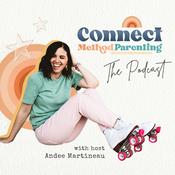
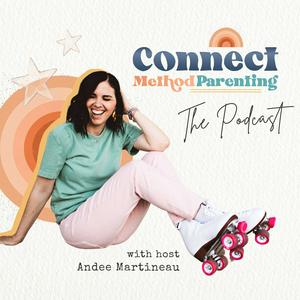
Connect Method Parenting I Conscious Parenting, Positive Parenting, Gentle Parenting, Connective Parenting, Peaceful Parenting, Slow Parenting, Parenting Teens, Single Parenting, Joyful Parenting, Positive Discipline, ADHD Parenting
Andee Martineau - Podcaster, Best-Selling Author, Parenting Coach
Último episodio
222 episodios
Ep #220 Your Emotional Range
30/03/2026 | 54 minI had a coaching call recently with a mom who was stuck in the exhausting cycle of yelling, feeling guilty, and then yelling again. Right in the middle of our session something clicked for her, and I thought, everyone needs to hear this.
Here's what shifted everything: what if instead of trying to stop feeling triggered, we focused on developing the capacity to feel everything and still parent from our highest selves?
That one reframe is what this episode is built on. I walk you through eight emotional capacities that have genuinely transformed my parenting, from learning to hold space for my daughter's meltdown on the way to Machu Picchu, to crying on the couch in a New Zealand Airbnb because I missed a phone call with my son. These aren't just nice ideas. They are muscles you can actually build.
Your emotional range is the limit of how far you can lead your kids. This episode is about expanding it.
Go connect with your kids. 💛
— Andee
Learn more here --> https://connectmethodparenting.com
Next Steps: Leave a review if you've been enjoying the CMP Podcast
My Book: https://cmp.works/1xs
My IG: https://cmp.works/istaEp #219 Acceptance Takes Effort
23/03/2026 | 26 minAcceptance is one of those words that sounds soft but is actually some of the hardest work you'll ever do. I know because I've lived it, including a moment sitting across from my husband at dinner where I had to stop mid-conversation, cover my mouth with my hands, and just breathe through everything I was feeling before I could say another word.
That moment didn't happen by accident. It was the result of months of showing up for myself every single day and learning how to actually feel my emotions instead of fight them.
In this episode I'm talking about what acceptance really means (and what it doesn't), why it's the key to showing up as the parent you want to be, and why you simply cannot skip this step. Viktor Frankl figured it out in Auschwitz. Nelson Mandela figured it out in prison. And I truly believe you can figure it out in your living room.
Go connect with your kids. 💛
— Andee
Learn more here --> https://connectmethodparenting.com
Next Steps: Leave a review if you've been enjoying the CMP Podcast
My Book: https://cmp.works/1xs
My IG: https://cmp.works/istaEp #218 Let Them Hate You
16/03/2026 | 34 minThis episode is personal. I spent years letting people live rent free in my brain, specifically a few women who had once been my closest friends and then made it very clear they didn't like me. I was destroyed by it. I tried everything to get them to like me again. It never worked.
What came out of that experience changed me as a parent and as a human. Because here's what I had to learn the hard way: someone else's hate literally cannot touch you unless you let it. Their emotions belong to them. What you feel comes from your own thoughts, not their words.
The less you fear being disliked, the better parent you become. And that's what this one is all about.
Go connect with your kids. 💛
— Andee
Learn more here --> https://connectmethodparenting.com
Next Steps: Leave a review if you've been enjoying the CMP Podcast
My Book: https://cmp.works/1xs
My IG: https://cmp.works/istaEp #217 What The Behavior Is Telling You
09/03/2026 | 38 minWhen one of my daughters was refusing to go to bed every single night, my first instinct was to fix it. But when I paused and actually got curious about what was going on, she told me she was scared to be alone. Her behavior wasn't defiance. It was fear.
That's what this episode is about. Over 95% of our kids' problem behavior was never intentional, and when we treat it like something to correct, we miss the real message underneath. In this episode I walk you through what it actually means to see your child instead of correct them, and why that one shift changes everything.
Go connect with your kids. 💛
— Andee
Learn more here --> https://connectmethodparenting.com
Next Steps: Leave a review if you've been enjoying the CMP Podcast
My Book: https://cmp.works/1xs
My IG: https://cmp.works/istaEp #216 The Uses of Regret
16/02/2026 | 24 minRegret shows up often in parenting, but it doesn’t have to keep us stuck.
In this episode, I explore how regret can become a tool for growth instead of a weapon we use against ourselves.
We’ll talk about the difference between regret that leads to learning and regret that keeps us spinning, how to shift from past-focused rumination to future-focused growth, and a simple framework I use to turn regret into clarity, compassion, and forward movement.
This episode is an invitation to stop fighting the past, and start using it to become the parent you want to be.
Learn more here --> https://connectmethodparenting.com
Next Steps: Leave a review if you've been enjoying the CMP Podcast
My Book: https://cmp.works/1xs
My IG: https://cmp.works/ista
Más podcasts de Familia
 Needo Talks con Michelle AzizFamilia, Niños y familia
 Mala MadreFamilia, Niños y familia
 MAMÁS EN PAUSAFamilia, Niños y familia
 Respectful Parenting: Janet Lansbury UnruffledFamilia, Niños y familia
 Club de MalasmadresFamilia, Niños y familia
 COURAGEOUS PARENTINGCristianismo, Familia, Niños y familia, Religión y espiritualidad
 Buenas noches, Cráneo: Historias para dormirFamilia, Historias para niños, Niños y familia, Salud mental, Salud y forma física
 Criar con Sentido | Montserrat CastueraFamilia, Niños y familia
 Había Una Vez by Naran Xadul | Cuentos InfantilesFamilia, Historias para niños, Niños y familia
 Good Inside with Dr. BeckyCultura y sociedad, Educación, Familia, Niños y familia, Relaciones, Superación personal
Podcasts a la moda de Familia
 Adolescencia positivaFamilia, Niños y familia
 M Is for Mama PodcastFamilia, Niños y familia
 Parenting Teens with Dr. CamEducación, Familia, Niños y familia, Salud mental, Salud y forma física, Superación personal
 Toddlers Made Easy with Dr CathrynFamilia, Niños y familia
 La MatrescenceEducación, Familia, Niños y familia, Salud mental, Salud y forma física, Superación personal
 Focus on the Family with Jim DalyCultura y sociedad, Familia, Niños y familia, Relaciones
- Club de MalasmadresFamilia, Niños y familia
 The Christian Parenting Podcast - Motherhood, Teaching kids about Jesus, Intentional parenting, Raising Christian kidsCristianismo, Familia, Niños y familia, Religión y espiritualidad
 Son Cosas de NiñosFamilia, Niños y familia
 The ADHD Parenting PodcastFamilia, Niños y familia
 Always HereCultura y sociedad, Familia, Niños y familia
 The Dr. Laura PodcastCultura y sociedad, Familia, Niños y familia, Relaciones, Salud mental, Salud y forma física
 Observar, entender y ayudar a los niñosFamilia, Niños y familia
Acerca de Connect Method Parenting I Conscious Parenting, Positive Parenting, Gentle Parenting, Connective Parenting, Peaceful Parenting, Slow Parenting, Parenting Teens, Single Parenting, Joyful Parenting, Positive Discipline, ADHD Parenting
Parenting advice on-the-go, with fun episodes that will make you laugh, cry, and feel better armed to be the parent you want to be! No punishments, rewards, or ultimatums required. (they’re actually discouraged).Join your host Andee Martineau, founder of the breakthrough parenting framework Connect Method Parenting, as she helps parents discover why their kids don’t listen and shows them the step-by-step process of regaining influence and building relationships that will last a lifetime!
Sitio web del podcastEscucha Connect Method Parenting I Conscious Parenting, Positive Parenting, Gentle Parenting, Connective Parenting, Peaceful Parenting, Slow Parenting, Parenting Teens, Single Parenting, Joyful Parenting, Positive Discipline, ADHD Parenting, Needo Talks con Michelle Aziz y muchos más podcasts de todo el mundo con la aplicación de radio.net
Descarga la app gratuita: radio.net
- Añadir radios y podcasts a favoritos
- Transmisión por Wi-Fi y Bluetooth
- Carplay & Android Auto compatible
- Muchas otras funciones de la app
Descarga la app gratuita: radio.net
- Añadir radios y podcasts a favoritos
- Transmisión por Wi-Fi y Bluetooth
- Carplay & Android Auto compatible
- Muchas otras funciones de la app
Connect Method Parenting I Conscious Parenting, Positive Parenting, Gentle Parenting, Connective Parenting, Peaceful Parenting, Slow Parenting, Parenting Teens, Single Parenting, Joyful Parenting, Positive Discipline, ADHD Parenting
Escanea el código,
Descarga la app,
Escucha.
Descarga la app,
Escucha.
 México