

Escucha gratis este podcast en la aplicación: Descarga gratuita en la App Store
radio.net
Sleep timer
Favoritos
257 episodios
248: Micro Minutes: What's in a name- Bacterial Groups and Complexes
15/10/2026 | 15 minHave you ever performed an organism identification using MALDI-TOF mass spectrometry and received a result showing multiple possible species, such as Enterobacter cloacae and Enterobacter asburiae, or Citrobacter freundii and Citrobacter werkmanii? Why does this happen? What do these organisms have in common, and why are they classified into groups or complexes?
In this episode of Micro Minutes, Luis explores bacterial groups and species complexes, why they exist, and how they relate to organism identification. He discusses several familiar and lesser-known examples, including the Enterobacter cloacae complex, Acinetobacter calcoaceticus–baumannii complex, Klebsiella pneumoniae species complex, Citrobacter freundii complex, and Pseudomonas putida group.
The episode also highlights the Burkholderia cepacia complex and why species-level identification can be particularly important in patients with cystic fibrosis.
Finally, learn why reporting an organism at the group or complex level is often appropriate, when additional identification may be necessary, and why understanding the capabilities and limitations of your identification system matters.
Stay connected with Let's Talk Micro:
Website: letstalkmicro.com
Questions or feedback? Email me at letstalkmicro@outlook.com
Interested in being a guest on Let's Talk Micro? Fill out the form here: https://forms.gle/V2fT3asjfyusmqyi8
Support the podcast:
Venmo
Buy me a Ko-fi247: Digital Biology: Data Quality in the Age of AI
08/10/2026 | 50 minAs artificial intelligence (AI) becomes increasingly integrated into biological research, the quality of the data used to develop these technologies is more important than ever. But what exactly is digital biology, and why does data quality matter?
In this episode of Let's Talk Micro, Luis is joined by Jonathan Jacobs, PhD, Senior Director of Bioinformatics at ATCC, to explore digital biology and the challenges associated with biological and genomic data. Dr. Jacobs discusses the importance of metadata, common issues with publicly available genomic databases, and why connecting digital information to authenticated biological materials is essential for reproducibility and reliable research.
The conversation also explores how data quality can affect AI models, the role of existing standards, and what researchers can do to improve the accuracy, completeness, and usefulness of the data they generate and share.
And, as always, stay until the end to hear Dr. Jacobs' favorite microorganism and what makes it so fascinating to him!
Resources
Learn more about ATCC:
https://www.atcc.org/
Stay connected with Let's Talk Micro:
Website: letstalkmicro.com
Questions or feedback? Email me at letstalkmicro@outlook.com
Interested in being a guest on Let's Talk Micro? Fill out the form here: https://forms.gle/V2fT3asjfyusmqyi8
Support the podcast:
Venmo
Buy me a Ko-fi246: Inside ATCC: From Biological Materials to the Bench
01/10/2026 | 46 minMany microbiology professionals are familiar with ATCC strains used for quality control, validation, and verification—but what happens before those biological materials reach the laboratory? ATCC, the American Type Culture Collection, maintains biological materials used by scientists and laboratories around the world.
In this episode of Let's Talk Micro, Luis is joined by Dr. Shahin Ali, Senior Scientist at ATCC, to take a closer look at the work behind biological reference materials. Dr. Ali discusses how ATCC identifies and acquires microorganisms, what characteristics are considered when adding them to the collection, and how materials are authenticated, characterized, preserved, and maintained over time.
The conversation also explores expert curation and complete provenance, why authenticated reference materials are important for laboratory quality and reproducibility, and how individual strains of the same species can have meaningful differences. Luis and Dr. Ali also discuss antimicrobial resistance, the growing importance of genomic and metadata quality, and how curated biological collections may support AI-driven research in the future.
And, as always, stay until the end to hear Dr. Ali's favorite microorganism—and the personal connection behind his answer.
Resources
Learn more about ATCC:
https://www.atcc.org/
Stay connected with Let's Talk Micro:
Website: letstalkmicro.com
Questions or feedback? Email me at letstalkmicro@outlook.com
Interested in being a guest on Let's Talk Micro? Fill out the form here: https://forms.gle/V2fT3asjfyusmqyi8
Support the podcast:
Venmo
Buy me a Ko-fiWorld Rabies Day: Revisiting Rabies with Dr. Rodney Rohde
28/09/2026 | 51 minOriginally published on September 28, 2022, this episode returns to the Let's Talk Micro feed in recognition of World Rabies Day.
Dr. Rodney Rohde joins the podcast to discuss rabies and his extensive experience working with the virus in public health. We start with the basics: What is rabies? How is it transmitted? What are the signs and symptoms? From there, we discuss potential exposures, post-exposure prophylaxis, vaccination, and ways to prevent rabies. Dr. Rohde also shares his experience working in rabies diagnostics and molecular epidemiology, as well as his involvement with wildlife rabies vaccination efforts.
We also discuss the importance of recognizing potential exposures, the role of wildlife—particularly bats—and considerations when traveling to areas where rabies may be more prevalent.
Finally, what is World Rabies Day, and why is it observed on September 28? Dr. Rohde discusses the history and significance of the day and the importance of education, prevention, and collaboration in the fight against rabies.
Tune in as we revisit this conversation and learn more about rabies.
Resources
World Rabies Day:
https://rabiesalliance.org/world-rabies-day
Dr. Rohde's rabies book:
https://www.elsevier.com/books/rabies/wilson/978-0-323-63979-8
Dr. Rohde's website:
https://rodneyerohde.wp.txstate.edu/
Related publication:
https://pubmed.ncbi.nlm.nih.gov/33659941/
Stay connected with Let's Talk Micro:
Website: letstalkmicro.com
Questions or feedback? Email me at letstalkmicro@outlook.com
Interested in being a guest on Let's Talk Micro? Fill out the form here: https://forms.gle/V2fT3asjfyusmqyi8
Support the podcast:
Venmo
Buy me a Ko-fi245: Antimicrobials Conference: The Next Chapter for MAD-ID and SIDP
24/09/2026 | 43 minMAD-ID (Making a Difference in Infectious Diseases) and the Society of Infectious Diseases Pharmacists (SIDP) have joined forces to create a new annual meeting focused on antimicrobial therapeutics, stewardship, infectious diseases, and more.
In this episode of Let's Talk Micro, Luis is joined by Dr. Erin McCreary and Dr. Mike Rybak to discuss the history of MAD-ID and SIDP, what brought the two organizations together, and highlights from their 2026 meeting. They also discuss sessions relevant to clinical microbiology, practical approaches to applying new science, opportunities for networking and trainees, and what attendees can expect as the meeting moves forward under its new name: Antimicrobials Conference.
Resources
MAD-ID:
https://www.mad-id.org/
Society of Infectious Diseases Pharmacists (SIDP):
https://sidp.org/
Information on upcoming Antimicrobials Conference meetings:
https://sidp.org/annualmeetings
Want to check out the Breakpoints podcast?
https://breakpoints-sidp.org/
Stay connected with Let's Talk Micro:
Website: letstalkmicro.com
Questions or feedback? Email me at letstalkmicro@outlook.com
Interested in being a guest on Let's Talk Micro? Fill out the form here: https://forms.gle/V2fT3asjfyusmqyi8
Support the podcast:
Venmo
Buy me a Ko-fi
Más podcasts de Ciencias

Podcasts a la moda de Ciencias



Acerca de Let's Talk Micro
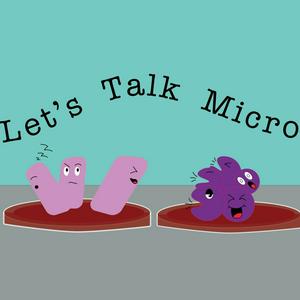
Clinical microbiology explained in simple terms, suitable for students and microbiologists alike. We discuss organisms, reactions, infectious diseases, and more. Hosted by Luis Plaza, a Medical Laboratory Scientist and microbiologist, who also shares his experiences in the field.
Sitio web del podcastEscucha Let's Talk Micro, Date Un Vlog Oficial y muchos más podcasts de todo el mundo con la aplicación de radio.net
Descarga la app gratuita: radio.net
- Añadir radios y podcasts a favoritos
- Transmisión por Wi-Fi y Bluetooth
- Carplay & Android Auto compatible
- Muchas otras funciones de la app
Descarga la app gratuita: radio.net
- Añadir radios y podcasts a favoritos
- Transmisión por Wi-Fi y Bluetooth
- Carplay & Android Auto compatible
- Muchas otras funciones de la app
Let's Talk Micro
Escanea el código,
Descarga la app,
Escucha.
Descarga la app,
Escucha.
 México