
Escucha gratis este podcast en la aplicación: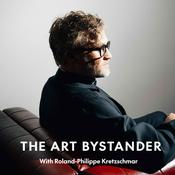 Descarga gratuita en la App Store
radio.net
Sleep timer
Favoritos
58 episodios
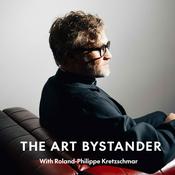
#58 Jordan Roth & Adam Charlap Hyman
24/10/2026 | 44 minJordan Roth spent years helping other people bring their creative visions to the stage. Eventually, he began to miss his own. His route back started with something he could practise every day: getting dressed.
Recorded in Paris during Art Basel week in October 2026, this episode brings together the artist, actor and seven-time Tony Award-winning theatre producer and designer Adam Charlap Hyman for a conversation with Roland-Philippe Kretzschmar about identity, performance and the emotional lives of objects.
Their starting point is Roth’s exhibition To Think of the Tranquil Life of Things, designed by Charlap Hyman & Herrero. Before leaving the New York apartment where he had lived for 15 years, Roth was photographed wearing clothes from different chapters of his life. Those photographs became collages printed onto silk crepe and draped over furniture, giving physical form to the memories held within a home. The exhibition takes its title from Georges Perec’s Life: A User’s Manual.
Roth speaks candidly about being a child who struggled to make sense to others, finding belonging on stage, and the professional uniform that eventually began to feel restrictive. He explains why performance is a way of revealing himself, and why he now imagines identity as an expanding circle that continues to contain earlier versions of a life.
Charlap Hyman describes translating the apartment into a Parisian exhibition, where rooms and objects recur in altered forms. Together, they consider the home as a self-portrait, collecting as a means of changing ourselves, and the difficulty of distinguishing our own instincts from other people’s expectations.
There are also deeply personal memories: a chair where Roth fed his baby, a kitchen sink used for a first bath, and a child making music with his great-grandmother.
To Think of the Tranquil Life of Things is presented in partnership with Salon 94 Design and Design Miami at 72 rue de l’Université, Paris, from 20 to 25 October 2026.
Hosted on Acast. See acast.com/privacy for more information.#57 Emilia De Stasio
21/10/2026 | 52 minYou can love a work of art and still question its price. You can support an artist and still want to understand what happens when you need to sell.
In this episode of The Art Bystander, Roland-Philippe Kretzschmar joins collector and Artscapy co-founder Emilia De Stasio in London for a conversation about the emotional convictions and financial decisions that shape a collection.
With a background spanning the European Central Bank, Moody’s and technology investment, Emilia brings an analytical eye to a deeply personal pursuit. Together with her husband, Alessandro, she owns around 200 works, with one firm rule: they buy living artists. Their collection explores identity, social politics and the relationship between humanity and the natural world.
We discuss what draws her to difficult, demanding art; how galleries and institutions influence an artist’s market; and the uncomfortable gap between buying a work and being able to sell it. We also examine why useful technology can struggle to gain acceptance in an industry built on personal relationships.
Those questions led the couple to establish Artscapy. Now, the platform is entering the auction market: its first Modern and Contemporary Art sale runs online from 2–12 November 2026, with 0% seller commission and a 16% buyer’s premium.
I ask Emilia whether those economics are sustainable, how the model serves collectors over time, and what support remains when a work fails to sell. Throughout our conversation, one question persists: whose interests does the art market actually serve?
Hosted on Acast. See acast.com/privacy for more information.#56 Valerio Polimeno & David Rotschild
18/10/2026 | 25 minWhat happens when you spend enough time with a painting to imagine living with it? In this episode of The Art Bystander, our host Roland-Philippe Kretzschmar speak with David Rothschild, Sotheby’s Head of Contemporary Art Private Sales in the UK and Global Lead for Private Sales Exhibitions, and Valerio Polimeno, founder of _POLIMENO, about Chez Sotheby’s.
Taking place from 19–24 October during Art Basel Paris, the project brings nearly $150 million of art into an apartment on Rue de Rivoli overlooking the Jardin des Tuileries. Works by Picasso, Matisse, Warhol, Richter, Bacon and others inhabit rooms conceived for dining, conversation and the pleasure of looking. The curation is just perfect.
Our conversation follows the collaboration from its beginnings in Gstaad and London to the personal experiences that shaped Valerio’s approach to hospitality. He recounts how a dismissive remark about the pasta served at an earlier exhibition helped inspire this project, and why creating a welcoming space begins with the intentions of its hosts.
David discusses sourcing works from private collections and the connections that emerge when different periods share a room. Among them is a pairing both guests would happily take home: Degas’s ballerinas and a painting by Cecily Brown, whose encounters with Degas helped inspire her work.
We also discuss the business behind the invitation. Everything is available for private sale, and the setting allows collectors to consider art within the rhythms of everyday life. Drawing on Paris’s history of salons, homes and restaurants, Chez Sotheby’s asks how the company we keep, the rooms we inhabit and the time we give a work might influence what we see.
Chez Sotheby’s | Paris | 19–24 October 2026
Viewing enquiries: chezsothebys@sothebys.com
Address supplied on request.
Exhibition details and catalogue:
https://www.sothebys.com/en/digital-catalogues/chez-sothebys
Hosted on Acast. See acast.com/privacy for more information.#55 Karen Boros
12/10/2026 | 29 minCollector Karen Boros joins Roland-Philippe Kretzschmar in the latest episode of The Art Bystander podcast. Karen Boros and her husband Christian began by collecting artists of their own generation. As they grew older, they made a deliberate decision to keep following younger artists, eventually those of their son’s generation. Collecting became a way of staying engaged with experiences and ideas beyond their own.
That willingness to remain curious runs through our conversation, recorded in Karen’s home above the Boros bunker in Berlin, after she had taken us through the collection downstairs.
Opened to the public in 2008, the collection occupies a former air-raid shelter that has also served as a prison, a warehouse and a techno club. Its changing presentations bring contemporary art into spaces where the building’s history remains impossible to ignore.
Karen’s experience extends across several parts of the art world. With a background in psychology and art history, she worked in galleries before joining Art Basel in 2005, working in VIP relations for Germany. Alongside building the collection with Christian, she has spent years engaging with other collectors and the relationships through which people find their way into art.
She is candid about how their own decisions happen. “Sometimes I think we should have a strategy, but we don’t,” she tells me. The collection grows through exhibitions, encounters and conversations, supported by longstanding trust in particular galleries.
I wanted to explore how an initial interest becomes a lasting commitment to an artist. What gives you confidence in a practice? What happens when it develops in a direction you hadn’t expected? And what can collectors contribute through the works they buy, the projects they support and the audiences they help artists reach?
Karen makes a point about galleries that deserves more attention: they produce exhibitions that anyone can visit for free. She also speaks about the importance of a work leaving the studio, being seen and entering into discussion. Supporting art involves making those encounters possible.
We talk about Berlin’s changing artistic communities, the challenge of encouraging younger people to collect, and the care involved in opening a private collection to the public. Some people arrive at the bunker knowing the artists; others come for the building and discover the art.
Karen calls them guests. By the end of our conversation, you understand how much work goes into making that word meaningful.
Hosted on Acast. See acast.com/privacy for more information.#54 Lidewij Edelkoort & Philip Fimmano
09/10/2026 | 53 minLidewij Edelkoort on how long trends really take
“Most of the time we only work on the long-term trend. Because the short TikTok things, for a few weeks, are not really interesting in the long run. They just give shape to the big movement. Recently, I showed my books to a publisher and we came to the conclusion that most trends take 20 to 25 years to arrive and to really blossom.”
What happens when we give ourselves permission to play, make mistakes and follow an idea before we know where it will lead? Recorded at Hotel Diplomat in Stockholm, this episode of The Art Bystander brings together host Roland-Philippe Kretzschmar, trend forecaster, publisher and educator Lidewij Edelkoort, and design curator, author and trend analyst Philip Fimmano.
Lidewij Edelkoort on trusting intuition
“I have given my intuition the sole power to give me the messages. So it’s almost something which is working outside my body and my own spirit. It’s going around without me even knowing it is. So it’s completely subconscious, doing its work, and then I just have to say, ‘Thank you very much. This is a very good idea.’ And I do believe that ultimately our intuition is not ours. It’s our common field, which is this big field of experience and soul processes which are around us.”
Their exhibition, INNER CHILD: Playing with Design at Artipelag, provides the starting point for a conversation about childhood, intuition, craftsmanship and the human need to create.
Philip Fimmano on play and the freedom to make mistakes
“Being experimental and taking risks and not being afraid of making mistakes or starting again. These are all the lessons that you learn when you’re playing with toys or even art materials as a child. It’s hard if you’re a perfectionist, like Li and me, but I think through the exhibition we’ve learned how to let go a little bit more. We’re also in a time frame now where everything doesn’t have to be perfect all the time. You can allow yourself to be a bit more playful or express a sense of humour and not take everything so seriously."
Edelkoort explains why the cultural changes she identifies can take 20 to 25 years to become fully established. Fimmano reflects on experimentation, the freedom to begin again and how designers have reconsidered their priorities since the pandemic.
Lidewij Edelkoort on craft and the need for touch
“I believe that people want to speak about craft more as a unique discipline because we need to rekindle it. […] Craft is not just a word like design and art. It’s almost a mentality. […] Our fingers are sort of thirsty for touch. So I guess this is why craft is now so prominent.”
Together, we discuss fashion’s relentless overproduction, the increasingly fluid boundaries between art, craft and design, and how AI might reshape work and education. We also explore Edelkoort’s “age of the amateur”: a possible future in which learning, making and shared interests occupy a larger place in our lives.
Philip Fimmano on the “age of the amateur”
“This is what Li calls the age of the amateur, because we’re going to be embracing hobbies and learning and craft like never before, where it becomes our main focus. In our spare time, so-called free time, we’re going to be investing in learning more, in becoming better at a certain technique or a certain pastime. The idea of cottage industries and doing things at home, and interacting with others, coming together as groups and socialising, all of this is going to be based on this idea that we’re all amateurs and lovers of certain things, and that we then invest ourselves in them like never before.”
INNER CHILD: Playing with Design brings together more than 200 objects by over 100 designers and studios from 23 countries. On view at Artipelag, outside Stockholm, from 10 October 2026 to 11 April 2027.
Hosted on Acast. See acast.com/privacy for more information.
Más podcasts de Arte









Podcasts a la moda de Arte















Acerca de The Art Bystander
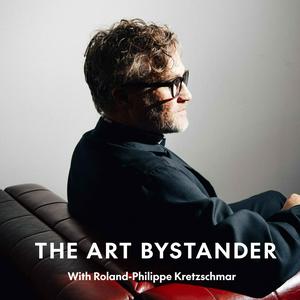
Meet the individuals who drive the art industry today and tomorrow; from artists to gallerists, curators, financial backers, advisors, collectors, and more. Hosted by Roland-Philippe Kretzchmar.More on www.theartbystander.com and www.instagram.com/theartbystander Hosted on Acast. See acast.com/privacy for more information.
Sitio web del podcastEscucha The Art Bystander, El Arte de la Guerra de Sun Tzu y muchos más podcasts de todo el mundo con la aplicación de radio.net
Descarga la app gratuita: radio.net
- Añadir radios y podcasts a favoritos
- Transmisión por Wi-Fi y Bluetooth
- Carplay & Android Auto compatible
- Muchas otras funciones de la app
Descarga la app gratuita: radio.net
- Añadir radios y podcasts a favoritos
- Transmisión por Wi-Fi y Bluetooth
- Carplay & Android Auto compatible
- Muchas otras funciones de la app
The Art Bystander
Escanea el código,
Descarga la app,
Escucha.
Descarga la app,
Escucha.
 México

