

Escucha gratis este podcast en la aplicación: Descarga gratuita en la App Store
radio.net
Sleep timer
Favoritos
Hearing Jesus: Daily Bible Study and Christian Affirmations
Rachael Groll
Último episodio
1629 episodios
Sunday Daily Affirmations: Inviting God Into Every Moment | Preparation and Trust
20/09/2026 | 9 minSunday Daily Affirmations: Inviting God Into Every Moment |
Preparation and Trust
Sunday is for looking ahead with God. Before the week begins, we pause and place what's coming into His hands. These Scripture-based Christian
affirmations are a steady way to enter the week grounded, attentive, and
trusting God to lead you one day at a time.
I'll say each affirmation, pause so you can repeat it after me, and then
read the Bible verse it comes from.
Links
AD-FREE Daily Affirmations are on my Patreon: Patreon
Join me on an immersive Bible Study Experience. Learn more at BibleStudyLive.org
Have a question? Leave me a voicemail: SpeakPipe
Sunday affirmations and Scripture
I place this coming week in God's hands.
Psalm 31:15 — "My times are in Your hands."
I trust God to guide my steps.
Psalm 37:23 — "The Lord makes firm the steps of the one who delights
in Him."
I enter this week with expectancy, not fear.
Romans 15:13 — "May the God of hope fill you with all joy and peace as
you trust in Him."
I invite God into every moment ahead.
Proverbs 16:3 — "Commit to the Lord whatever you do."
I trust God to order my priorities.
Matthew 6:33 — "Seek first His kingdom and His righteousness."
I receive God's wisdom for the days ahead.
James 1:5 — "If any of you lacks wisdom, you should ask God."
I walk into this week anchored in truth.
Psalm 119:105 — "Your word is a lamp to my feet."
I trust God with what I cannot foresee.
Isaiah 46:10 — "I make known the end from the beginning."
I choose faith over anticipation of stress.
Psalm 56:3 — "When I am afraid, I put my trust in You."
I rely on God's grace for each day.
2 Corinthians 12:9 — "My grace is sufficient for you."
I trust God's timing this week.
Habakkuk 2:3 — "Though it linger, wait for it."
I remain open to God's leading.
Psalm 25:4 — "Show me Your ways, Lord."
I step forward with humility and trust.
Micah 6:8 — "What does the Lord require of you? To walk humbly with
your God."
I depend on God's strength, not my own.
Psalm 68:35 — "God gives strength and power to His people."
I trust God with every conversation and decision.
Proverbs 20:24 — "A person's steps are directed by the Lord."
I choose obedience over control.
John 14:23 — "Anyone who loves Me will obey My teaching."
I walk into this week aware of God's presence.
Exodus 33:14 — "My Presence will go with you."
I trust God to work through ordinary moments.
Zechariah 4:10 — "Do not despise these small beginnings."
I release anxiety about outcomes.
Psalm 112:7 — "They will have no fear of bad news."
I remain attentive to God's voice.
John 10:27 — "My sheep listen to My voice."
I trust God to meet my needs.
Philippians 4:19 — "My God will meet all your needs."
I step into this week with courage.
Psalm 31:24 — "Be strong and take heart."
I trust God to shape my character.
Romans 8:29 — "To be conformed to the image of His Son."
I begin this week grounded in hope.
Hebrews 6:19 — "We have this hope as an anchor for the soul."
I rest in God's faithfulness as I move forward.
Psalm 33:4 — "The word of the Lord is right and true."
Closing prayer
God, as I step into this new week, I place everything ahead of me in Your
care. Go before me, guide my steps, and help me stay attentive to You. I trust
You with what's coming, one day at a time. Amen.
Learn more about your ad choices. Visit megaphone.fm/adchoicesSaturday Daily Affirmations: Looking Back with God | Reflection and Gratitude
19/09/2026 | 11 minSaturday Daily Affirmations: Looking Back with God | Reflection and
Gratitude
Saturday is a good day to slow down and look back over your week with
God. Not to replay everything or overthink it, but to notice where He met you, where He carried you, and where His grace showed up. These Scripture-based Christian affirmations are a gentle way to reflect with honesty and gratitude before the new week begins.
I'll say each affirmation, pause so you can repeat it after me, and then
read the Bible verse it comes from.
Links
AD-FREE Daily Affirmations are on my Patreon: Patreon
Join me on an immersive Bible Study Experience. Learn more at BibleStudyLive.org
Have a question? Leave me a voicemail: SpeakPipe
Saturday affirmations and Scripture
I thank God for walking with me through this week.
Psalm 143:10 — "Teach me to do Your will, for You are my God; may Your
good Spirit lead me on level ground."
I recognize God's faithfulness in both the seen and unseen moments.
Psalm 77:11 — "I will remember the deeds of the Lord; yes, I will
remember Your miracles of long ago."
I release regret and receive God's grace.
Psalm 32:5 — "Then I acknowledged my sin to You... and You forgave the
guilt of my sin."
I trust that God was at work even when I didn't notice.
Ecclesiastes 3:11 — "He has made everything beautiful in its
time."
I give thanks for the strength God provided each day.
Psalm 28:7 — "The Lord is my strength and my shield; my heart trusts in
Him, and He helps me."
I acknowledge where I grew this week.
2 Peter 3:18 — "Grow in the grace and knowledge of our Lord and Savior
Jesus Christ."
I notice where God invited me to trust Him more deeply.
Psalm 37:5 — "Commit your way to the Lord; trust in Him and He will do
this."
I receive God's mercy for where I fell short.
Micah 7:18 — "You delight in mercy."
I choose gratitude over self-criticism.
1 Thessalonians 5:18 — "Give thanks in all circumstances."
I honor the work God has been doing in my heart.
Philippians 1:6 — "He who began a good work in you will carry it on to
completion."
I acknowledge God's presence in ordinary moments.
Psalm 16:11 — "You make known to me the path of life."
I release this week into God's care.
Psalm 55:22 — "Cast your cares on the Lord and He will sustain
you."
I trust God with what remains unfinished.
Proverbs 16:9 — "In their hearts humans plan their course, but the Lord
establishes their steps."
I thank God for His patience with me.
Psalm 103:8 — "The Lord is compassionate and gracious, slow to anger,
abounding in love."
I rest in the truth that God sees me fully.
Hebrews 4:13 — "Nothing in all creation is hidden from God's
sight."
I choose to end this week with gratitude.
Psalm 92:1 — "It is good to give thanks to the Lord."
I release comparison and embrace contentment.
Hebrews 13:5 — "Be content with what you have, because God has said,
'Never will I leave you.'"
I acknowledge God's protection this week.
Psalm 121:7 — "The Lord will keep you from all harm."
I thank God for His provision.
Matthew 6:31-32 — "Your heavenly Father knows that you need them."
I recognize God's quiet guidance.
Isaiah 30:21 — "This is the way; walk in it."
I let go of striving and receive rest.
Psalm 23:2 — "He leads me beside quiet waters."
I honor the limits God has given me.
Psalm 127:2 — "He grants sleep to those He loves."
I trust God with what I do not understand.
Romans 11:33 — "Oh, the depth of the riches of the wisdom and knowledge
of God."
I receive peace as I reflect with God.
Psalm 4:7 — "You have filled my heart with greater joy."
I end this week grounded in God's faithfulness.
Lamentations 3:23 — "Great is Your faithfulness."
Closing prayer
God, thank You for walking with me through this week. Help me to see Your
faithfulness clearly and to release what I need to let go of. I trust that You
were present in ways I noticed and in ways I didn't. I place this week back
into Your hands. Amen.
Learn more about your ad choices. Visit megaphone.fm/adchoicesFRIDAY BONUS: Who is Rachael and How Did the Hearing Jesus Podcast Start?
18/09/2026 | 42 minWho is Rachael and How Did the Hearing Jesus Podcast Start?
This bonus Friday episode is an introduction to Rachael and the Hearing Jesus podcast for all our new listeners. Rachael explains what listeners can expect each week, why the show is structured the way it is, and how her own story shaped the heart of the podcast. She also shares her testimony, the origins of the show, and the vision behind Bible Study Live and the wider Hearing Jesus community.
Send Rachael a voicemail with any questions at her SpeakPipe here
Go on a trip with Rachael: Bible Study Live
Get Ad-Free Episodes, Bonus Content, and more here: patreon.com/HearingJesus
Chapters
00:00 - What this bonus Friday episode is about
01:01 - Why the podcast had extra bonus content this week
01:49 - The normal weekly rhythm of affirmations and Bible study
03:11 - Why interviews became more selective
05:05 - Final call for unclaimed giveaway winners
06:48 - Rachel’s calling to help people hear God’s voice
08:03 - Early life, marriage, divorce, and healing
09:25 - Ministry training, education, and early church work
10:55 - Leaving the daycare and stepping into church leadership
12:07 - From children’s ministry to outreach and justice work
13:02 - Starting Sidewalk Sunday School in hard parts of town
14:27 - The first empty bus and learning to keep going
15:24 - Why outreach grew beyond kids into food, housing, and care
16:23 - Missions work around the world
17:16 - Pushback over preaching Jesus in the housing community
18:30 - One conversation that changed everything
19:27 - Fighting back and regaining gospel access
19:56 - Writing Go and speaking about outreach ministry
20:48 - The message that became She Hears
22:37 - Starting the podcast during COVID
23:33 - Asking whether the podcast was worth the work
24:25 - Treating the podcast like the church
26:48 - Full-time missions work and global ministry
28:29 - Why immersive Bible study trips became the next step
29:28 - How Bible Study Live began with Rome
31:42 - Adding Maui and planning Greece
32:35 - The heart behind immersive Bible study
33:31 - Finding older episodes and sending questions
34:52 - Organizing the episode library through Patreon
35:52 - SpeakPipe questions and prayer requests
36:21 - Encouragement for listeners facing discouragement
37:16 - Closing resources and final thoughts
Notable quotes
“The call of God on my life was not instant.”
“God’s word does not come back void.”
Learn more about your ad choices. Visit megaphone.fm/adchoicesFavored Is Not the Same Thing as Favorite (Luke 1:26-38)
18/09/2026 | 44 minFavored Is Not the Same Thing as Favorite (Luke 1:26-38)
Have you ever wondered why, if you are really favored by God, life still feels this hard? A lot of us quietly carry that question. We hear that God favors His people, and then we look at our circumstances and feel confused, overlooked, or unqualified. The story of Mary clears up something we have gotten mixed up for a long time.
In this episode we slow down in Luke 1:26-38, the moment the angel Gabriel visits Mary, and we sit with one word that changes everything: favored. Being favored by God is not the same thing as being His favorite, and once you see the difference, it changes how you read your own life. This is the second stop in our slow read through the Gospel of Luke.
"And coming in, he said to her, 'Greetings, favored one! The Lord is with you.'" (Luke 1:28, NASB)
Links
Join me on an immersive Bible Study Experience. Learn more at https://biblestudylive.org
Leave me a voicemail with your question for the series: SpeakPipe
Download the free SEEDS app and take one small step today: plant your first seed and see what God can grow. SEEDS APP
What does "favored" actually mean in Luke 1:28?
The word behind favored comes from the Greek word for grace. It describes someone who has been given grace, not someone who earned a gold star. When Gabriel calls Mary the favored one, he is not saying she out-performed every other woman alive. He is saying God freely poured out grace on her. Favor starts with God's character, not our performance.
Is being favored the same as being God's favorite?
This is where so many of us get tripped up. A favorite is earned. Think of the favorite student or the favorite child, the one who won the spot by their grades or their effort. Favored is the opposite. It is a free gift, and in Scripture it is tied to being given a purpose, not to comfort or ease. Mary was favored, and it led straight into a hard, costly assignment.
Why would God favor a girl from Nazareth?
Nazareth was a small, overlooked town with no reputation. Later in John's Gospel, someone asks whether anything good could come from there. That is the point. Out of every place and every person God could have chosen, He chose the girl nobody would have picked, because His favor has never been about status or standing.
What did being favored cost Mary?
Betrothal was far more than a modern engagement. It was a legally binding contract, essentially marriage in every way except living together. A pregnancy that was not her husband's could expose Mary to public disgrace and real danger. Her favor came wrapped in risk. That is the piece we miss when we treat favor like a reward for good behavior.
Why did Gabriel respond to Mary so differently than to Zechariah?
When Gabriel appeared to Zechariah, fear fell on him and he asked for proof. Mary was troubled too, but her response was to ponder, to turn the words over and work through them. Zechariah was older, credentialed, and established. Mary was young with no title or standing. Yet she is the one who trusted. God's favor and His ability to use us have nothing to do with our credentials.
What does favor look like when you say "let it be"?
Mary's words, let it be, came before she knew how any of it would work out. She still had to face Joseph, her town, and the math everyone would do on her pregnancy. Being favored did not remove the cost. It gave her the grace to trust God inside the cost. That is the invitation for us too, to trust Him so deeply that even when it does not make sense, we can say, let it be.
Common Questions
What passage does this episode cover?
Luke 1:26-38, Gabriel's visit to Mary. It is the second teaching episode in the slow read through the Gospel of Luke.
What Bible translation does Rachael use?
Rachael reads from the ESV while using the color method and studies and teaches from the NASB, so you may hear small wording differences during the teaching.
What is the color method?
A simple Bible study approach Rachael teaches in the Bible Study 101 series for marking and noticing patterns in a passage as you read slowly.
How can I send a question for the Luke series?
Leave a voicemail through the SpeakPipe link above or email Rachael. Some questions get answered in future Q and A episodes.
Learn more about your ad choices. Visit megaphone.fm/adchoicesFriday Daily Affirmations: Fully Known by God | Rest, Renewal, and Surrender
18/09/2026 | 11 minFriday Daily Affirmations: Fully Known by God | Rest, Renewal, and
Surrender
End your week anchored in peace and presence. These Scripture-based
Christian affirmations are a short, steady way to set down what you've been
carrying and find rest in God's care. Today's affirmations are about releasing
your burdens, letting go of striving, and remembering that God's strength,
love, and renewal are available right where you are. It's time to stop striving
and start resting in His goodness.
I'll say each affirmation, pause so you can repeat it after me, and then
share the Scripture it comes from.
Links
AD-FREE Daily Affirmations are on my Patreon: Patreon
Join me on an immersive Bible Study Experience. Learn more at BibleStudyLive.org
Have a question? Leave me a voicemail: SpeakPipe
Before we begin
The week is ending, and as we step into the weekend, let's take a moment to
breathe. Release your burdens and rest in God's presence. We're not meant to carry everything ourselves. God calls us to lay our worries at His feet and
find renewal in Him.
Friday affirmations and Scripture
I release my worries and trust God to handle what I cannot.
1 Peter 5:7
God's peace fills my heart and I rest in His presence.
Matthew 11:28
I am not defined by my mistakes. God's grace is greater than my failures.
Lamentations 3:22-23
I let go of the need to control everything and surrender to God's perfect
plan.
Proverbs 3:5-6
I am deeply loved by God and nothing can separate me from His love.
Romans 8:38-39
God refreshes my soul and renews my strength.
Isaiah 40:31
I will be fully present today, trusting that God holds tomorrow.
Matthew 6:34
My body, mind, and spirit find rest in God alone.
Psalm 62:1
I let go of striving and choose to rest in God's love.
Zephaniah 3:17
I step into the weekend with joy, knowing that God is in control.
Psalm 118:24
God's presence is my safe place.
Psalm 91:1
I am fully known and fully loved by God.
Psalm 139:1-2
I will not let stress steal my peace today.
Philippians 4:6-7
God is my refuge and I am safe in His hands.
Psalm 46:1
I do not need to have all the answers. I trust God.
Romans 11:33
God is fighting my battles and I can rest in His victory.
Exodus 14:14
I will not fear because God is with me.
Isaiah 41:13
I am held together by God's love even when life feels overwhelming.
Colossians 1:17
God's goodness and mercy follow me every day.
Psalm 23:6
I will not carry burdens that God has already taken from me.
Matthew 11:29-30
I am at peace because God is in control.
Isaiah 26:3
I trust in God's timing even when I don't understand.
Ecclesiastes 3:11
I will lay down my burdens and take on God's.
Psalm 4:8
I am never alone for God is always with me.
Deuteronomy 31:6
No matter what happens today, God is still good.
Nahum 1:7
Closing prayer
Father, as this week comes to an end, I lay my burdens at Your feet. Help me
to release my worries, rest in Your peace, and trust You with everything I
cannot control. Refresh my heart and renew my spirit so I can step into the
weekend with joy. In Jesus' name, amen.
I hope these affirmations spoke to your heart today. If you want to go
deeper, just keep listening. Your full Bible study episode is coming up next.
Listen daily and start your morning with God's truth so you can walk in
faith, clarity, and confidence.
Learn more about your ad choices. Visit megaphone.fm/adchoices
Más podcasts de Cristianismo
 Iglesia Bautista InternacionalCristianismo, Religión y espiritualidad
 Meditación del DíaCristianismo, Religión y espiritualidad, Salud mental, Salud y forma física
 Hablar con DiosCristianismo, Espiritualidad, Religión, Religión y espiritualidad
 Aviva Nuestros CorazonesCristianismo, Religión y espiritualidad
 365 con DiosCristianismo, Religión y espiritualidad
 La Biblia en un Año (con Fray Sergio Serrano, OP)Cristianismo, Historia, Religión y espiritualidad
 Iglesia Biblica del Señor JesucristoCristianismo, Religión y espiritualidad
 Rosario del DíaCristianismo, Educación, Ocio, Pasatiempos, Religión y espiritualidad, Tutoriales
 La Historia de Tu HistoriaCristianismo, Religión y espiritualidad
 El Santo RosarioCristianismo, Religión y espiritualidad
Podcasts a la moda de Cristianismo
 Piedras Vivas - Estudio de la BibliaCristianismo, Religión y espiritualidad
 Revive Our HeartsCristianismo, Religión y espiritualidad
 Evangelio Católico del DíaCristianismo, Religión y espiritualidad
 Joyce Meyer Enjoying Everyday Life® TV Audio PodcastCristianismo, Religión y espiritualidad
 GodCast.mx - Un ratito con JesúsCristianismo, Religión y espiritualidad
 Grace en Español Sermon PodcastCristianismo, Religión y espiritualidad
 ExpuestasCristianismo, Religión y espiritualidad
 Entre SemanaCristianismo, Religión y espiritualidad
 Sunday Homilies with Fr. Mike SchmitzCristianismo, Religión y espiritualidad
 Crianza Reverente: Tú y tus hijos delante de DiosCristianismo, Religión y espiritualidad
 Encuentro & Conexión - ELPCristianismo, Religión y espiritualidad
Acerca de Hearing Jesus: Daily Bible Study and Christian Affirmations
Do you ever wonder whether you're actually hearing God's voice, or whether it's just your own? Have you been in a season where He feels completely silent?
Hosted by Rachael Groll, the Hearing Jesus Podcast brings together daily Bible study, Christian affirmations, prayer, and spiritual growth to help you hear God more clearly and go deeper with Him. Each episode opens the Bible through historical context, Spirit-led teaching, and honest encouragement, so you can understand Scripture, strengthen your faith, and live it out in ordinary days.
Episodes cover daily devotionals, Christian prayer, Bible teaching, hearing the Holy Spirit, emotional healing, identity in Christ, and learning to recognize God's direction in a noisy world.
Whether you're looking for a daily devotional podcast, Christian encouragement, Bible study for women, or practical teaching on hearing God and following Jesus, this is a place to grow.
Sitio web del podcastEscucha Hearing Jesus: Daily Bible Study and Christian Affirmations, Iglesia Bautista Internacional y muchos más podcasts de todo el mundo con la aplicación de radio.net
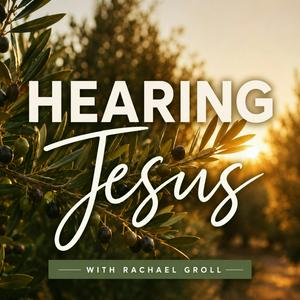
Descarga la app gratuita: radio.net
- Añadir radios y podcasts a favoritos
- Transmisión por Wi-Fi y Bluetooth
- Carplay & Android Auto compatible
- Muchas otras funciones de la app
Descarga la app gratuita: radio.net
- Añadir radios y podcasts a favoritos
- Transmisión por Wi-Fi y Bluetooth
- Carplay & Android Auto compatible
- Muchas otras funciones de la app
Hearing Jesus: Daily Bible Study and Christian Affirmations
Escanea el código,
Descarga la app,
Escucha.
Descarga la app,
Escucha.
Hearing Jesus: Daily Bible Study and Christian Affirmations: Podcasts del grupo
 México