
Escucha gratis este podcast en la aplicación: Descarga gratuita en la App Store
radio.net
Sleep timer
Favoritos
26 episodios
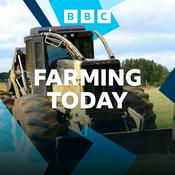
27/10/2026: CO2 Consultation, Solar Robot Weeder; Rat Catcher
27/10/2026 | 13 minThe government should suspend the consultation it launched yesterday on phasing out the use of carbon dioxide in the slaughter of pigs, according to AIMS - the Association of Independent Meat Suppliers. It's written to the Secretary of State warning that the move could put British producers at a disadvantage, as other countries - including the EU where the vast majority of pig meat imported into the uk is from - will continue to use co2. It wants the consultation process paused while discussions with the EU on closer alignment of the rules continue.
This week we're looking at pests on farm - and how to safely, humanely and legally get rid of them. Today, rats on a farm in Scotland, and the controller on why they're becoming more of a problem.
And the solar powered weeding robot that's a cousin of the ExoMars rover heading to Mars.
Presented by Charlotte Smith and produced by Sally Challoner.26/10/26 Consultation to end painful pig slaughter, pest control, farmers' choir
26/10/2026 | 11 minA consultation on phasing out the use of carbon dioxide in the slaughtering process for pigs is launched today. The vast majority of pigs in the UK are stunned using CO2 but last year the government announced plans to move away from using the gas, following an independent report which said that the practice causes pain, respiratory distress and fear in conscious pigs and should be replaced. The National Pig Association tells us the industry accepts that CO2 is on the way out, but wants a realistic timeline.
This week we're going to tackle rats, mice, moles and more: those animals which when found in the wrong place, like a farm, are pests. It's not a new problem but changing legislation and the changing climate are bringing new challenges, as the British Pest Control Association explains.
We hear from the Farmers' Choir Northern Ireland who've just won a national music award, recognised for 'bringing farmers and rural communities together through music, friendship and mutual support'.
Presented by Charlotte Smith and produced by Beatrice Fenton.Farming Today This Week 24/10/26 Wildfires; agri-environment schemes; orchards & agroforestry; pumpkins; winter strawberries.
24/10/2026 | 24 minWildfires have been on the political menu this week with a report from MPs criticising the lack of a National Wildfire Strategy, followed by wildfire summits in England and Wales, and an announcement from the Prime Minister of ‘initial steps to improve our response’. Andy Burnham announced £45 million of extra funding to better equip firefighters and said military aircraft would be available to help tackle wildfires. Earlier this week MPs on the Environment Food and Rural Affairs Committee published a report saying the UK was not ready for the next fire season.
At its summit the Welsh Government said it would bring in international expertise, and create a register for farmers and landowners are able to help fight fires.
The scramble online for funding under the Sustainable Farming Incentive or SFI left thousands of farmers with nothing. Some had technical problems, others were too late. SFI funding pays farmers for improving the environment. Those who weren't successful will have to decide whether to stop managing their land for the environment or carry on without payments. The Secretary of State tells us she's working with farmers to avoid a repeat of this year's funding application chaos.
We visit a Herefordshire farmer who was seriously considering grubbing up her 22 acre intensive orchard. Instead she thinned out the trees and introduced an agroforestry system.
UK strawberries at Christmas? It doesn't seem likely, but one Worcestershire farmer says his growing season now stretches to December. He's worried that fruit will be wasted as supermarkets aren't used to local supplies being available so late in the year.
We meet a farmer who's growing pumpkins - not for Halloween but for seeds.
Presenter = Charlotte Smith
Producer = Rebecca Rooney23/10/26 Wild fire summit, Farming for the Future award winner, picking plums by rowing boat
23/10/2026 | 13 minA wildfire summit is being held today in Westminster, bringing together government departments and agencies to work out plans to address future fires.
We announce the winner of the BBC Food and Farming Awards' Farming for the Future winner, Bronagh O’Kane.
And picking plums by rowing boat: the Tregothnan estate in Cornwall has a very unusual micro climate on the Fal estuary, allowing a rare variety of plum to grow. The Kea plum is small and similar to a damson and very unusually grows so close to the waterside that some trees are harvested from the water.
Presented by Anna Hill and produced by Beatrice Fenton.22/10/26 Grazing and arable, apples and agroforestry, BBC Food & Farming Awards
22/10/2026 | 14 minFarmers in Scotland have been taking part in a four year scheme to get more arable farmers to have sheep on their land. Instead of leaving fields bare over winter, cereal growers have been planting cover crops, things like oats or turnips. They then invite a shepherd to graze sheep on the fields. The sheep farmer gains extra grazing, and for the arable farmer, the sheep help fertilise the soil, keep down the weeds, and get rid of the cover crop by the end of the season.
All week we're taking a closer look at the top fruit harvest - that means apples, pears and plums. Keeping an orchard profitable can be difficult at the best of times. We visit a Herefordshire farmer who was seriously considering grubbing up her 22 acre intensive orchard. Instead she thinned out the trees and introduced an agroforestry system.
We celebrate some of the winners in this year's BBC Food and Farming Awards
Presenter = Anna Hill
Producer = Rebecca Rooney
Más podcasts de Ciencias









Podcasts a la moda de Ciencias




















Acerca de Farming Today
The latest news about food, farming and the countryside
Sitio web del podcastEscucha Farming Today, Jefillysh: Ciencia Simplificada y muchos más podcasts de todo el mundo con la aplicación de radio.net
Descarga la app gratuita: radio.net
- Añadir radios y podcasts a favoritos
- Transmisión por Wi-Fi y Bluetooth
- Carplay & Android Auto compatible
- Muchas otras funciones de la app
Descarga la app gratuita: radio.net
- Añadir radios y podcasts a favoritos
- Transmisión por Wi-Fi y Bluetooth
- Carplay & Android Auto compatible
- Muchas otras funciones de la app

Farming Today
Escanea el código,
Descarga la app,
Escucha.
Descarga la app,
Escucha.
Farming Today: Podcasts del grupo
 México