
Escucha gratis este podcast en la aplicación: Descarga gratuita en la App Store
radio.net
Sleep timer
Favoritos
223 episodios
Infections, Vaccines, and GLP-1s for Hypermobility with Dr. Ina Stephens | Ep 219
22/10/2026 | 1 h 13 minIf an infection triggered your mast cell activation syndrome (MCAS), Sjögren’s, or dysautonomia, can treating that infection reverse it?
In this episode of the Bendy Bodies Podcast, Dr. Linda Bluestein and Dr. Ina Stephens answer a listener questions.
Dr. Stephens explains molecular mimicry and how a virus like Epstein-Barr can set off autoimmune conditions such as Sjögren’s in genetically predisposed people, and why killing the infection does not undo that autoimmune cascade. The conversation then moves into one of the most charged topics in the chronic illness world: vaccines. She shares an evidence-based view on the shingles vaccine, flu shots, and COVID boosters, who should be cautious, and why reaching for ibuprofen after a shot can blunt your immune response (reach for acetaminophen instead). Finally, Dr. Bluestein and Dr. Stephens dig into GLP-1 medications like tirzepatide and semaglutide, and the surprising, still-anecdotal reports that microdoses as low as a fraction of the weight-loss dose may calm refractory MCAS, inflammation, and pain. This episode offers practical, hopeful information for anyone told there’s “nothing you can do.”
Takeaways:
If an infection set off your Sjögren’s or MCAS, can treating it make the condition disappear? The answer reframes what “healing the trigger” really means.
How can a common virus like Epstein-Barr switch on an autoimmune disease years later? Molecular mimicry may be the hidden link.
Should you get the shingles vaccine if you have EDS? A vaccinologist explains why postherpetic neuralgia pain is worth preventing.
Why might that ibuprofen after your flu shot actually work against you? One painkiller can blunt the immune response you’re trying to build.
Had a bad reaction to a COVID vaccine that flared your symptoms for good? Here’s who Dr. Stephens says should skip the booster, and who shouldn’t.
Want to learn more about the UVA EDS Center?
For Appointments and Questions: RUVAEDSCenter@uvahealth.orgUVA EDS: https://www.uvahealth.com/healthy-practice/advancing-care-through-ehlers-danlos-clinicUVA EDS FAQ: https://www.uvahealth.com/support/eds/faq
UVA Pediatric Integrative Medicine: https://childrens.uvahealth.com/specialties/integrative-health
Want more Dr. Linda Bluestein, MD?Website: https://www.hypermobilitymd.com/YouTube: https://www.youtube.com/@bendybodiespodcastInstagram: https://www.instagram.com/hypermobilitymd/Facebook: https://www.facebook.com/BendyBodiesPodcastX: https://twitter.com/BluesteinLindaLinkedIn: https://www.linkedin.com/in/hypermobilitymd/Newsletter: https://hypermobilitymd.substack.com/Shop my Amazon store https://www.amazon.com/shop/hypermobilitymdDr. Bluestein's Recommended Herbs, Supplements and Care Necessities: https://us.fullscript.com/welcome/hypermobilitymd/store-start
Thank YOU so much for tuning in. We hope you found this episode informative, inspiring, useful, validating, and enjoyable. Join us on the next episode for YOUR time to level up your knowledge about hypermobility disorders and the people who have them.
Join YOUR Bendy Bodies community at https://www\.bendybodiespodcast\.com/.
YOUR bendy body is our highest priority!
Learn more about Human Content at http://www\.human-content\.com
Podcast Advertising/Business Inquiries: sales@human-content.com
Part of the Human Content Podcast Network
Cozy Earth almost never does 30% off, and they're doing it right now through the 11th. Go to cozyearth.com, use code |Bendy|, and get 30% off home and sleepwear. Cozyearth.com, code |Bendy|.
Go to AirDoctorPro.com and use promo code BENDY_ to get UP TO $300 off today!
FTC: This video is not sponsored. Links are commissionable, meaning I may earn commission from purchases made through links
Learn more about your ad choices. Visit megaphone.fm/adchoicesCan Brain Retraining Actually Heal Chronic Illness? with Dr. Cathleen King (Ep 218)
15/10/2026 | 1 h 19 minWhat if the reason your body keeps "betraying" you isn't one more undiagnosed disease, but a nervous system stuck in danger mode? Dr. Cathleen King was bedridden for over a decade before she discovered that the brain and vagus nerve might be the missing link behind POTS, mast cell flares, and chronic pain, and that you can start retraining them yourself.
In this episode of the Bendy Bodies Podcast, Dr. Linda Bluestein, the Hypermobility MD, talks with Dr. Cathleen King, physical therapist and founder of Primal Trust, about brain retraining, vagus nerve toning, and nervous system regulation for hypermobile Ehlers-Danlos syndrome (hEDS), POTS, mast cell activation syndrome (MCAS), long COVID, and ME/CFS.
Dr. King spent over a decade chronically ill and homebound before building the approach she now teaches. She explains the science of psychoneuroimmunology, the cell danger response, and polyvagal theory in plain language, and makes a careful distinction between taking responsibility for your healing and blaming yourself for being sick. She shares why she has patients tone the vagus nerve before brain retraining, why biohacking devices can backfire for highly sensitive people, how upper cervical instability can keep the body locked in alarm, and how a functional recovery is possible even while structural issues remain. Dr. Bluestein and Dr. King also discuss how to tell when a racing heart or a real MCAS trigger needs medical attention versus nervous system work, what to look for (and the red flags to avoid) when choosing a brain retraining program, and simple practices like near-far gaze and coherence breathing you can try today.
This episode is for educational purposes only and is not a substitute for personalized medical advice.
Takeaways:
Is "self-healing" real science or wishful thinking? The field of psychoneuroimmunology may explain how your brain state changes your immune system.
Can you recover your function while still having mold, Lyme, or joint instability? Dr. King says she did, and explains how.
Could upper cervical instability be keeping your whole body stuck in alarm mode? What EDS patients should know before trying eye exercises.
Want more Dr. Cathleen King?
Website: https://www.primaltrust.org/Facebook: https://www.facebook.com/primaltrust.drcat/YouTube: https://www.youtube.com/channel/UCCnLWMcEqPI6I9jizRvhS8wInstagram: https://www.instagram.com/primaltrust_official/TikTok: https://www.tiktok.com/@primaltrust_official
Want more Dr. Linda Bluestein, MD?Website: https://www.hypermobilitymd.com/YouTube: https://www.youtube.com/@bendybodiespodcastInstagram: https://www.instagram.com/hypermobilitymd/Facebook: https://www.facebook.com/BendyBodiesPodcastX: https://twitter.com/BluesteinLindaLinkedIn: https://www.linkedin.com/in/hypermobilitymd/Newsletter: https://hypermobilitymd.substack.com/Shop my Amazon store https://www.amazon.com/shop/hypermobilitymdDr. Bluestein's Recommended Herbs, Supplements and Care Necessities: https://us.fullscript.com/welcome/hypermobilitymd/store-start
Want to learn more about the UVA EDS Center?
For Appointments and Questions: RUVAEDSCenter@uvahealth.orgUVA EDS: https://www.uvahealth.com/healthy-practice/advancing-care-through-ehlers-danlos-clinicUVA EDS FAQ: https://www.uvahealth.com/support/eds/faq
UVA Pediatric Integrative Medicine: https://childrens.uvahealth.com/specialties/integrative-health
Thank YOU so much for tuning in. We hope you found this episode informative, inspiring, useful, validating, and enjoyable. Join us on the next episode for YOUR time to level up your knowledge about hypermobility disorders and the people who have them.
Join YOUR Bendy Bodies community at https://www\.bendybodiespodcast\.com/.
YOUR bendy body is our highest priority!
Learn more about Human Content at http://www\.human-content\.com
Podcast Advertising/Business Inquiries: sales@human-content.com
Part of the Human Content Podcast Network
Cozy Earth almost never does 30% off, and they're doing it right now through the 11th. Go to cozyearth.com, use code |Bendy|, and get 30% off home and sleepwear. Cozyearth.com, code |Bendy|.
Go to AirDoctorPro.com and use promo code BENDY to get UP TO $300 off today!
FTC: This video is not sponsored. Links are commissionable, meaning I may earn commission from purchases made through links
Chapter:
00:00 Safe to Feel Safe00:32 Meet Dr Kathleen King02:07 From Bedridden to Breakthrough05:14 What Self Healing Means06:39 Not All in Your Head10:27 Sensitized Brain and Noise21:25 Brain Retraining Explained34:04 Vagus Nerve Toning Basics41:38 Presencing Through Discomfort43:22 Near Far Gaze Exercise45:14 Screens Neck Tension Anxiety47:37 Trauma Levels In Primal Trust52:12 Hypermobility Personality Patterns57:34 POTS MCAS Symptoms Vs Anxiety01:00:42 Choosing Brain Retraining Wisely01:08:35 Sovereignty Hack And Wrap Up
Learn more about your ad choices. Visit megaphone.fm/adchoicesEDS, MCAS & Dysautonomia: Autoimmunity Triggers & Brain Retraining with Dr. Ina Stephens | Ep 217
08/10/2026 | 1 h 23 minAre hypermobile EDS, MCAS, POTS, and dysautonomia actually becoming more common—or are we finally getting better at recognizing what has been there all along?
In this episode, host Dr. Linda Bluestein, the Hypermobility MD, is joined again by Dr. Ina Stephens to answer listener questions and take a deeper look at autoimmunity, inflammation, and acquired causes of autonomic nervous system dysfunction.
Why are so many people suddenly being diagnosed with hypermobile Ehlers-Danlos syndrome (hEDS), hypermobility spectrum disorder (HSD), mast cell activation syndrome (MCAS), and POTS? Dr. Stephens explains why greater awareness and recognition may account for at least part of the apparent increase—including patients being diagnosed for the first time in their 70s and 80s and family histories suggesting these conditions went unrecognized for generations.
But genetics may be only part of the story. What causes someone with an underlying predisposition to suddenly become symptomatic? Drs. Bluestein and Stephens explore how viral infections and other triggers may contribute to inflammatory and autoimmune cascades, including the potential role of molecular mimicry and environmental exposures.
They also tackle a topic that can be easily misunderstood: brain retraining and nervous system regulation. What do neuroplasticity, the amygdala, and the brain’s threat response have to do with very real physical symptoms? Programs such as Primal Trust, DNRS, and the Gupta Program are discussed as possible tools for reducing an overactive threat response—not because symptoms are imaginary or “all in your head,” but because the brain and body are deeply interconnected.
Finally, they broaden the differential diagnosis beyond autoimmunity. Nutritional deficiencies, B-vitamin imbalances, toxic exposures, medications, and other acquired factors may also contribute to autonomic dysfunction, highlighting why evaluation should be guided by each person’s history and individual risk factors.
Takeaways:
Are hEDS, HSD, MCAS, POTS, and dysautonomia really becoming more common—or are we finally recognizing them? Diagnoses in older adults and patterns across generations raise fascinating questions about how much of the apparent increase reflects awareness rather than changing incidence.
Could autoimmunity be hiding behind some cases of POTS and autonomic dysfunction? Secondary autoimmune disease may be an important consideration in some people with hEDS or HSD, particularly when the clinical picture suggests more than primary dysautonomia alone.
Can you retrain the nervous system without implying that symptoms are “all in your head”? Neuroplasticity, amygdala retraining, and nervous system regulation programs such as Primal Trust, DNRS, and the Gupta Program offer a very different way of thinking about the brain’s role in amplifying—or potentially calming—physical symptoms.
Want to learn more about the UVA EDS Center?
For Appointments and Questions: RUVAEDSCenter@uvahealth.orgUVA EDS: https://www.uvahealth.com/healthy-practice/advancing-care-through-ehlers-danlos-clinicUVA EDS FAQ: https://www.uvahealth.com/support/eds/faq
UVA Pediatric Integrative Medicine: https://childrens.uvahealth.com/specialties/integrative-health
Want more Dr. Linda Bluestein, MD?Website: https://www.hypermobilitymd.com/YouTube: https://www.youtube.com/@bendybodiespodcastInstagram: https://www.instagram.com/hypermobilitymd/Facebook: https://www.facebook.com/BendyBodiesPodcastX: https://twitter.com/BluesteinLindaLinkedIn: https://www.linkedin.com/in/hypermobilitymd/Newsletter: https://hypermobilitymd.substack.com/Shop my Amazon store https://www.amazon.com/shop/hypermobilitymdDr. Bluestein's Recommended Herbs, Supplements and Care Necessities: https://us.fullscript.com/welcome/hypermobilitymd/store-start
Thank YOU so much for tuning in. We hope you found this episode informative, inspiring, useful, validating, and enjoyable. Join us on the next episode for YOUR time to level up your knowledge about hypermobility disorders and the people who have them.
Join YOUR Bendy Bodies community at https://www\.bendybodiespodcast\.com/.
YOUR bendy body is our highest priority!
Learn more about Human Content at http://www\.human-content\.com
Podcast Advertising/Business Inquiries: sales@human-content.com
Part of the Human Content Podcast Network
Cozy Earth almost never does 30% off, and they're doing it right now through the 11th. Go to cozyearth.com, use code |Bendy|, and get 30% off home and sleepwear. Cozyearth.com, code |Bendy|.
FTC: This video is not sponsored. Links are commissionable, meaning I may earn commission from purchases made through links
Learn more about your ad choices. Visit megaphone.fm/adchoicesEDS & Hypermobility in Kids: Growing Pains, POTS & Signs We Miss w/ Dr. Sarah Cohen Solomon | Ep 216
01/10/2026 | 1 h 11 minWhat if a child has joint instability but doesn’t actually look hypermobile? And when are “growing pains” a sign that something more is going on?
In this episode of Bendy Bodies, Dr. Linda Bluestein sits down with Sarah Cohen Solomon, MD, a board-certified pediatrician at UVA Health specializing in Ehlers-Danlos syndromes (EDS), joint hypermobility, and related conditions, to unpack how connective tissue disorders can present differently in children and why they can be so easy to miss.
Dr. Solomon, who was diagnosed with hEDS herself at age 20, explains why evaluating joint hypermobility in children requires more than a quick Beighton score. They discuss how muscle tension can mask joint instability, why coaches, teachers, and parents may notice problems before clinicians do, and when recurring “growing pains” deserve a closer look.
The conversation also explores the significant overlap between hypermobility and neurodivergence, including ADHD and autism, as well as dizziness, orthostatic intolerance, and POTS in children and adolescents.
Just as importantly, Drs. Bluestein and Solomon tackle a difficult question: How do we validate a child’s very real symptoms without increasing fears about their body being fragile?
You’ll hear practical strategies for creating flare plans, using a traffic-light system to guide activity, choosing meaningful school accommodations for dynamic disabilities, and helping children remain active without repeatedly pushing them into symptom flares.
Dr. Solomon also explains when pediatric patients should be referred to specialists, how a 10-minute standing test can help evaluate orthostatic symptoms, and why gentle, consistent physical therapy may be more successful than an aggressive “push through it” approach.
The episode closes with a rapid-fire round covering pediatric red flags, favorite treatment strategies, and a surprisingly simple hypermobility hack for long flights and car rides.
Takeaways:
• Can a child have unstable joints without looking flexible? Muscle tension and guarding may hide more than you think.
• When are “growing pains” not just growing pains? Learn which patterns deserve a closer look.
• Is the Beighton score enough to identify hypermobility in children? Dr. Solomon explains what this commonly used tool can miss.
• Why do hypermobility, ADHD, and autism so often show up together? The overlap may be an important piece of the clinical puzzle.
• Could a simple 10-minute standing test provide clues about dizziness, POTS, or orthostatic intolerance? Here’s what clinicians and families should know.
• Can physical therapy actually make a hypermobile child feel worse? Learn why pushing too hard, too fast may backfire and what a more sustainable approach can look like.
• What can schools do when a child’s abilities change from day to day? The right accommodations can support participation without unnecessarily limiting activity.
• And what’s Dr. Solomon’s simple hypermobility hack for long flights and car rides? Stay to the end for her surprisingly practical tip.
Want more of Dr. Sarah Cohen Solomon?
Website: https://thebendypediatrician.com/
Instagram: @thebendypediatrician
Want more Dr. Linda Bluestein, MD?Website: https://www.hypermobilitymd.com/YouTube: https://www.youtube.com/@bendybodiespodcastInstagram: https://www.instagram.com/hypermobilitymd/Facebook: https://www.facebook.com/BendyBodiesPodcastX: https://twitter.com/BluesteinLindaLinkedIn: https://www.linkedin.com/in/hypermobilitymd/Newsletter: https://hypermobilitymd.substack.com/Shop my Amazon store https://www.amazon.com/shop/hypermobilitymdDr. Bluestein's Recommended Herbs, Supplements and Care Necessities: https://us.fullscript.com/welcome/hypermobilitymd/store-start
Want to learn more about the UVA EDS Center?
For Appointments and Questions: RUVAEDSCenter@uvahealth.orgUVA EDS: https://www.uvahealth.com/healthy-practice/advancing-care-through-ehlers-danlos-clinicUVA EDS FAQ: https://www.uvahealth.com/support/eds/faq
UVA Pediatric Integrative Medicine: https://childrens.uvahealth.com/specialties/integrative-health
Thank YOU so much for tuning in. We hope you found this episode informative, inspiring, useful, validating, and enjoyable. Join us on the next episode for YOUR time to level up your knowledge about hypermobility disorders and the people who have them.
Join YOUR Bendy Bodies community at https://www\.bendybodiespodcast\.com/.
YOUR bendy body is our highest priority!
Learn more about Human Content at http://www\.human-content\.com
Podcast Advertising/Business Inquiries: sales@human-content.com
Part of the Human Content Podcast Network
FTC: This video is not sponsored. Links are commissionable, meaning I may earn commission from purchases made through links
Learn more about your ad choices. Visit megaphone.fm/adchoicesEpstein-Barr, PEM & Why You Keep Crashing with Dr. Ina Stephens | Ep 215
24/09/2026 | 1 h 18 minWhat if the virus is gone, but your body still has not recovered?
Dr. Linda Bluestein is joined again by Dr. Ina Stephens, associate director of the UVA Health EDS and Hypermobility Disorders Center, to unpack what can happen after Epstein-Barr virus (EBV), especially when post-exertional malaise (PEM), autonomic symptoms, and repeated crashes continue long after the initial infection.
Starting with a listener question from someone recovering from EBV who keeps crashing after activity, Dr. Stephens explains how EBV testing is interpreted, what IgM, IgG, early antigen, and EBNA may tell you, and why a “reactivation” result does not always mean the virus itself is the main problem.
They also get into what may help recovery. The discussion includes antiviral treatment, pacing, sleep, anti-inflammatory nutrition, mitochondrial and muscle support, and supplements such as creatine monohydrate, HMB, taurine, glutathione, and urolithin A. Dr. Stephens also explains why deep diaphragmatic breathing may help calm the autonomic nervous system and what to do when you are already in a PEM crash.
Takeaways:
EBV testing can be confusing, and the pattern of antibodies matters more than any single result.
A positive marker for EBV reactivation does not necessarily mean active viral replication is driving symptoms.
Antivirals are most likely to help when active viral replication is actually occurring.
Pushing through PEM can make recovery harder, so pacing matters.
Sleep, nutrition, breathing practices, and selected supplements may help support recovery.
Want to learn more about the UVA EDS Center?
For Appointments and Questions: RUVAEDSCenter@uvahealth.orgUVA EDS: https://www.uvahealth.com/healthy-practice/advancing-care-through-ehlers-danlos-clinicUVA EDS FAQ: https://www.uvahealth.com/support/eds/faq
UVA Pediatric Integrative Medicine: https://childrens.uvahealth.com/specialties/integrative-health
Want more Dr. Linda Bluestein, MD?Website: https://www.hypermobilitymd.com/YouTube: https://www.youtube.com/@bendybodiespodcastInstagram: https://www.instagram.com/hypermobilitymd/Facebook: https://www.facebook.com/BendyBodiesPodcastX: https://twitter.com/BluesteinLindaLinkedIn: https://www.linkedin.com/in/hypermobilitymd/Newsletter: https://hypermobilitymd.substack.com/Shop my Amazon store https://www.amazon.com/shop/hypermobilitymdDr. Bluestein's Recommended Herbs, Supplements and Care Necessities: https://us.fullscript.com/welcome/hypermobilitymd/store-start
Thank YOU so much for tuning in. We hope you found this episode informative, inspiring, useful, validating, and enjoyable. Join us on the next episode for YOUR time to level up your knowledge about hypermobility disorders and the people who have them.
Join YOUR Bendy Bodies community at https://www\.bendybodiespodcast\.com/.
YOUR bendy body is our highest priority!
Learn more about Human Content at http://www\.human-content\.com
Podcast Advertising/Business Inquiries: sales@human-content.com
Part of the Human Content Podcast Network
Go http://www.AquaTru.com now for 20% off (your purifier) using promo code BENDY.
FTC: This video is not sponsored. Links are commissionable, meaning I may earn commission from purchases made through links
Chapter:
00:00 EBV Everywhere00:29 Welcome and Episode Roadmap02:10 Corey’s PEM Question02:52 What EBV Does in the Body06:03 Healing PEM From the Ground Up10:37 Vagus Nerve Breathing Tools16:31 Mitochondrial Supplements and Dosing29:36 EBV Labs Reactivation vs New Infection40:58 IgM and Monospot Memory42:07 Cold Sores and Antivirals44:47 Why Reactivation Varies49:21 Holistic Medicine Not Silos51:11 Vagus Nerve Breathing Basics55:00 Stress Hormones and Inflammation01:00:54 Urolithin A and Mitophagy01:08:49 PEM Recovery and Wrap Up
Learn more about your ad choices. Visit megaphone.fm/adchoices
Más podcasts de Educación

Podcasts a la moda de Educación















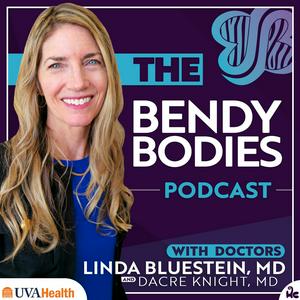
Acerca de Bendy Bodies with Dr. Linda Bluestein
Whether you’re bendy with all the benefits or hurting in all the wrong places, you’ve come to the right place for all things hypermobility. Connective tissue disorders like Ehlers-Danlos Syndromes (EDS) are often dismissed or overlooked by healthcare providers as a cause of chronic pain. But if you or someone you care about struggles with the life-altering symptoms of hypermobility, you should know YOU ARE NOT ALONE! At the Bendy Bodies Podcast, we understand.
Each week, join Dr. Linda Bluestein (The Hypermobility MD) as she pulls back the curtain on how to prevent injury and unnecessary suffering in “double-jointed” individuals seeking a more comfortable life in their unique, complex “bendy bodies.” When you tune in, you’re engaging in more than a podcast. Both on-air and online, you’re joining a supportive community where patients, caregivers, and healthcare professionals trade insights, life hacks, and inspiring stories to embrace our Bendy Bodies journey together!
Sitio web del podcastEscucha Bendy Bodies with Dr. Linda Bluestein, CAMINO AL ÉXITO por BRIAN TRACY y muchos más podcasts de todo el mundo con la aplicación de radio.net
Descarga la app gratuita: radio.net
- Añadir radios y podcasts a favoritos
- Transmisión por Wi-Fi y Bluetooth
- Carplay & Android Auto compatible
- Muchas otras funciones de la app
Descarga la app gratuita: radio.net
- Añadir radios y podcasts a favoritos
- Transmisión por Wi-Fi y Bluetooth
- Carplay & Android Auto compatible
- Muchas otras funciones de la app
Bendy Bodies with Dr. Linda Bluestein
Escanea el código,
Descarga la app,
Escucha.
Descarga la app,
Escucha.
Bendy Bodies with Dr. Linda Bluestein: Podcasts del grupo
 México