

Escucha gratis este podcast en la aplicación: Descarga gratuita en la App Store
radio.net
Sleep timer
Favoritos
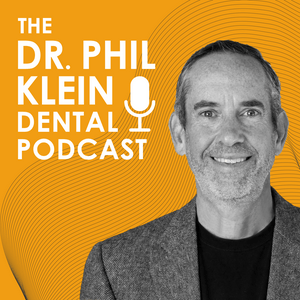
The Dr. Phil Klein Dental Podcast
Dr. Phil Klein | Dentist
Último episodio
806 episodios
Ep. 811 - Implant Maintenance Update: New Evidence, Better Outcomes
12/10/2026 | 29 minAre your implant maintenance protocols actually protecting your patients' implants — or quietly contributing to their failure?
Lynn Pencek brings a rare dual perspective to implant maintenance, having worked as both a clinical dental hygienist and an industry representative for major implant and instrument companies. She holds a Bachelor of Science from Thomas Jefferson University, a Master of Science in Dental Hygiene from the University of Maryland School of Dentistry, and has held faculty appointments at Thomas Jefferson University and the Community College of Philadelphia. Her hands-on experience with Nobel Biocare and the Envista team, combined with her role as school manager for Hu-Friedy and her service on the corporate council for Dimensions of Dental Hygiene, gives her an unusually comprehensive view of where clinical practice and industry intersect. She is the founder of Practice At Your Best, LLC and a nationally recognized continuing education lecturer in implant maintenance.
This episode tackles one of the most clinically underserved areas in modern dentistry: what actually happens to implants after they are placed. With 45 to 63 percent of implant patients presenting with peri-implant mucositis and up to one in five developing peri-implantitis, the stakes for getting maintenance right have never been higher. The conversation dismantles outdated assumptions about plastic instruments, fluoride safety, and polishing protocols, replacing them with current, evidence-grounded recommendations. Listeners will gain a framework for triaging implant patients, selecting the right instruments, and knowing when to refer — all grounded in clinical reality rather than habit.
Episode Highlights:
Plastic instruments have long been considered the default for implant maintenance, but the evidence does not support their use. The rough nano-surface texture of implants causes plastic instruments to shed microparticles that are not biocompatible, embed in the biofilm, and contribute to ongoing inflammation — making them counterproductive to the goal of reducing peri-implant disease.
Stainless steel scalers pose a specific biological risk when used on implant surfaces through a mechanism called metallosis. Metal ions shed from stainless steel instruments are deposited into the biofilm and engulfed by soft tissue cells via endocytosis, triggering an inflammatory response that compounds existing peri-implant disease. Titanium and anodized titanium instruments are preferred because any residual material left on the surface remains biocompatible.
Air polishing with glycine or erythritol powder represents the current standard of care for biofilm removal on implant surfaces, including in subgingival and thread-exposed sites. A 2020 survey of approximately 1,600 hygienists found that 90 percent of those using air polishing felt effective at biofilm removal, compared to only 10 percent of those relying on plastic instruments — a finding with direct implications for practice investment decisions.
Fluoride presents a nuanced risk for titanium implants that depends on concentration, frequency of application, and pH of the oral environment. Over-the-counter fluoride toothpaste used twice daily is considered safe, but high-concentration prescription fluoride applied daily in an already acidic oral environment can accelerate corrosion of exposed implant surfaces. Clinically applied neutral sodium fluoride varnish or hydroxyapatite-based remineralization agents are recommended alternatives for high-caries patients who also have implants.
Desiccation therapy using a desiccant gel or liquid applied for 10 to 30 seconds subgingivally is an emerging adjunctive tool for implant maintenance that removes water from the biofilm, facilitates calculus removal, reduces red-complex bacteria, and provides a hemostatic effect. Application time should not exceed 30 seconds, the agent must be rinsed thoroughly, and while early evidence is promising, more in vivo research on implant-specific outcomes is still needed.
Perfect for: dental hygienists at all career stages seeking current evidence on implant maintenance protocols, general dentists managing implant patients in-house, periodontists looking to improve interdisciplinary communication workflows, and dental educators developing or updating implant-related curriculum content.
If you are still relying on the instruments and protocols you learned in school, this episode will change the way you approach every implant patient in your chair.Ep. 810 - The Art of Case Acceptance: Communication, Technology, and Trust
08/10/2026 | 20 minPatient communication is one of those skills that gets overlooked and undertrained—but it’s actually one of the most important things you can master to run a successful dental practice. To tell us all about it is our guest, Dr. Todd Snyder. He is a popular speaker on Viva Learning.com, a cosmetic dentist, international author, lecturer and consultant to dental companies. You can reach Dr. Snyder at: www.Legion.Dentist.Ep. 809 - Mastering Large Composite Restorations
05/10/2026 | 35 minWhat if the crown you've been planning isn't always the best answer — and a well-executed direct composite could outperform it for decades?
Dr. John Gammichia is a 1995 graduate of the University of Florida College of Dentistry and a Fellow of the Academy of General Dentistry (FAGD) with over 31 years in private practice in Orlando, Florida. He has completed more than 1,500 hours of continuing education, including all five continuums and a special studies course at the L.D. Pankey Institute, and has published in Dental Economics, Dental Practice Reports, Dental Entrepreneur, New Dentist Magazine, and the Pankeygram. A former blogger for the Academy of General Dentistry and speaker at the Chicago Midwinter and AGD Annual Meeting, Dr. Gammichia has built a reputation for championing excellence in single-tooth, bread-and-butter dentistry.
In this episode, Dr. Gammichia makes a compelling case for direct composite restorations as a predictable, financially viable, and structurally conservative alternative to full coverage in a wide range of clinical scenarios — from multi-cusp fractures and cracked teeth to post-endodontic restorations and anterior cosmetic cases. He walks through his complete clinical armamentarium, shares 30-plus years of real-world longevity data from his own recall patients, and explains how thoughtful material selection, technique, and case philosophy have made large composite buildups the cornerstone of his practice. This conversation challenges deeply held restorative assumptions while offering actionable clinical guidance that can be applied immediately.
Episode Highlights:
Large direct composite restorations on multi-cusp fractures can be clinically predictable and financially competitive with crowns. When factoring in lab fees and chair time, two direct composite restorations completed in an hour can generate comparable or higher hourly production than a single crown appointment — making efficiency with composites a legitimate practice-building strategy.
Adhesive systems have advanced to the point where posts are rarely necessary even in heavily broken-down posterior teeth. A selective etch technique using a thick, antimicrobial etchant combined with a self-etching primer and bond provides reliable retention without the need for intracoronal post placement in the vast majority of molar cases.
Curing light quality and testing are critical — and often overlooked — variables in composite longevity. A laser-based curing light using a one-second cure cycle through a focused, highly collimated beam has shown excellent results in deep preparations, provided the composite contains a camphoroquinone photoinitiator. Lights should be tested regularly to ensure consistent output.
For cracked teeth or post-endodontic restorations without pre-existing full coverage, a fiber-reinforced mesh splinting material placed perpendicular to the fracture line beneath a composite restoration can provide meaningful structural reinforcement. The speaker reserves crown preparation for cases where the tooth already had a crown that required removal — not as a routine post-endodontic default.
Deep caries management with incomplete caries removal, glass ionomer liner, silver diamine fluoride application to arrest the lesion, and either a sandwich technique or direct composite placement over the liner offers a pulp-preserving approach for young patients with large lesions. This sequence prioritizes pulp vitality and avoids root canal therapy while delivering a durable, well-sealed restoration.
Perfect for: General dentists at any career stage looking to expand their direct restorative skill set, dental residents rethinking default crown preparations, and any clinician interested in the clinical and financial case for composite-first treatment planning.
If you've ever hesitated before presenting a direct composite on a heavily broken-down tooth, this episode will give you both the clinical rationale and the confidence to reconsider.Ep. 808 - The Highest ROI Hire: How to Interview Your Dental Office Manager
01/10/2026 | 13 minWhat separates a thriving dental practice from a struggling one often comes down to a single hire — and it's not the associate. It's the office manager.
Your host, Dr. Phil Klein, brings over 40 years of experience across private practice, dental education, and industry to this solo episode on one of the most consequential hiring decisions a dentist can make. Dr. Klein holds a Bachelor of Applied Science from the University of Pennsylvania College of Engineering and Applied Science, a DMD from Penn Dental, and a Post-Doctorate specialty degree in Endodontics from Penn Dental (1985). He spent fourteen years as an Endodontic specialist in private practice before founding multiple dental technology and education companies, including Viva Learning LLC — now the largest dental continuing education entity in the world — where he serves as Chairman of the Board. He currently holds three dental patents and hosts this podcast, which draws more than 30,000 listens per month from a global user base of over 460,000 dental professionals.
In this episode, Dr. Klein presents a structured, stage-by-stage framework for hiring a dental office manager — from the initial virtual screening all the way through to the formal offer letter. The discussion is grounded in practice management realities, emphasizing that the office manager is the operational leader of the practice, not simply an administrative hire. Dr. Klein explains why rushing or under-structuring this process puts cash flow, culture, team retention, and patient experience at risk. The framework is practical, immediately applicable, and designed to help dentists approach this hire with the same rigor they would apply to a clinical procedure.
Episode Highlights:
The initial virtual interview should be treated as a professional evaluation, not a casual screening. Candidates should be assessed for communication clarity, on-camera professionalism, and the ability to cite specific, measurable outcomes — such as improvements in collections rates, reductions in accounts receivable days, or tightened cancellation metrics — rather than vague claims of efficiency.
The in-person interview should include an observed office tour where the interviewer watches how the candidate interacts with team members, assesses workflow, and demonstrates natural curiosity about practice operations. Role-playing scenarios involving upset patients or scheduling conflicts are recommended to evaluate composure, emotional intelligence, and the candidate's willingness to take ownership rather than escalate to the doctor.
Skills assessments are a critical and frequently skipped step. Candidates should be asked to perform live tasks in the practice management software — such as scheduling mock appointments, entering patient data, or generating production reports — and to walk through how they would code and submit a mock insurance claim. Because billing proficiency directly impacts cash flow, verification of claimed skills before hiring is essential.
Background and reference checks should go beyond confirming employment dates. Meaningful reference questions should probe how candidates handled high-pressure situations, contributed to team morale, and demonstrated reliability. Criminal background checks are recommended for all candidates in this role given their access to patient data, financial transactions, and payroll. Credit checks may also be appropriate when significant financial oversight is involved.
Before extending a formal offer, a final alignment conversation should establish shared expectations around practice vision, growth trajectory, and the candidate's own long-term goals. The written offer should clearly define salary, benefits, incentive structures, leadership responsibilities, work hours, and any probationary period, as ambiguity in these areas is a primary driver of early turnover and workplace conflict.
Perfect for: General dentists, group practice owners, dental residents entering practice ownership, and any dental team leader responsible for administrative hiring decisions who wants a structured, repeatable process for evaluating and onboarding practice leadership.
If you have ever hired the wrong office manager — or want to make sure you never do — this episode gives you the exact framework to get it right.Ep. 807 - Master the Social 6 with Injection Composite
28/09/2026 | 32 minWhat if you could deliver stunning anterior composite restorations in half the time it takes to freehand sculpt them — without relying on advanced artistic ability? This episode breaks down exactly how to do it.
Dr. Mackenzie Kelly is a cosmetic dentist, educator, and adjunct faculty member at Indiana University School of Dentistry, where she graduated with highest distinction and received the American College of Prosthodontists award for excellence in crowns, bridges, restorative, and cosmetic procedures. She is currently pursuing accreditation through the American Academy of Cosmetic Dentistry — one of the most prestigious and rarely achieved designations in the field. With hundreds of hours of continuing education in minimal prep veneers, cosmetic bonding, clear aligners, and digital dentistry, Dr. Kelly brings both technical mastery and genuine artistic talent to every case.
In this episode, Dr. Kelly provides a thorough clinical walkthrough of the injection composite technique — a digital workflow that uses a clear custom matrix fabricated from a diagnostic wax-up to guide composite placement and eliminate the need for freehand sculpting. She explains why this approach is applicable across nearly all anterior composite scenarios, how it compares to indirect porcelain restorations, and how proper case planning on the front end is the single most important factor in achieving consistent, beautiful outcomes. The conversation covers the full process from digital scan and CAD design through matrix fabrication, tooth preparation, isolation, injection protocol, and final finishing — with specific clinical tips at every step.
Episode Highlights:
The injection composite technique uses a clear matrix fabricated from a digital or analog diagnostic wax-up, with small injection ports pierced into the matrix through which composite is injected once the matrix is fully seated. Creating two separate matrix variants — one for every other tooth and one for all teeth — dramatically reduces interproximal cleanup and improves contour control, especially in multi-tooth cases like the social six.
Tooth preparation for injection composite is performed entirely within enamel when possible, using air abrasion rather than a handpiece to achieve micro-surface preparation without structural reduction. After isolation with Teflon tape on alternating teeth, unprepped enamel is phosphoric acid etched for 30 to 60 seconds, followed by application of a universal self-etching bonding agent to ensure reliable adhesion even if small areas of dentin are inadvertently exposed.
A high-filler-content composite — specifically one with approximately 91% filler loading in the packable formulation and approximately 81% in the flowable formulation — provides significantly greater strength and stain resistance compared to conventional composites, which typically contain filler content in the 60 to 70 percent range for flowables. Higher filler content reduces the resin component responsible for polymerization shrinkage and staining, supporting long-term durability of direct anterior restorations.
A partial cure of approximately 10 seconds before removing the clear matrix allows the composite to reach sufficient rigidity for matrix removal while remaining manageable for flash cleanup. A sharp scalpel blade is used immediately after matrix removal to trim excess composite at the gingival and interproximal margins before completing the final cure — this technique minimizes finishing time and reduces the risk of over-contouring.
Executing a provisional mock-up using a putty matrix and a bisacryl provisional material before any etching or preparation allows the clinician to verify tooth length, proportion, and shade masking in the patient's face under natural conditions. This critical step also helps identify whether darker underlying tooth structure will require a more opaque composite selection, and provides a reversible checkpoint for patient approval before any irreversible clinical steps are taken.
Perfect for: General dentists looking to expand their direct aesthetic composite capabilities, cosmetic dentistry enthusiasts at any career stage, dental residents building confidence with anterior restorations, and any clinician interested in integrating digital workflows into their cosmetic dentistry practice.
If anterior composite cases have been a source of stress or hesitation in your practice, this episode gives you a concrete, step-by-step protocol to change that starting with your very next case.
Más podcasts de Medicina




Podcasts a la moda de Medicina


Acerca de The Dr. Phil Klein Dental Podcast
The Dr. Phil Klein Dental Podcast is the #1 clinical dental podcast for evidence-based dentistry. Hosted by endodontist Dr. Phil Klein, DMD - trusted by 250,000+ dental professionals with 750+ episodes since 2018.
The fastest-growing dental podcast worldwide, The Dr. Phil Klein Dental Podcast delivers cutting-edge clinical dentistry, state-of-the-art dental education, and actionable practice management strategies to more than 250,000 dental professionals globally. Two new episodes every Monday and Thursday featuring world-renowned clinicians, dental school faculty, academic researchers, specialty leaders, and practice management experts discussing the latest advances in evidence-based dentistry and modern practice growth you can apply immediately in practice.
Episodes span every major dental specialty - from implant dentistry, endodontics, and restorative dentistry to cosmetic dentistry, digital workflows, sleep dentistry, oral surgery, periodontics, infection control, and pediatric dentistry - giving dental professionals a single trusted source for cutting-edge clinical education across the full scope of modern dentistry.
Guests include leading clinicians from Harvard School of Dental Medicine, University of Pennsylvania School of Dental Medicine, University of Florida College of Dentistry, the American Academy of Cosmetic Dentistry, the American Academy of Endodontists, and top dental institutions across the United States and internationally. Every episode is focused on clinical excellence and state-of-the-art dental techniques — evidence-based dentistry at its highest level.
Perfect for:
General dentists seeking cutting-edge clinical techniques and evidence-based protocols
Dental specialists staying current across adjacent specialties
Dental hygienists and assistants accessing clinical education beyond typical CE options
Dental students and new graduates building a strong clinical foundation
Practice owners integrating state-of-the-art digital workflows, modern dental materials, and proven practice management strategies
Full episode library and clinical show notes: philkleindentalpodcast.com
Sitio web del podcastEscucha The Dr. Phil Klein Dental Podcast, Medicina ¡Clases en 15 minutos! y muchos más podcasts de todo el mundo con la aplicación de radio.net
Descarga la app gratuita: radio.net
- Añadir radios y podcasts a favoritos
- Transmisión por Wi-Fi y Bluetooth
- Carplay & Android Auto compatible
- Muchas otras funciones de la app
Descarga la app gratuita: radio.net
- Añadir radios y podcasts a favoritos
- Transmisión por Wi-Fi y Bluetooth
- Carplay & Android Auto compatible
- Muchas otras funciones de la app
The Dr. Phil Klein Dental Podcast
Escanea el código,
Descarga la app,
Escucha.
Descarga la app,
Escucha.
 México