PodcastsFitnessThe Ready State Podcast

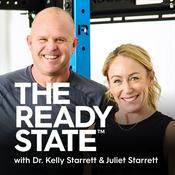
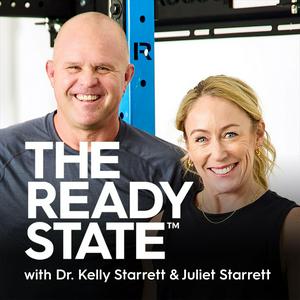
The Ready State Podcast

Kelly Starrett & Juliet Starrett
The Ready State Podcast
Último episodio

202 episodios

  • The Ready State Podcast

    RECESS: GLP-3s, College ROI for Women, Fake Fitness Influencers, and the Existential Dread of Liminal Spaces

    18/06/2026 | 29 min
    Welcome back to RECESS — our bi-weekly look at what we’re learning, trends we’re seeing in the health and fitness space, and how we’re building more play into real life.

    The fitness industry is facing its biggest shake-up yet, and it's coming from a syringe. In this episode of RECESS, we cover a lot of ground: from Caroline's high school graduation and a wild weekend of sports (Knicks championship! Water polo! World Cup!) to the questions keeping health and fitness professionals up at night.

    The centerpiece of this episode is a candid conversation about GLP-1, GLP-2, and the newly trialed GLP-3 drug Retatrutide — and what near-30% body weight loss results mean for the future of personal training, nutrition coaching, and the entire weight loss industry. Is weight loss about to become a purely medical intervention? And if so, what does that mean for coaches, trainers, and wellness brands like ours?

    We also take on a viral debate about AI-generated fitness influencers crowding out real coaches on social media, break down the data on whether women should skip college in the age of AI (spoiler: the numbers say no), and share our take on Backrooms, the buzzy horror film directed by a local kid who built the concept as a high schooler. If you've ever felt the existential dread of liminal spaces, this one's for you.

    What You'll Learn in This EpisodeWhy Caroline Starrett's observation that "muscles are the new skinny" might be the most important trend call in fitness right now
    How GLP-3 drug Retatrutide achieved nearly 30% average body weight loss in Phase 3 trials, and what that means compared to Ozempic and ZepBound
    What happens to the fitness industry if weight loss becomes a purely pharmaceutical intervention
    The hidden dangers of GLP-1 drugs: muscle and bone mass loss, weight regain after stopping, and the return of extreme thinness culture
    Why AI-generated fitness influencers are getting millions of views while real coaches struggle for reach, and what to do about it
    The data behind college ROI for women: why the gender pay gap and VC funding stats make a compelling case for staying in school
    Why the most successful female founders (Rent the Runway, Stitch Fix, 23andMe, Tory Burch) share one thing in common
    A local director's Backrooms, worth seeing even if you hate horror

    Key Highlights: (00:00) Welcome back to RECESS; Caroline's high school graduation and becoming (almost) empty nesters; the "open nest" philosophy
    (01:50) A massive weekend of sports: Knicks championship, Stanley Cup, World Cup, water polo tournaments, and shoutouts to Cal athletes competing in European club championships
    (05:35) The viral Canadian coach's Instagram post: AI-generated fitness influencers vs. real coaches, the algorithm problem, and a defense of making content that's actually fun
    (07:45) Why real coaches deserve your engagement: the difference between AI-driven content and educators who've spent years building free resources
    (11:17) College ROI debate: a prominent female entrepreneur suggests skipping college; Juliet and Kelly push back with data — 65–75% higher lifetime earnings for college grads, and the gender pay gap closes with education
    (16:00) Female founders and elite credentials: why the women who actually break through in VC-backed startups almost universally have top-tier degrees; notable examples and one cautionary tale
    (18:00) Caroline's insight: "muscles are the new skinny" — when anyone can change their body composition with a GLP drug, muscle becomes the differentiator
    (19:29) Breaking down the GLP-3 trial results for Retatrutide: 70+ lbs average loss, nearly 30% body weight reduction, and how it compares to GLP-1 and GLP-2 drugs
    (20:40) How GLP drugs are splitting the fitness industry: some coaches relieved, some threatened, and the legacy weight loss brands already pivoting
    (22:45) The dark side: muscle and bone mass loss, Hollywood's return to extreme thinness, and what happens when people stop taking the drugs without changing their habits
    (27:00) The message that still matters: muscle is your longevity organ; building a body for adventure; why GLP drugs and strength training aren't mutually exclusive
    (27:29) Backrooms the movie: local Marin School of the Arts alum director Kane Parsons, and why this creepy-beautiful film is worth your time even if you're not a horror fan
    (29:10) Wrap-up and thanks for listening
  • The Ready State Podcast

    The Future of Youth Sports: Building Stronger, Healthier, & More Durable Athletes | Jack Brown

    11/06/2026 | 1 h 32 min
    View This Week's Show Notes
    Start Your 7-Day Trial to Mobility Coach
    Join Our Free Weekly Newsletter: The Ambush

    “Strength training will make swimmers slow.”
    “Water polo players should stop lifting before big competitions.”
    "Young athletes just need more time in the pool.”

    These ideas have shaped aquatic sports for decades… but what if they’re actually holding athletes back?

    In this episode of The Ready State Podcast, Kelly and Juliet Starrett sit down with strength and conditioning coach Jack Brown, founder of Aqua Strength Performance, to challenge some of the biggest myths in swimming and water polo. Drawing from his own experience as an injured athlete and years spent coaching everyone from middle school beginners to Division I athletes, Jack explains why strength training may be one of the most overlooked tools for improving performance, reducing injuries, and helping athletes stay in the sport longer.

    The conversation goes far beyond the weight room. Jack shares why sprinting, jumping, mobility work, sleep, nutrition, and recovery are essential pieces of athletic development—and why many youth athletes are training harder than ever while missing the fundamentals that matter most. Whether you're a swimmer, water polo player, coach, or parent of a young athlete, this episode offers a fresh perspective on what it really takes to build stronger, healthier, and more resilient competitors.

    What You'll LearnWhy strength training doesn't make swimmers and water polo players bulky or slow – but more resilient and powerful
    Why sprinting, jumping, and strength work belong in every athlete's development plan
    How strength and conditioning can reduce injury risk and improve long-term athletic durability
    Why sleep and nutrition may have a bigger impact on performance than adding more training volume
    What parents should look for in a quality youth strength and conditioning program

    Key Highlights(0:00) Common myths about strength training for aquatic athletes
    (0:28) Jack Brown’s Story and Finding His Path
    (7:20) Building Aqua Strength and identifying a gap in youth sports
    (10:33) Why swimming and water polo have resisted strength training
    (15:13) What parents should look for in a youth S&C program
    (22:01) The importance of sprinting and jumping for athletic development
    (26:26) Creating a gym culture athletes enjoy
    (34:08) Bone health and loading for aquatic athletes
    (35:18) Why strength training prepares athletes for college sports
    (43:34) What “strength and conditioning” actually means
    (52:44) Red flags in youth sports programs
    (56:10) Training volume, overuse, and recovery
    (1:01:35) Sleep, screen time, and athlete responsibility
    (1:06:21) Myth #1: Strength training makes swimmers slow
    (1:07:46) Myth #2: Athletes should stop lifting during a taper
    (1:16:00) Myth #3: You need a sport-specific strength coach
    (1:22:53) The future of aquatic athlete development
    (1:28:16) Infinite Shelf recommendation

    Huge thanks to our sponsors, Momentous and LMNT.
  • The Ready State Podcast

    RECESS: Cancer Shaming, Youth Sports Nutrition, and NARP Moms

    04/06/2026 | 28 min
    Welcome back to RECESS — our break from the serious stuff to talk about what we’re learning, what’s making us laugh, and how we’re building more play into real life.

    In this episode, we talk about everything from terrible coffee decisions and animal attack close calls to youth sports nutrition, cancer shaming in the wellness world, and the Enhanced Games. We also discuss why parents may be unintentionally under-fueling their young athletes, the growing divide between personal health optimization and public health, and a new term we can’t stop thinking about: NARP Moms.

    Along the way, we reflect on Caroline’s graduation week, the challenges of raising healthy athletes, the strange culture surrounding performance enhancement in sports, and why compassion—not blame—should guide conversations about health and disease.

    What You'll Learn in This EpisodeWhy Kelly’s coffee experiments nearly caused a household revolt
    Our take on the Enhanced Games and what they say about the future of sport
    Why “cancer shaming” is becoming a troubling trend in wellness culture
    What Juliet learned from being diagnosed with cancer at 19—and again later in life
    The difference between personal health optimization and public health
    Why many young athletes are dramatically under-fueled
    How “NARP Moms” might be affecting their kid's sports performance
    Why carbs are still king for growing athletes
    What fewer kids reading books could mean for the next generation
    Reflections on parenting through graduation season
    Key Highlights: (00:00) — Welcome back to RECESS
    (00:30) — Juliet’s latest near-animal attack and Kelly’s divorce-worthy coffee experiments
    (02:52) — Caroline’s signing day and graduation season reflections
    (05:04) — The Enhanced Games: spectacle, performance, and the future of sport
    (11:39) — Follow-up on nicotine pouches and European bans
    (14:12) — Zach Coen and cancer shaming in the wellness community
    (16:20) — Juliet’s experience as a two-time cancer survivor
    (18:18) — Brad Ludden and First Descents
    (18:55) — Why blaming people for cancer is dangerous and misguided
    (20:28) — Introducing the “NARP Mom”, Shannon Mendez
    (22:08) — Why youth athletes need dramatically more calories than adults
    (24:45) — Carbs, under-fueling, and sports performance
    (25:45) — Soman Chainani's new book, Young World — and how the data shows that fewer kids are reading books
    (27:33) — Graduation week and sending another kid off to college
  • The Ready State Podcast

    How Breathing Shapes Sleep, Stress, Performance, & Longevity | Patrick McKeown

    28/05/2026 | 1 h 56 min
    View This Week's Show Notes
    Start Your 7-Day Trial to Mobility Coach
    Join Our Free Weekly Newsletter: The Ambush

    In this episode of The Ready State Podcast, breathing expert Patrick McKeown joins Kelly and Juliet Starrett for a mind-expanding conversation about something you do 20,000 times a day but probably haven’t thought deeply about: your breath. From asthma and anxiety to sleep quality, athletic performance, focus, and recovery, Patrick explains why the way you breathe may be quietly shaping nearly every aspect of your health.

    The conversation dives into the surprising science of CO2 tolerance, why most people are chronically over-breathing, and how simple shifts – like nasal breathing, breath holds, and slowing your exhales – can dramatically change your nervous system and performance. Patrick also breaks down why women experience breathing and sleep differently than men, how poor breathing affects kids’ development and behavior, and why many sleep disorders may be going undiagnosed.

    Most importantly, this episode is packed with practical tools you can start using immediately – whether you’re trying to sleep better, feel calmer, improve endurance, or simply function better under stress.

    What You'll Learn in This EpisodeWhy most people are chronically over-breathing and how it impacts stress, sleep, and performance
    How nasal breathing and CO2 tolerance can improve endurance, recovery, and focus
    The surprising connection between breathing patterns, anxiety, panic attacks, and nervous system regulation
    Why women experience sleep-disordered breathing differently than men, especially during menopause
    How mouth breathing in children may affect sleep, behavior, facial development, and long-term health

    Key Highlights: (0:00) Intro: Men vs. Women in Breathing & Sleep
    (0:22) Patrick McKeown: Breathing Expert & Founder of Oxygen Advantage
    (2:46) Kelly's History with Asthma & Breathing
    (10:39) Exercise-Induced Asthma & Hyperventilation
    (15:32) The BOLT Score Explained
    (17:00) The Science of CO2 & Oxygen Delivery
    (23:59) Kipchoge’s Closed-Mouth Marathon
    (28:01) Women’s Breathing, Hormones & Sleep
    (32:21) Why Women Get Misdiagnosed in Sleep Studies
    (34:46) The Hidden Sleep Disorder Affecting Women
    (38:07) Breathing Practices for Brain Health
    (44:31) Dysfunctional Breathing & Mental Health
    (46:05) Panic Attacks, CO2 & the Paper Bag
    (1:04:38) Falling Asleep Faster with Breathwork
    (1:12:54) Breathing Warmups for Athletes
    (1:20:51) Mouth Breathing & Facial Development
    (1:33:43) Children, Sleep & ADHD
    (1:44:55) Breath Holds, Altitude & Hematocrit
    (1:54:09) Infinite Shelf & Glymphatic Breathing

    Huge thanks to our sponsors, LMNT and Momentous.
  • The Ready State Podcast

    RECESS: Juliet & Kelly Starrett on Social Connection, School Recess Guidelines, Rachel Entrekin’s Self-Talk, and Prom Maxxing

    21/05/2026 | 30 min
    Welcome back to RECESS — our weekly break from the serious stuff to talk about what we’re learning, what’s making us laugh, and how we’re building more play into real life.

    In this episode, we unpack why social connection may be the single biggest predictor of healthy aging and longevity, reflect on new pediatric guidelines pushing for more school recess, and talk about how adults desperately need more play too. We also dive into Rachel Entrekin’s mindset during her historic Cocodona 250 win, Kelly’s emotional experience eulogizing his mom, and the rise of “prom maxxing” — and why it gives us the ick.

    What You'll Learn in This EpisodeWhy social connection may matter more than anything else for longevity
    How play and movement create stronger communities and healthier adults
    Why the American Academy of Pediatrics says recess is not optional
    Rachel Entrekin’s powerful self-talk strategy during her record-setting ultramarathon
    What Kate Courtney’s career shift teaches about identity and reinvention
    Why “third places” like gyms, clubs, and community spaces matter so much
    Juliet and Kelly’s thoughts on “prom maxxing” and modern parenting culture
    What Kelly learned from giving the eulogy at his mother’s memorial
    Key Highlights: (00:00) — Welcome back to RECESS
    (00:40) — Kelly reflects on eulogizing his mom
    (02:52) — Travel, burnout, and speaking at a longevity conference
    (04:06) — Why adults need more play and movement
    (05:43) — The Harvard Longitudinal Study and the importance of social connection
    (06:18) — The “Six Points of Connection” and building real community
    (10:15) — Kate Courtney, identity shifts, and elite performance
    (12:33) — New school recess guidelines from the American Academy of Pediatrics
    (15:23) — Why adults need recess too
    (17:23) — Rachel Entrekin’s self-talk during her historic Cocodona 250 win
    (21:01) — “Happy to be here” vs. competing to win; Tia Toomey's Champion's Mindset
    (24:00) — Prom maxxing, parenting culture, and losing the plot
    (29:02) — What we’re living for right now
Más podcasts de Fitness
Acerca de The Ready State Podcast
A podcast about health, aging, fitness, recovery, nutrition, parenting, and living well, featuring conversations with leading experts, coaches, and thought leaders. Each episode brings warmth, humor, and real-world perspective to the conversation, turning expert insight into practical tools for building a stronger, more durable life — and living in your Ready State.
Sitio web del podcast

Escucha The Ready State Podcast, WHITE NOISE y muchos más podcasts de todo el mundo con la aplicación de radio.net

Descarga la app gratuita: radio.net

  • Añadir radios y podcasts a favoritos
  • Transmisión por Wi-Fi y Bluetooth
  • Carplay & Android Auto compatible
  • Muchas otras funciones de la app