
Escucha gratis este podcast en la aplicación: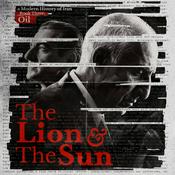 Descarga gratuita en la App Store
radio.net
Sleep timer
Favoritos
35 episodios
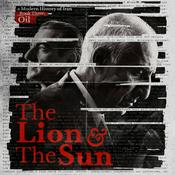
Book Three – Ep.7: The People v. AIOC
01/10/2026 | 31 minWith British warships looming off Abadan and an economic war squeezing Iran, Britain drags the oil dispute before the United Nations, and Mosaddegh crosses the ocean to fight it himself.
Follow us on Instagram, TikTok or X (Twitter).
Support this show on Patreon.
Earlier Chapters of The Oil Dispute:
Book One – Episode 8: Anglo-Persian Oil Company
Book Two – Episode 4: Anglo-Iranian Oil Company
Episode Summary
In the spring of 1951, Mosaddegh’s oil nationalization law took Iran’s oil industry out of British hands. London’s first instinct was to invade. Military planners drew up schemes to land tens of thousands of troops and seize the Abadan refinery. What stopped them was not Iran but the United States. President Truma, made it clear that America would not support the use of force. And Prime Minister Attlee, never eager for war to begin with, set the plans aside.
So Britain reached for a quieter weapon, and the Abadan Crisis became an economic siege. The Anglo-Iranian Oil Company pulled its British staff out of the refinery, and London pressured governments across Europe to keep foreign engineers from going to Iran in their place. It warned the world that anyone buying Iran’s “stolen” oil would face consequences, and it froze Iran’s hard currency in British banks. The British oil embargo was meant to squeeze until Iran’s will gave out. But when American advisers warned Mosaddegh about the collapse ahead, the old man would simply shrug and say, Tant pis pour nous. Too bad for us.
Believing it could win the argument in the court of world opinion, Britain then took Iran to the UN Security Council in October 1951, and Mosaddegh decided to go to New York himself. The Western press had called him a “Fainting Fanatic,” yet in the chamber he dismantled the British case with numbers, telling the council how the company earned sixty-one million pounds in a single year while Iran received nine, and then reading back, word by word, the insults Britain had used against his people. The council set the matter aside, and the British Empire walked away humiliated.
From there, Truman invited Mossadegh to Washington, where he charmed his hosts, embraced Acheson on the train platform, and spent seventy hours in talks with George McGhee, only to reject every compromise put in front of him. He went home empty-handed and saw that as a victory, because he would not have to defend a deal his people never wanted.
That autumn was the high point of the friendship between Iran and America.
But while Mosaddegh was winning over Washington, Churchill returned to power in London with no interest in compromise and only one goal, which was getting rid of Mosaddegh. The one thing standing in his way was the United States, and Churchill was prepared to wait until that changed.
Music
Dian Shuai – One Step Away
Max Anson – Where Does It End?
Jay Varton – Inside Light
Christoffer Moe Ditlevsen – The Road Less Travelled
Mozart – Piano Concerto No. 23 in A Major, K. 488: II. Adagio
Spearfisher, Cicely Parnas – Tombeau de Vivaldi
The post Book Three – Ep.7: The People v. AIOC appeared first on The Lion and The Sun Podcast.Book Three – Ep.6: Nationalization – Part Two
10/09/2026 | 23 minWith nationalization signed and Mosaddegh in office, Britain cuts off Iran’s oil exports and moves warships into the Gulf. Secret documents expose decades of political interference, American mediation fails, and Iran finds itself in a standoff it cannot easily win.
Listen to part one of Nationalization here.
Episode sources
Follow us on Instagram, TikTok or X (Twitter).
Support this show on Patreon.
Episode Summary
With nationalization passed, Britain’s response came not at the negotiating table but on the water. Warships moved toward Abadan as London made clear it had no intention of accepting the law as final. Internally, the British pushed the Shah to appoint Sayyed Zia (a familiar face from the 1921 coup) as prime minister, hoping to steer Iran back toward compromise.
In the confirmation hearing, right-wing deputy, Jamal Emami, rose to mock Mosaddegh: “If Mosaddegh thought everyone else was failing, why not run the government himself?” The chamber fell silent. Then, Mosaddegh accepted. Seventy-nine deputies voted for him and afterwards the Majlis unanimously passed his follow-up nationalization legislation, establishing the National Iranian Oil Company and setting terms for auditing Anglo-Iranian’s books.
On May 1st, 1951, the Shah signed it into law.
Britain responded with an embargo. Anglo-Iranian’s general manager ordered tankers to leave Abadan empty rather than submit to Iranian oversight. The refinery ground to a halt.
America offered a mediator instead, Averell Harriman, carrying a letter from Truman himself. He spent ten days shuttling proposals between Tehran and the British. Every formula preserved some foreign role in managing Iranian oil. Mosaddegh rejected them all, warmly and completely.
When Iranian delegations moved into Anglo-Iranian’s offices, they found files being burned in a fireplace … but not quickly enough. What remained revealed decades of quiet interference: deputies bought, ministers managed, newspapers paid to undermine the National Front, a Radio Department official recruited as an asset. Mosaddegh released everything.
In Washington, Truman’s National Security Council heard the warnings plainly. The refinery was shutting down. British warships were already positioned off Abadan. Intelligence suggested an invasion was being considered. The Western alliance and Iran’s future hung in the balance.
The world was now deciding whether to let Iran’s nationalization stand … or crush it.
Music
Roberto Prado – Hidden Thread
Mark Fabian – Super Secret Spy
FableForte – Reminiscence
Christoffer Moe Ditlevsen – Missing Memories
Francesco D Andrea – Tempus Fugit
Cjbeards – Heart of the Wicked
The post Book Three – Ep.6: Nationalization – Part Two appeared first on The Lion and The Sun Podcast.Book Three – Ep.5: Nationalization (1)
09/04/2026 | 28 minFailed negotiations, assassination, and a vote that changed Iran’s history. As pressure builds and compromise collapses, Mohammad Mosaddegh leads a united nation towards oil nationalization.
Follow us on Instagram, TikTok or X (Twitter).
Support this show on Patreon.
Earlier Chapters of The Oil Dispute:
Book One – Episode 8: Anglo-Persian Oil Company
Book Two – Episode 4: Anglo-Iranian Oil Company
Book Three – Episode 4: Paper City
Episode Summary
In the early 1950s, Iran entered a period of rapid political upheaval. After disputed elections, a group of nationalists led by Mohammad Mosaddegh entered parliament, determined to challenge a revised oil agreement with the Anglo-Iranian Oil Company. Though framed as a financial improvement, the agreement left the core structure of foreign control intact. For Mosaddegh and his allies, the issue was not revenue, but sovereignty.
A parliamentary committee formed in 1950 turned the agreement into a national confrontation. While Prime Minister Ali Razmara sought compromise with Britain, proposing transparency and limited reforms, London refused to concede. The deadlock shifted momentum toward rejection, uniting unlikely factions across Iran’s political and religious spectrum.
Among them was Abolqasem Kashani, a cleric with deep anti-British convictions. His alignment with Mosaddegh signalled a broader transformation: oil was no longer just policy, but a national and moral cause.
Public opinion hardened further after news from Saudi Arabia, where a 50–50 oil profit-sharing agreement set a new benchmark. Iranian demands escalated beyond reform toward full control.
By early 1951, mass demonstrations filled the streets, calling for nationalization. Razmara warned of economic and political consequences, but his position collapsed as public anger intensified. On March 7, he was assassinated by a member of a militant religious group, removing the last advocate for compromise and deepening uncertainty around the balance of power.
With Razmara gone, momentum became irreversible. Under Mosaddegh’s leadership, the parliamentary oil committee voted unanimously to recommend nationalization. Days later, both the Majlis and Senate approved it without opposition. Iran’s oil industry was formally nationalized.
Across the country, celebrations followed. Diverse groups, clerics, nationalists, elites, and ordinary citizens, briefly united around a shared vision of independence. For a moment, Iran asserted control over its resources and its future.
But the decision also set the stage for confrontation. What began as a domestic dispute over oil had now become an international crisis.
Music
Cjbeards – Shattered Glass
FableForte – Whodunit
Jay Varton – Inside Light
Rachel Sandy – Impossible Theory
ANBR – Days Pass
Jay Varton – First Second
Adrián Berenguer – Presto
Brianna Tam and Spearfisher – Attacca
The post Book Three – Ep.5: Nationalization (1) appeared first on The Lion and The Sun Podcast.Book Three – Ep.4: Paper City
19/03/2026 | 29 minIran’s oil had enriched Britain and left its workers in shanty towns.
When a deadly strike erupts and the Anglo-Iranian Oil Company refuses to yield, a veteran constitutionalist steps forward to fight for control of the nation’s oil.
Follow us on Instagram, TikTok or X (Twitter).
Support this show on Patreon.
Earlier Chapters of The Oil Dispute:
Book One – Episode 8: Anglo-Persian Oil Company
Book Two – Episode 4: Anglo-Iranian Oil Company
Episode Summary
Abadan was not just a refinery. It was a world divided.
British managers lived behind garden walls and tennis courts. Iranian workers lived in Paper Cities, built from flattened oil drums, without water, without electricity, without shade.
In July 1946, they went on strike.
Fifty thousand workers walked off the job before dawn, and the refinery fell silent. For a day, it looked like organized defiance: crowds gathering, speeches about wages, dignity, legal rights. Then the atmosphere shifted. Street fighting broke out. The army moved in and declared martial law.
The strike was crushed. The structure remained untouched.
In the years that followed, the Anglo-Iranian Oil Company offered minor adjustments and symbolic gestures. Sir William Fraser, its chairman, saw the workers of Abadan as labour units, nothing more.
When formal talks produced a Supplemental Agreement in 1949, he declared the offer final, boarded his plane, and left.
Inside the Majlis, deputies were furious. The agreement left British control intact. But the Shah pushed for the passage of the supplemental agreement.
Stuck between their constitutions and the crown, Majlis stalled, filibustered, and let the parliamentary term expire without a vote.
But one figure was done with the delay.
Mohammad Mosaddegh had spent decades warning that foreign influence and royal overreach were two sides of the same problem. When the 1949 elections for the new Majlis were manipulated, he led a sit-in at the palace gates and forced a re-run in Tehran. He won. He organized. And the coalition he built (the National Front) transformed a dispute over royalty rates into something far harder to contain.
The oil question was no longer technical. It had become a question of sovereignty.
Music
Roberto Prado – Court Scheme
Kai Engel – Collateral
Christoffer Moe Ditlevsen – The Unveiling
FableForte – Riddles
FableForte – Reminiscene
Christoffer Moe Ditlevsen – Covert Affairs
The post Book Three – Ep.4: Paper City appeared first on The Lion and The Sun Podcast.Book Three – Ep.3: New Friends
05/03/2026 | 30 minAs Cold War tensions rise, Iran and the United States become unlikely allies. After surviving an assassination attempt, Mohammad Reza Shah moves to consolidate power and reshape Iran’s political order.
Follow us on Instagram, TikTok or X (Twitter).
Support this show on Patreon.
Episode Summary
In February 1949, there was an assassination attempt on Mohammad Reza Shah Pahlavi at the University of Tehran. A gunman posing as a photographer fired several shots at close range. The gunman wounded the Shah in the face and shoulder, but he survived. Guards immediately subdued the attacker.
Within hours, martial law was declared. A sweeping crackdown followed. The Tudeh Party was banned, hundreds were arrested, and the press restrictions tightened.
The state framed the attack as part of a broader extremist threat and as a result, public sympathy towards the monarchy surged.
The Shah moved quickly to convert sympathy into authority.
He amended the constitution, activated the long-dormant Senate, secured the power to dissolve parliament, and shifted the appointment of prime ministers toward the palace. Each change was legal and together, they strengthened the crown.
As all of this was happening, Iran was also expanding its relationship with the United States.
Since World War II, ties had grown through financial advisers, military missions, and wartime cooperation. In December 1949, the Shah travelled to Washington, where Harry S. Truman received him with full ceremony.
American officials emphasized economic development as the best defence against communism. The Shah focused on military aid and a stronger army.
In the end, they settled for a middle ground.
At home, one veteran statesman saw the direction clearly. From exile, Ahmad Qavam warned that concentrated power would also concentrate blame.
Music
Kai Engel – Changing Reality
Kai Engel – Irsen’s Tale
FableForte – Whodunit
Rachel Sandy – Impossible Theory
Megan Wofford – Vivace Waltz in A minor
Christoffer Moe Ditlevsen – Missing Memories
Scott Buckley – The Illusionist
The post Book Three – Ep.3: New Friends appeared first on The Lion and The Sun Podcast.
Más podcasts de Historia









Podcasts a la moda de Historia


















Acerca de The Lion and The Sun: A Modern History of Iran
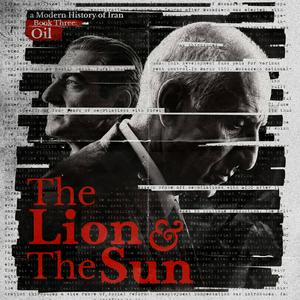
2025 Signal Award Winner: Best History Podcast Iran’s history has been a never-ending struggle for liberty and independence. In this podcast, we tell the story of how Iran ended up where it is now and how religion, monarchy, democracy, and nationalism all played important roles in defining the lives of its people. Book One: The Qajars How the constitutional revolution created Iran’s very first parliament. This season follows the story of the fading Qajar monarchy, as unrest, foreign meddling, and political betrayal set the stage for Reza Khan’s rise to power. Book Two: Reza Shah The rise and fall of Reza Shah, the architect of modern Iran. The meteoric rise of Reza Khan from a simple soldier to the founding Shah of the Pahlavi dynasty, his radical transformation of Iran into a modern state, and his ultimate downfall. Book Three: Oil (January 2026) Listen to new episodes every other Wednesday.
Sitio web del podcastEscucha The Lion and The Sun: A Modern History of Iran, Teorías de Conspiración y muchos más podcasts de todo el mundo con la aplicación de radio.net
Descarga la app gratuita: radio.net
- Añadir radios y podcasts a favoritos
- Transmisión por Wi-Fi y Bluetooth
- Carplay & Android Auto compatible
- Muchas otras funciones de la app
Descarga la app gratuita: radio.net
- Añadir radios y podcasts a favoritos
- Transmisión por Wi-Fi y Bluetooth
- Carplay & Android Auto compatible
- Muchas otras funciones de la app

The Lion and The Sun: A Modern History of Iran
Escanea el código,
Descarga la app,
Escucha.
Descarga la app,
Escucha.
 México

