
Escucha gratis este podcast en la aplicación: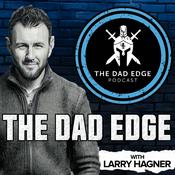 Descarga gratuita en la App Store
radio.net
Sleep timer
Favoritos
1558 episodios
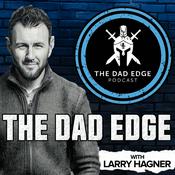
Willpower Alone Will Never Fix a P*rn Problem (Here's Why) featuring Steven Wolt
26/10/2026 | 1 h 4 minThis week I sat down with Steven Wolt, the founder of Valor Recovery, a virtual coaching program that helps men overcome pornography abuse and compulsive sexual behavior. Steven is a husband, father, and entrepreneur who spent decades fighting a private war with sexual addiction while looking successful on the outside. After hitting rock bottom in 2008, he rebuilt his life and now uses that story to help other men get free.
We went underneath the shame, the secrecy, and the promises of I'm done. Steven explained why willpower alone fails, why porn abuse is really an intimacy disorder, how a phone became his main tool for regulating emotions, and what recovery looks like through emotional regulation, community, and vulnerability. If you're a dad who has struggled in silence, or you want to break the cycle so your sons do not inherit it, this one is for you.
Timeline Summary
[1:02] Larry welcomes Steven Wolt and explains why porn recovery episodes get big downloads but few comments
[2:25] Larry shares his own origin story with pornography, starting at age nine
[4:09] Larry introduces Steven, the founder of Valor Recovery, and what dads will learn
[7:33] Steven's start in 1990s New York City, using porn to numb depression and loneliness
[9:07] How his use escalated, and the shame that came with a progression no one explained to him
[12:18] Hitting rock bottom in 2008 after losing his career and cycling through treatment centers
[19:40] Why porn abuse is an intimacy disorder and why the opposite of addiction is connection
[23:18] How shame feeds the belief "I am flawed" and keeps your life small
[26:59] The difference between porn use and porn abuse, and using it to regulate emotions
[28:21] Why it's not about willpower: the phone as a primary regulation tool and retraining the nervous system
[30:30] Three things a man must address: regulating emotions, finding root causes, and tolerating boredom
[36:16] How exercise and caring for yourself physically, emotionally, and spiritually replace the need to escape
[44:59] A walk with the baby, with and without a phone, and why men need time away from screens
[50:24] Larry sits with his sadness over his first son leaving, and why emotions are neither good nor bad
[56:49] How men find the courage to go first with vulnerability, and why it creates a domino effect
[1:00:12] How Valor Recovery works as a 90 day coaching program led by men in long term recovery
Five Key Takeaways
Willpower alone doesn't fix porn abuse because it is a learned way to regulate emotions, so recovery means retraining your nervous system to handle urges, discomfort, and cravings.
Porn abuse is often an intimacy disorder, which means the opposite of addiction is connection, and very few men overcome it by white knuckling it alone.
Guilt says I did something wrong while shame says I am wrong, and moving past shame is what stops it from keeping your life small.
Learning to sit with boredom and uncomfortable emotions like sadness and loneliness, without reaching for your phone, is a key part of lasting recovery.
Caring for yourself physically, emotionally, and spiritually, and being brave enough to be vulnerable with other men, builds a life you don't need to escape from.
Links & Resources
Valor Recovery social media: https://www.facebook.com/ValorRecovery/, https://www.instagram.com/valorrecovery1/, https://www.linkedin.com/company/valor-recovery
Valor Recovery: https://findyourvalor.com
The Dad Edge Podcast: https://thedadedge.com/1545
Closing
Steven said the opposite of addiction is not recovery, it's connection, and I felt that when I admitted I'd been distracting myself with busyness instead of sitting with my sadness over my first son leaving for college. If you're struggling with this, you're in good company, and it's a battle none of us should fight in isolation. Reach out to a brother or to Valor this week, put your phone in another room, and let yourself be bored for a few minutes. Go out and live legendary.Spontaneous or Responsive Desire in Marriage (What the Difference is) featuring Dr. Diane Mueller
23/10/2026 | 44 minThis week I sat down with Dr. Diane Mueller, a board certified sexologist with doctorates in natural medicine and acupuncture and oriental medicine. She is the host of the Libido Lounge and a best selling author and international speaker who helps committed couples who went from passionate lovers to feeling like roommates. She looks at the whole picture, including hormones, stress, kids, menopause, communication, and life transitions.
We got honest about how easily intimacy slips off track, including my own sadness since our first son left the nest and the drinking habit I traced back to it. Dr. Mueller explained why new relationship energy fades after 6 to 18 months, the difference between spontaneous and responsive desire, how novelty brings the spark back, and why talking about sex feels like such a threat. If you're a husband or dad who wants to stop settling for roommate status in your marriage and rebuild desire and connection, this one is for you.
Timeline Summary
[0:00] Introduction and the October Dad Edge Alliance promo
[3:01] Larry welcomes Dr. Diane Mueller of the Libido Lounge and asks how she got into this work
[4:24] Her story of how life gets couples off their intimate track and turns them into roommates
[8:42] What somatic experience means and why we escape uncomfortable feelings in the body
[11:32] Larry shares how sadness over his son leaving led him to drink more, and why he gave it up
[12:47] Breaking habits by asking "why am I doing this" and letting the ego take a back seat
[15:15] Larry introduces Dr. Mueller and the questions on roommate syndrome, desire, and kids
[17:04] Why new relationship energy lasts 6 to 18 months and how dopamine and novelty drive desire
[19:49] Why couples plan intimacy before moving in together, then expect it to happen on its own
[24:16] Spontaneous desire versus responsive desire and why the difference matters in marriage
[25:30] Why a partner with responsive desire needs 15 minutes to an hour of warm up
[27:32] Bringing novelty back with a yes, no, maybe checklist and a date night conversation
[30:14] How to set your partner up to respond well when you share something vulnerable
[33:01] Why talking about sex feels like a bigger threat than other conflicts
[35:07] Start by talking only about what's going right to help the nervous system feel safe
[40:30] The right next step for dads: start the conversation and don't put intimacy on autopilot
[43:17] Where to find Dr. Mueller's books, free resources, and social channels
Five Key Takeaways
The rush of new relationship energy lasts about 6 to 18 months, so when it fades it doesn't mean something is wrong with your marriage.
Spontaneous desire and responsive desire are different, and a partner with responsive desire often needs 15 minutes to an hour of warm up before the desire shows up.
Bring novelty back by going through a yes, no, maybe checklist on a date night, and tell your partner ahead of time how you want them to respond to what you share.
Conversations about sex feel like a bigger threat than other conflicts, so start by only talking about what's going right until both of you feel safe.
Intimacy can't run on autopilot any more than your health can, so ask what you're avoiding and take one small step toward talking about it.
Links & Resources
Dr. Diane Mueller (My Libido Doc): https://mylibidodoc.com
Want to Want It by Dr. Diane Mueller: https://www.amazon.com/s?k=want+to+want+it+diane+mueller
Dad Edge Alliance (October Bonuses): https://thedadedge.com/join
Dad Edge Day at State Farm Stadium: https://thedadedge.com/nfl
The Dad Edge Podcast: https://thedadedge.com/1547
Closing
Dr. Mueller reminded me that the body doesn't lie, and when I admitted I'd been drinking more because I was sad about our son leaving, I saw how easily we avoid the feelings we don't want to face. Her challenge is simple: tell your wife what she does well, make it safe to talk, and don't let your marriage run on autopilot. Pick one thing you love about the way she connects with you and tell her this week. Go out and live legendary.The Danger of Raising Boys Through a Screen featuring Bill Winchester
21/10/2026 | 1 h 4 minBill Winchester is back on the show, and one word kept coming to mind as I read his story: builder. He started with backyard tree forts, married his high school sweetheart Christy at 21, raised three kids, and helped build the church his family worshiped in and the school his kids attended. Somewhere along the way he realized the most important thing he'd ever build was men, which led him to create the Dangerously Good Men rite of passage in Bend, Oregon, and Improving Grounds, where men gather around a fire on Saturday mornings.
We talked about raising sons in a digital world, why despair and loneliness are rising among men, and the difference between protecting your son and preparing him. Bill walked through the liminal space between boyhood and manhood, the six core values behind his framework, and the men of significance every young man needs in his corner. If you're a dad raising a boy who is nearing his teens and you want to send him into manhood supported instead of unprepared, this conversation is for you.
Timeline Summary
[1:01] Larry welcomes Bill Winchester back and asks about the rite of passage he created for his oldest son
[3:18] How Dangerously Good Men serves boys 12 to 15, and a father and son who came full circle after four years
[5:59] Larry introduces Bill: a builder, a father of three, and a man helping fathers lead sons into manhood
[9:22] Raising sons in a digital world, the despair among men, and living in 3D in a 2D world
[12:46] Why fathers must shift from protecting their sons to preparing them
[18:00] The liminal space: the threshold between boyhood and manhood
[19:53] How absent fathers, latchkey kids, and screens left young men unprepared
[22:34] Why anything that can give you everything can take it all away
[24:16] Turning the SOS into shared strength and building community before the crisis
[29:28] Six arrows, a shadow box, and the four year journey that ended in a college dorm room
[31:38] The six HEROIC core values: honorable, enterprising, responsible, original, intimate, and creative
[38:49] Men of significance: the letters five men write to a son, each tied to a core value
[40:36] Driving away from a college dorm knowing his son was prepared and not alone
[44:25] Why a boy needs other good men besides his dad, from grandfathers to coaches
[56:46] Why a deep installation process beats cramming, and why it is simple but not easy
[1:02:15] Where to find Bill's work and a free 90 minute call for registering for the January 2027 event
Key Takeaways
Shift from protecting your son to preparing him, because a boy who has only been protected steps into manhood empty handed.
Give your son a clear threshold between boyhood and manhood, because a graduation party alone doesn't tell him who he is becoming.
Recruit a small circle of trusted men who will write him letters and answer the phone at 3 a.m., because a boy listens differently to a man he respects.
Teach your son that his worth doesn't come from likes, followers, or screens, because anything that can give you everything can take it all away.
Build values deep over years instead of cramming them in a crisis, because what is bolted on quickly gets unbolted at the first challenge.
Links & Resources
Dangerously Good Men (January 2027 event, use code FirstArrow for a free 90 minute coaching call): https://dangerouslygoodmen.com
Improving Grounds: https://improvinggrounds.com
Dad Edge Alliance (October Bonuses): https://thedadedge.com/join
Dad Edge Day at State Farm Stadium: https://thedadedge.com/nfl
The Dad Edge Podcast: https://thedadedge.com/1548
Closing
Bill told me about driving away from his oldest son's dorm room, knowing his boy had a quiver of arrows and a handful of men who would pick up the phone, and how that gave him peace he couldn't have gotten any other way. That's what I felt when I watched Mason walk through his own rite of passage, and it's why I'm bringing Lawson to Bill's January 2027 event. Whether you do it with a mountain hike, a weekend away, or a simple circle of men, don't leave your son's manhood to chance. Start by picking one man you trust and asking him to step in. Go out and live legendary.The Mother's Side Baldness Myth Finally Explained featuring Dr. Goran Jezic
19/10/2026 | 49 minDr. Goran Jezic is a dual board certified physician practicing in Houston since 1996 who has focused on hair restoration for over a decade, with his team reporting more than 1 million hair grafts implanted. He personally conducts every consultation and specializes in the follicular unit extraction (FUE) method, working with everyday men as well as professional athletes, actors, and celebrities.
In this episode Larry and Dr. Jezic break down why men actually lose their hair, what finasteride and minoxidil really do (and their side effect profiles), and how modern FUE transplants compare to the older strip method and the "hair plugs" of the past. If you're a man noticing thinning or a receding hairline and you want straight answers on genetics, medications, and what's possible before your hairline is gone, this conversation is for you.
Timeline Summary
[1:01] – Larry welcomes Dr. Goran Jezic and frames the topic every man quietly thinks about: hair loss
[1:24] – Dr. Jezic on his father, a three time Olympian in water polo and PhD chemist who called fatherhood his proudest achievement
[4:22] – His dad's early passing from prostate cancer just shy of 74, and being inducted into the Water Polo Hall of Fame posthumously
[6:14] – The one standard his father held him to: integrity and "do the right thing when nobody's looking"
[9:07] – Larry's intro to Dr. Jezic's credentials, 1 million plus grafts, and hands-on consultations
[12:10] – Why high-performing dads often pressure their kids, and how Dr. Jezic's father chose "did you do your best?" instead
[20:11] – Larry reveals he had hair restoration surgery in 2012 and has zero regrets
[20:35] – The real cause of hair loss explained: androgenic alopecia, DHT, and genetically susceptible follicles
[22:43] – Busting the myth that baldness comes only from your mother's side of the family
[25:32] – Finasteride, DHT, and the small subset of men who get low-T side effects including depression and suicidal ideation
[28:21] – How minoxidil actually works, why it's different from finasteride, and the oral pill option
[33:36] – FUE versus the older strip (FUT) method, linear scarring, and why both beat the old hair plugs
[37:21] – What men are most worried about in consultations and the real psychological weight of hair loss
[40:04] – How TRT and testosterone optimization can accelerate hair loss in predisposed men
[45:11] – Dr. Jezic's closing message: free consultations, no stigma, and "you've got nothing to lose but more hair"
5 Key Takeaways
Hair Loss Is Genetic And Hormonal — Male pattern baldness is androgenic alopecia, driven by genetically susceptible follicles that react to the testosterone byproduct DHT. It's roughly a third of men by 30 and half by 50.
The Mother's Side Myth Is Mostly Myth — Baldness was once thought to be inherited only from the maternal line, but research now shows it's multifactorial, can come from either side, and can skip generations.
Finasteride Keeps, Minoxidil Grows — Finasteride blocks DHT to protect the hair you still have, while minoxidil lengthens the growth cycle to stimulate fuller hair. They work by completely different mechanisms and pair well together.
Know The Side Effect Profile — A small percentage of men on finasteride experience low-T type effects like low libido, mood changes, and in rare cases depression or suicidal ideation. It's uncommon but real and worth discussing with a doctor.
Modern Transplants Are Not Hair Plugs — Today's FUE method extracts individual follicles with no linear scar, minimal downtime, and natural-looking results, a far cry from the strip method and the obvious plugs of decades past.
Links & Resources
Houston Hair Transplant Center — https://houstonhairtransplant.com
Maxim Hair Restoration (Dr. Jezic is medical director) — https://maximhairrestoration.com
The Dad Edge website and episode page — https://thedadedge.com/1552
Join The Dad Edge Alliance — https://thedadedge.com/alliance
Enjoyed This Episode?
If you've ever stared at a clump of hair in the shower drain and wondered whether anything actually works, this conversation gives you the straight science without the Instagram hype. Share it with a friend who's been quietly battling the bald and wondering what his options really are. Follow The Dad Edge, and if the show's helped you, leave a rating and review so more dads can find it.The Unspoken Expectations Are Quietly Hurting Your Marriage featuring Michael Bernoff
16/10/2026 | 1 h 7 minThis week I sat down with Michael Bernoff, a human behavior expert with more than 20 years of study into communication, influence, and language. He's the founder of the Human Communications Institute and the author of Average Sucks, and he started as an average middle class Jersey kid who was told that certain things weren't for people like us. At 19 he discovered that communication is a skill you can learn, and at 21 he met his mentor Jim Rohn, whose success principles shaped decades of his work.
We got practical on the words we use with our kids, our wives, and ourselves when nobody is listening. Michael shared why saying it's hard keeps us stuck, why telling your kid you're proud of him might not be enough, how one phrase takes the pressure off any habit, and what your wife may really mean when she says you should know by now. If you're a dad or husband who wants to be more intentional about the language and communication patterns in your home, this one is for you.
Timeline Summary
[1:01] Larry welcomes Michael Bernoff and asks the story behind going by Mike versus Michael
[4:19] Larry introduces Michael: communication expert, founder of the Human Communications Institute, and author of Average Sucks
[9:17] Growing up with the "that's them, this is us" mindset, and why "how can I do that" beats "how does he do that"
[12:29] How wrestling legend Jake Herbert and Larry trade a daily gratitude text before 6 a.m.
[18:54] The psychology of communication: why words trigger a chemical reaction and performance is influence
[22:15] The reframe for kids: swap "it's hard" for "it's harder than you'd like it to be"
[25:39] Why "you should be proud of yourself" can land better than "I'm proud of you"
[29:24] Larry's story about praising a talented wrestler's wins instead of his work ethic
[31:30] Honor the effort, not the result: why "of course you did, that's the kind of person you are" works
[37:59] Why absolutes like every day create stress, and how "more often than not" makes habits doable
[43:40] What to say at night instead of "I'm exhausted": "I served a lot of people today"
[48:35] Sorting food into nutrition, entertainment, and addiction to change what you eat
[52:37] Marriage: why unspoken expectations lead to disappointment, and how to own your mistakes
[58:16] What "you should know by now" really means, and how to ask your wife for what you need
[1:00:35] Why your wife expects you to be great, and why it's okay she doesn't say it every day
[1:02:38] Closing message: it's up to dads to lead the change in how we communicate at home
Key Takeaways
Communication isn't about what you said, it's about what was heard, so speak to get the response you want instead of to sound right.
Teach your kids to say it's harder than they'd like it to be instead of it's hard, because that small change points the mind toward a solution.
Honor your kids' effort and who they're becoming instead of just the result, and help them feel proud of themselves so they don't need your approval to feel good.
Trade absolutes like every day for more often than not, and the pressure comes off while the habit sticks.
Say your expectations out loud to your wife, because unspoken expectations lead to disappointment, and you're not owed a particular response.
Links & Resources
Michael Bernoff: https://michaelbernoff.com
Average Sucks by Michael Bernoff: https://www.amazon.com/s?k=average+sucks+michael+bernoff
Dad Edge Alliance (October Bonuses): https://thedadedge.com/join
Dad Edge Day at State Farm Stadium: https://thedadedge.com/nfl
The Dad Edge Podcast: https://thedadedge.com/1544
Closing
Michael said it isn't what you say that matters, it's how what you said was received, and I've been listening to my own words differently ever since. When I told him how I wished my wife would touch me more and she heard criticism, I saw exactly how quickly a good request turns into a defensive moment. Michael's challenge was simple: ask for what you want, don't expect a perfect response, and lead the way in how your family talks. Pick one phrase this week, maybe more often than not, and use it with your kids and your wife. Go out and live legendary.
Más podcasts de Educación










Podcasts a la moda de Educación



























Acerca de The Dad Edge Podcast
The Dad Edge Podcast is a movement. It is a strong community of Fathers who all share a set of values.
Larry Hagner, founder of The Dad Edge, breaks down common challenges of fatherhood, making them easy to understand and overcome. Tackling the world of Fatherhood can be a daunting task when we try to do it alone.
The mission of The Dad Edge Podcast is to help you become the best, strongest, and happiest version of yourself so that you can help guide your kids to the best version of themselves. Simple as that.
Everything you need and all of our resources can be found at thedadedge.com/podcast
Sitio web del podcastEscucha The Dad Edge Podcast, Inglés desde cero y muchos más podcasts de todo el mundo con la aplicación de radio.net
Descarga la app gratuita: radio.net
- Añadir radios y podcasts a favoritos
- Transmisión por Wi-Fi y Bluetooth
- Carplay & Android Auto compatible
- Muchas otras funciones de la app
Descarga la app gratuita: radio.net
- Añadir radios y podcasts a favoritos
- Transmisión por Wi-Fi y Bluetooth
- Carplay & Android Auto compatible
- Muchas otras funciones de la app

The Dad Edge Podcast
Escanea el código,
Descarga la app,
Escucha.
Descarga la app,
Escucha.
 México