

Escucha gratis este podcast en la aplicación: Descarga gratuita en la App Store
radio.net
Sleep timer
Favoritos
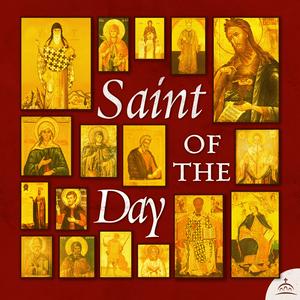
Saint of the Day
Dn. Jerome Atherholt, and Ancient Faith Ministries
Último episodio
6090 episodios
Holy Prophet Micah (8th c. BC)
14/08/2026Read his prophecies (which include the prophecy that Christ would be born in Bethlehem, Micah 5:2) in the Old Testament book that bears his name. He was a contemporary of the prophets Isaiah, Amos and Hosea, and is ranked sixth among the "minor" prophets. It was he who prophesied that the Christ would be born in Bethlehem. (This is a different Micah from the one mentioned in 1 Chronicles 22:8, who lived earlier). Micah was buried in his home village of Morasth in the land of Judah; his holy relics were found along with those of the prophet Habbakuk during the reign of St Theodosius the Great — their location was given by a revelation to Zebennus, Bishop of Eleutheropolis.Holy Martyr Hippolytus of Rome and 18 Martyrs with him (258)
13/08/2026He was the pagan jailkeeper who guarded St Laurence (see August 10); seeing his prisoner's holiness and the wonders wrought by him, Hippolytus was convinced of the truth of the Faith and became a Christian. When St Laurence baptized him, he was granted a vision of heaven and said 'I see innocent souls in great joy.' He took Laurence into his own home, and his entire household were baptized, nineteen in all.
When St Laurence was martyred, Hippolytus retrieved his body by night and buried it. He was detected and brought before the Emperor Valerian on the third day after Laurence's death. Despite severe beatings he would not renounce his faith. The Emperor ordered that he be stripped and flayed but, standing naked before the emperor, Hippolytus said 'You have not stripped me, but have begun to clothe me.' Despite all torments, neither Hippolytus nor any of his household would deny Christ. All of his household were slain, one by one, before Hippolytus. Finally Hippolytus himself was bound behind a wild horse and dragged to death.
Our Holy Mother the Empress Irene (Xenia in Monasticism) (12th c.)
She was the pious wife of the Emperor John II Comnenus (reigned 1118-1143), but retired into monastic life. She founded the Monastery of the Pantokrator in Constantinople.Martyrs Anicetas and Photius of Nicomedia (305)
12/08/2026These holy martyrs suffered victoriously in the year 305 (Prologue) or 288 (Great Horologion), during the reign of Diocletian, who visited Nicomedia to stir up a persecution of Christians there. Anicetas, one of the city governors, presented himself before the Emperor, boldly confessed his Christian faith, and denounced the worship of the idols. Anicetas was subjected to a series of cruelties: his tongue was cut out, but he miraculously continued to speak; he was thrown to a lion, but it refused to attack him; then he was savagely beaten with rods until his bones showed through his wounds. His nephew Photius, seeing his endurance of all these trials, ran forward, embraced his uncle, and declared to the Emperor that he too was a Christian. The Emperor ordered that he be beheaded immediately, but the executioner, raising his sword, gave himself such a wound that he died instead. After many tortures, the two were put in prison for three years, then brought out and cast into a fiery furnace, where they died, though their bodies were brought out of the flames intact.
Saint Anicetas is counted as one of the Holy Unmercenaries.The Holy Martyr Susanna the Virgin, and those with her (295-296)
11/08/2026She was the daughter of Gavinius, a Christian priest in Rome, and the niece of Pope Gaius. The Emperor Diocletian's adopted son Maximian wished to marry Susanna, but she had no desire to marry any one, least of all a pagan. The patricians Claudia and Maxima were sent to Susanna by the Emperor to present Maximian's suit; but instead she turned both of them, and all their households, to the Faith. The enraged Emperor had Claudia, Maxima and their families executed, then had Susanna herself beheaded. The Emperor's wife, Serena, was a secret Christian, and took Susanna's body secretly and buried it. Soon after this Susanna's father Gavinius and her uncle Pope Gaius also met martyrdom.Holy Martyrs Archdeacon Laurence, Pope Sixtus, and others with them (258)
10/08/2026"This Saint, who was born in Spain, was the Archdeacon of the Church of Rome, caring for the sacred vessels of the Church and distributing money to the needy. About the year 257, a harsh persecution was raised up against the Christians by Valerian. Pope Sixtus, who was from Athens, was commanded to worship the idols, and refused; before his martyrdom by beheading, he committed to Laurence all the sacred vessels of the Church. When Laurence was arrested and brought before the Prefect, he was questioned concerning the treasures of the Church; he asked for three days' time to prepare them. He then proceeded to gather all the poor and needy, and presented them to the Prefect and said, "Behold the treasures of the Church." The Prefect became enraged at this and gave command that Laurence be racked, then scourged with scorpions (a whip furnished with sharp iron points — compare II Chron. 10:11), then stretched out on a red-hot iron grill. But the courageous athlete of Christ endured without groaning. After he had been burned on one side, he said, "My body is done on one side; turn me over on the other." And when this had taken place, the Martyr said to the tyrants, "My flesh is now well done, you may taste of it." And when he had said this, and had prayed for his slayers in imitation of Christ, he gave up his spirit on August 10, 258." (Great Horologion). His icon shows him stretched on the grill.
Más podcasts de Cristianismo
 La Biblia en un Año (con Samu Uribe)Cristianismo, Religión y espiritualidad
 Padre José Arturo López CornejoCristianismo, Religión y espiritualidad
 La Biblia en un Año (con Fray Sergio Serrano, OP)Cristianismo, Historia, Religión y espiritualidad
 365 con DiosCristianismo, Religión y espiritualidad
 Aviva Nuestros CorazonesCristianismo, Religión y espiritualidad
 RebeldesPodcastCristianismo, Religión y espiritualidad
 La Biblia en 365 diasCristianismo, Espiritualidad, Religión, Religión y espiritualidad
 Meditación del DíaCristianismo, Religión y espiritualidad, Salud mental, Salud y forma física
 Dr. Armando Alducin PodcastCristianismo, Religión y espiritualidad
 Proyecto BibliaCristianismo, Religión y espiritualidad
Podcasts a la moda de Cristianismo
 Joyce Meyer Enjoying Everyday Life® TV Audio PodcastCristianismo, Religión y espiritualidad
 QNTLCCristianismo, Religión y espiritualidad
 Search Results on SermonAudioCristianismo, Religión y espiritualidad
 Itiel Arroyo PredicacionesCristianismo, Religión y espiritualidad
 Mujer Verdadera 365: Nuevo Testamento y SalmosCristianismo, Religión y espiritualidad
 Semilla de Mostaza BazCristianismo, Religión y espiritualidad
 VEA Comunidad CristianaCristianismo, Espiritualidad, Religión y espiritualidad, Salud mental, Salud y forma física
 Girls Gone BibleCristianismo, Religión y espiritualidad
 Rosario del DíaCristianismo, Educación, Ocio, Pasatiempos, Religión y espiritualidad, Tutoriales
 A Través de la BibliaCristianismo, Religión y espiritualidad
 Que amen a sus hijosCristianismo, Religión y espiritualidad
 The Bryce Crawford PodcastCristianismo, Religión y espiritualidad
 Consagración a MaríaCristianismo, Espiritualidad, Religión y espiritualidad
 La Sinopsis de la BibliaCristianismo, Religión y espiritualidad
 Vida Abundante de ParralCristianismo, Religión y espiritualidad
 The Catechism in a Year (with Fr. Mike Schmitz)Cristianismo, Espiritualidad, Religión y espiritualidad
 Mujer Verdadera 365: CronológicoCristianismo, Religión y espiritualidad
 Another Name For Every Thing with Richard RohrCristianismo, Religión y espiritualidad
 Apologética para gentilesCristianismo, Religión y espiritualidad
Acerca de Saint of the Day
Daily Orthodox Saints
Sitio web del podcastEscucha Saint of the Day, La Biblia en un Año (con Samu Uribe) y muchos más podcasts de todo el mundo con la aplicación de radio.net
Descarga la app gratuita: radio.net
- Añadir radios y podcasts a favoritos
- Transmisión por Wi-Fi y Bluetooth
- Carplay & Android Auto compatible
- Muchas otras funciones de la app
Descarga la app gratuita: radio.net
- Añadir radios y podcasts a favoritos
- Transmisión por Wi-Fi y Bluetooth
- Carplay & Android Auto compatible
- Muchas otras funciones de la app

Saint of the Day
Escanea el código,
Descarga la app,
Escucha.
Descarga la app,
Escucha.
 México