
Escucha gratis este podcast en la aplicación: Descarga gratuita en la App Store
radio.net
Sleep timer
Favoritos
1059 episodios
Is 15 Weeks Enough to Build Muscle PostMenopausal? Science Unpacked
23/10/2026 | 32 minThis episode is sponsored by BEAM Minerals.
BEAM Minerals - Get 20% off your first order at https://beamminerals.com/FLIPPING50 with code FLIPPING50.
Is 15 weeks enough to build muscle postmenopausal?
If you're wondering whether your muscles can still grow stronger in postmenopause, the science is here.
You'll learn how to approach strength training, find the right balance between workouts and recovery, and measure progress beyond the number on the scale.
Discover what the research actually tells us about whether 15 weeks is enough to build muscle postmenopausal — and how to put those findings to work in your own strength-training routine.
Questions We Answer in This Episode
[00:01:48] The study: 15 weeks being enough to build muscle postmenopausal.
[00:12:10] Why isn't the scale telling the whole story?
[00:16:52] Do you really need to lift three days a week?
[00:18:23] Can you get stronger without changing everything?
[00:20:54] How do you build strength safely after 50?
[00:26:04] How do you know your strength training is working?
If this episode made you flip your workout routine — share it!
👉 Post to your stories, tag @Flipping50TV in Instagram and share the episode to your best friend.
👉 Meet other women, who are done with outdated fitness advice, at Flipping50 Facebook Group.
👉 Subscribe, share, and leave a review if you’re ready to flip the script on Flipping 50 The Stronger Way.
References:
Maturitas. 2026, PMID: 41687563.
Other Episodes You Might Like:
Previous Episode - Perimenopause's Long Game: How It Shapes Your Health for Years to Come
More Like This:
3 Steps to Gain Lean Muscle in Menopause
6 Menopause Fitness Questions From the Community
Resources:
Work with Debra with an Ultimate Assessment
Flipping 50 App on iOS App Store & Google Play
Questions / Contact Debra on Instagram or Facebook Group
FLIP Menopause program - Join the next live cohort
Flipping 50 Master class - Choose your session here
Measure what matters using the Flipping 50 Strong Aging Index
Hot Off The Press! The science for staying strong.
Get the full episode Show Notes HERE.Perimenopause's Long Game: How It Shapes Your Health for Years to Come
20/10/2026 | 58 minThis episode is sponsored by BEAM Minerals and AquaTru.
BEAM Minerals - Get 20% off your first order at https://beamminerals.com/FLIPPING50 with code FLIPPING50.
AquaTru - Go to https://AquaTru.com/ now for 20% off (your purifier) using promo code FLIPPING50. AquaTru even comes with a 30-day best-tasting water guarantee.
Perimenopause long term health is about more than managing symptoms or accepting that getting older means slowing down.
What if this stage of life is your opportunity to change how you age, protect your future health, and stay strong and independent for decades to come?
Dr. Jennifer Rollins joins us to explore menopause care, hormone therapy, bone and muscle health, and why your long-term health deserves more attention than symptoms alone.
Learn how the perimenopause long term game can become a turning point for building a stronger, healthier future.
My Guest:
Dr. Jennifer Roelands, MD is a double board-certified OB-GYN and Integrative Medicine physician specializing in perimenopause, hormone optimization, and women's longevity health. She earned her medical degree at UC San Diego, completed her OB-GYN residency at Duke University, and a fellowship at the Andrew Weil Center for Integrative Medicine. She is the founder of Precision Health MD and creator of the Midlife Upgrade Academy, reaching over 35,000 subscribers through evidence-based education on hormones and midlife health.
Questions We Answer in This Episode:
[00:09:09] Why are so many women left without answers in perimenopause?
[00:12:41] If you feel great, do you really need to consider HRT?
[00:14:36] Is menopause care about more than symptom relief?
[00:20:17] Why should midlife women train for strength, not skinny?
[00:29:26] Why is perimenopause still dismissed or misunderstood?
[00:34:25] Is bone and muscle loss inevitable as you age?
[00:36:47] What should you measure now for a healthier future?
Connect with Dr. Jen:
Website - Dr. Jennifer Roelands
Instagram - @dr.jenniferroelands
YouTube - Dr. Jennifer Roelands, MD
Connect with Flipping 50:
Facebook Group - Flipping50 Insiders
Instagram - @Flipping50TV
YouTube - @Flipping50TV
More Episodes - Flipping 50 The Stronger Way
Other Episodes You Might Like:
Previous Episode - Hidden Toxins in Everyday Life: The Risks of Cancer and Accelerated Aging
Next Episode - Is 15 Weeks Enough to Build Muscle PostMenopausal? Science Unpacked
More Like This - The Perimenopause Rules Nobody Told You About Resistance Training
Resources:
Work with Debra with an Ultimate Assessment
Flipping 50 App on iOS App Store & Google Play
Questions / Contact Debra on Instagram or Facebook Group
FLIP Menopause program - Join the next live cohort
Flipping 50 Master class - Choose your session hereHidden Toxins in Everyday Life: The Risks of Cancer and Accelerated Aging
16/10/2026 | 27 minToxins in everyday life may be hiding in places you’d never think to look.
What if the exposures affecting your health aren't coming from your diet or workouts, but from the water you drink, the products you use, and the places where you exercise?
Let’s explore everyday environmental exposures, potential effects on hormones, and why women in midlife may want to take a closer look at their cumulative exposure.
This episode offers practical ways to become more aware of hidden toxins in everyday life without giving up the activities that support a stronger, healthier life.
My Guest:
Dr. Stephanie Gray, DNP, MS, ARNP, AGNP-C, ABAAHP, FAARFM, is a functional medicine provider who helps women and men build sustainable, optimal health and longevity. She specializes in helping midlife women restore optimal hormone levels so they can improve sleep, mood, body composition, and how they feel in their bodies.
Stephanie is the Amazon best-selling author of Your Longevity Blueprint and Your Fertility Blueprint, with Your Hormone Blueprint soon to launch. She is also the host of the Your Longevity Blueprint podcast and co-founder of Your Longevity Blueprint Nutraceuticals and the Integrative Health and Hormone Clinic in Hiawatha, Iowa.
Questions We Answer in This Episode:
[00:04:02] Could everyday exposures be adding up?
[00:05:15] What do agricultural chemicals have to do with health?
[00:07:15] Is your drinking water as clean as you think?
[00:10:28] Could your water bottle affect your hormones?
[00:11:18] Should you think twice about swimming in pools or lakes?
[00:14:54] Are outdoor activities exposing you to more than you realize?
Connect with Dr. Stephanie:
Book - Your Hormone Blueprint
Facebook - Dr. Stephanie Gray and Integrative Health and Hormone Clinic
Instagram - @stephaniegraydnp
Youtube - @YourLongevityBlueprint
Connect with Flipping 50:
Facebook Group - Flipping50 Insiders
Instagram - @Flipping50TV
YouTube - @Flipping50TV
More Episodes - Flipping 50 The Stronger Way
Full Episode with Dr. Stephanie:
Are Your Hormones Aging You Faster? Midlife Lab Tests & Toxins You Need to Know
Resources:
Work with Debra with an Ultimate Assessment
Flipping 50 App on iOS App Store & Google Play
Questions / Contact Debra on Instagram or Facebook Group
FLIP Menopause program - Join the next live cohort
Flipping 50 Master class - Choose your session here
🎧 Want to take this conversation further?
Get the full story from this episode HERE.True Detox During Menopause: Is It Science or Trend?
13/10/2026 | 42 minThis episode is sponsored by AirDoctor.
AirDoctor - Head to https://AirDoctorPro.com and use promo code FLIPPING50 and get up to $300 off ANY of their select AirDoctor models, plus you will get a 3-year warranty, absolutely FREE! All AirDoctor air purifiers come with a 30-day money-back guarantee.
What and how is true during menopause?
Do you really need another wellness protocol?
Know what actually happens inside your body. From brain fog and fatigue to everyday chemical exposures, could your total toxic burden be part of the picture?
A quick cleanse may miss the bigger picture, and how the “last straw” theory can change the way you think about your health.
Learn what to consider before trying a detox protocol, who should use caution, and why the order and pace of a protocol matter.
We’re separating science from detox marketing hype. If you’re curious about true detox during menopause, this conversation is for you.
My Guest:
Dr. Gregory Kelly is Chief Product Officer at Qualia Life, naturopathic physician (N.D.), and author of the book Shape Shift. He was the editor of the journal Alternative Medicine Review and has been an instructor at the University of Bridgeport in the College of Naturopathic Medicine, where he taught classes in Advanced Clinical Nutrition, Counseling Skills, and Doctor-Patient Relationships. Dr. Kelly has published hundreds of articles on natural medicine and nutrition, contributed three chapters to the Textbook of Natural Medicine, and has more than 30 journal articles indexed on Pubmed. His areas of expertise include nootropics, anti-aging and regenerative medicine, weight management, sleep and the chronobiology of performance and health.
Questions We Answer in This Episode:
[00:09:21] Why might we need to think about detox if the liver and kidneys already detox the body?
[00:14:54] What does “real detox” actually look like—and how is it different from a typical cleanse?
[00:21:21] Can a higher toxic burden make menopause harder?
[00:25:16] How much do all the little exposures in everyday life really add up?
[00:29:00] Can past medications, such as antibiotics, still affect us years later?
[00:31:28] Who should NOT do a detox, and what if you’re sensitive to detox protocols?
[00:33:50] How often should you detox, and what else can you do on those days?
Connect with Dr. Gregory:
Get up to 50% discount for Qualia Life products when you use this link! Or use code FLIPPING50
Facebook - Qualia Life
Instagram - @qualialife
TikTok - @qualialife
LinkedIn - Dr. Gregory Kelly
Connect with Flipping 50:
Facebook Group - Flipping50 Insiders
Instagram - @Flipping50TV
YouTube - @Flipping50TV
More Episodes - Flipping 50 The Stronger Way
Other Episodes You Might Like:
Previous Episode - Is There Really a Best Time to Strength Train After 50
More Like This - How Mold Toxicity Affects Hormonal Balance During Menopause And Effective Detox Strategies
Resources:
Work with Debra with an Ultimate Assessment
Flipping 50 App on iOS App Store & Google Play
Questions / Contact Debra on Instagram or Facebook Group
FLIP Menopause program - Join the next live cohort
Flipping 50 Master class - Choose your session here
🎧 Want to take this conversation further?
Get the full story from this episode HERE.Is There Really a Best Time to Strength Train After 50
09/10/2026 | 31 minThis episode is sponsored by Alloy.
Alloy - Spoiler: you can feel amazing in menopause. Visit https://myalloy.com and use code FLIPPING50 for 20% off your first order!
The best time to strength train after 50 might not be the time you think.
But does training when your body performs best actually result in more strength or muscle?
It’s time to look at what the research actually says.
A new 2026 randomized controlled trial put that question to the test in adults 60–80 years old. The answer may simplify your workout schedule considerably.
In this episode, I break down what the researchers discovered, what this study does — and does not — change about the Flipping 50 recommendations, and why your sleep, energy and ability to consistently exercise still matter when choosing your best time to strength train after 50 without rearranging your life around the clock.
Questions We Answer in This Episode
[00:04:45] Does your strongest workout time actually build more muscle?
[00:06:24] Is 4 PM really better than 6 AM for strength training?
[00:13:11] What matters more than finding the “perfect” workout hour? Should exhausted women really push through hard workouts?
[00:19:01] Why does “intense early, light late” still matter?
[00:23:46] Can late workouts mess with your sleep after 50?
[00:25:30] So what really is the best time to strength train after 50?
If this episode made you flip your workout routine — share it!
👉 Post to your stories, tag @Flipping50TV in Instagram and share the episode to your best friend.
👉 Meet other women, who are done with outdated fitness advice, at Flipping50 Facebook Group.
👉 Subscribe, share, and leave a review if you’re ready to flip the script on Flipping 50 The Stronger Way.
References:
Journal of Cachexia Sarcopenia Muscle. 2026, PMID: 42791208.
Journal of Strength and Conditioning Research. 2012, PMID: 22531613.
Chronobiology International. 2022, PMID: 34978950.
Physical Activity and Nutrition. 2023, PMID: 37946447.
Other Episodes You Might Like:
Previous Episode - Tired But Wired? Why You’re Exhausted But Can’t Shut Your Brain Off After 50
More Like This - The Bible for Exercise Guidelines Update: Here’s What It Means
Resources:
Work with Debra with an Ultimate Assessment
Flipping 50 App on iOS App Store & Google Play
Questions / Contact Debra on Instagram or Facebook Group
FLIP Menopause program - Join the next live cohort
Flipping 50 Master class - Choose your session here
🎧 Want to take this conversation further?
Get the full story from this episode HERE.
Más podcasts de Fitness



Podcasts a la moda de Fitness


Acerca de Flipping 50 the Stronger Way
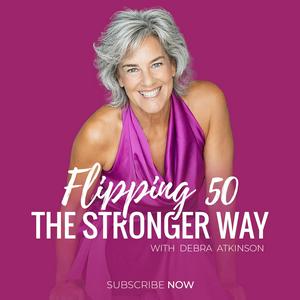
The podcast for women in menopause and beyond who want to change the way they age. Fitness, wellness, and health science put into practical tips you can use today. You still got it, girl!
Sitio web del podcastEscucha Flipping 50 the Stronger Way, Mind Pump: Raw Fitness Truth y muchos más podcasts de todo el mundo con la aplicación de radio.net
Descarga la app gratuita: radio.net
- Añadir radios y podcasts a favoritos
- Transmisión por Wi-Fi y Bluetooth
- Carplay & Android Auto compatible
- Muchas otras funciones de la app
Descarga la app gratuita: radio.net
- Añadir radios y podcasts a favoritos
- Transmisión por Wi-Fi y Bluetooth
- Carplay & Android Auto compatible
- Muchas otras funciones de la app
Flipping 50 the Stronger Way
Escanea el código,
Descarga la app,
Escucha.
Descarga la app,
Escucha.
Flipping 50 the Stronger Way: Podcasts del grupo
 México