
Escucha gratis este podcast en la aplicación: Descarga gratuita en la App Store
radio.net
Sleep timer
Favoritos
3 episodios
Teotihuacan: Who Really Built the City of the Gods?
18/10/2026 | 32 minWhen the Mexica found Teotihuacan, its great temples had been in ruins for six hundred years. Nobody remembered who had built it, so they decided it was the place where the gods were born.
We follow what archaeology has learned since: a planned city of more than a hundred thousand people, pyramids dedicated with human sacrifice, a sealed tunnel under the Temple of the Feathered Serpent with pools of liquid mercury, Maya-style murals painted at its heart, and a stranger from Teotihuacan who arrived at Tikal on the day its king died. Then the fire of the year 550, and the question that remains open: what did its people call themselves?
What we know, what we think, and what people made up, kept apart.
Chapters:
0:00 A city nobody remembered
0:45 The names the Mexica gave
2:23 How the Sun was born
5:10 The Mexica dig up Teotihuacan
6:26 The largest city of its time in the Americas
8:14 The Pyramid of the Sun
8:55 Rebuilt in 1910, and the cave below
10:19 The Pyramid of the Moon
11:44 The Feathered Serpent and its army
13:08 The tunnel found in 2003
14:40 75,000 objects and a pool of mercury
16:33 A city of many peoples
17:29 The Maya in Teotihuacan
18:38 Tikal, 378: a stranger arrives
19:51 The painted altar of 2025
21:13 Conquest, alliance or prestige?
22:21 Who ruled Teotihuacan?
23:34 Can we read their writing?
25:16 The volcano and the rival city
26:33 The fire of 550
27:20 A revolt from within?
28:29 After the fall
29:19 How the Mexica filled the silence
29:59 Giants and other myths
30:49 Putting the layers back in order
Sources:
- Sahagún, Florentine Codex, book VII, Library of Congress — https://www.loc.gov/item/2021667852
- UNESCO, Pre-Hispanic City of Teotihuacan (no. 414) — https://whc.unesco.org/en/list/414/
- Metropolitan Museum of Art, Teotihuacan (ca. 100 BCE–800 CE) — https://www.metmuseum.org/essays/teotihuacan
- Sugiyama, Human Sacrifice, Militarism, and Rulership, Cambridge UP, 2005 — https://www.cambridge.org/core/books/abs/human-sacrifice-militarism-and-rulership/conclusion-the-feathered-serpent-pyramid-as-symbol-of-sacrifice-militarism-and-rulership/405F99023DA73E9ED307167D034A60ED
- ASU, Sacrificial burial at the Pyramid of the Moon, 2004 — https://www.sciencedaily.com/releases/2004/12/041203084345.htm
- Smithsonian, A Secret Tunnel Found in Mexico, 2016 — https://www.smithsonianmag.com/history/discovery-secret-tunnel-mexico-solve-mysteries-teotihuacan-180959070/
- ASU, Liquid mercury found beneath Teotihuacan temple, 2015 — https://news.asu.edu/content/liquid-mercury-found-beneath-teotihuacan-temple
- Brown University, Painted altar found at Tikal, 2025 — https://www.brown.edu/news/2025-04-08/altar
- University of Copenhagen, The Language of Teotihuacan Writing, 2025 — https://www.eurekalert.org/news-releases/1100884
- What Happened after the Fall of Teotihuacan?, Latin American Antiquity, 2026 — https://www.cambridge.org/core/journals/latin-american-antiquity/article/introduction-what-happened-after-the-fall-of-teotihuacan/4D4C66E5D714E86E5F305A543E64529B
This episode is narrated with AI-generated voices. The research, sources and script are made by The Quiet Ruins.The Aztec Great Temple: How Many Were Really Sacrificed?
11/10/2026 | 36 minIn 1487, the Mexica dedicated the Great Temple of Tenochtitlan. The chronicles say eighty thousand four hundred people were sacrificed in four days, and the friar who wrote that number down did not believe it himself.
We follow the number from the lost Mexica chronicle it came from, through the painted codices that disagree with it, to what five decades of excavation under Mexico City have found: the victims counted bone by bone, where they came from, an offering made in a year of drought, and the tower of skulls described by the conquistadors and found in 2015.
What we know, what we think, and what people made up, kept apart.
Chapters:
0:00 A number nobody believed
0:45 The temple under Mexico City
1:55 A city on a lake
4:00 What Cortés saw
5:03 The Great Temple
6:07 Ahuitzotl and the year 1487
6:58 Durán's account of the dedication
8:18 The hidden guests
9:17 Eighty thousand four hundred
10:10 The lost Chronicle X
11:25 One page, two numbers
12:37 Taking the number seriously
13:40 A boast of power
14:28 The fall of Tenochtitlan
16:11 The stone found in 1978
17:02 The myth of Coyolxauhqui
17:56 The Templo Mayor Project
19:00 What the bones say
20:59 Where the victims came from
22:04 Offering 48 and the great drought
23:43 The skull rack in the chronicles
25:04 The tower found in 2015
26:52 The women in the tower
29:02 Ancient DNA and what comes next
30:08 How many a year?
32:48 The protein theory
33:49 Two opposite myths
34:40 Putting the layers back in order
Sources:
- Diego Durán, History of the Indies of New Spain, ch. XLIV (manuscript about 1581; ed. 1867), Internet Archive — https://archive.org/details/historiadelasind01dur
- Francisco López de Gómara, History of the Conquest of Mexico, ch. LXXXII, 1552, Internet Archive — https://archive.org/details/historia-de-la-conquista-de-mexico-francisco-lopez-de-gomara
- Bernardino de Sahagún, Florentine Codex, 1577, Library of Congress — https://www.loc.gov/item/2021667837/
- Ximena Chávez Balderas, Bioarchaeology of human sacrifice, Arqueología Mexicana 143, 2017 — https://arqueologiamexicana.mx/mexico-antiguo/fueron-tantos-los-sacrificados
- Eduardo Matos Moctezuma, review of Chávez Balderas, Human sacrifice at the Templo Mayor (INAH, 2017), Estudios de Cultura Náhuatl 54 — https://nahuatl.historicas.unam.mx/index.php/ecn/article/view/77851
- Xavier Noguez, Sacrifices at the Templo Mayor, Arqueología Mexicana 108, 2011 — https://arqueologiamexicana.mx/mexico-antiguo/sacrificios-en-el-templo-mayor
- Raúl Barrera Rodríguez, The Huei Tzompantli of Tenochtitlan, Arqueología Mexicana special edition 79, 2018 — https://arqueologiamexicana.mx/mexico-antiguo/el-huei-tzompantli-de-tenochtitlan-0
- Caroline Dodds Pennock, Mass Murder or Religious Homicide?, Historical Social Research 37 (3), 2012 — https://eprints.whiterose.ac.uk/id/eprint/98071/
- Moreiras Reynaga et al., Residential patterns of Mexica human sacrifices, Journal of Anthropological Archaeology 62, 2021 — https://www.sciencedirect.com/science/article/abs/pii/S0278416521000295
- INAH, Offering of children to Tlaloc coincided with the great drought of 1454, bulletin 696, 2024 — https://www.inah.gob.mx/boletines/ofrenda-masiva-de-infantes-dedicada-a-tlaloc-fue-coincidente-con-la-gran-sequia-de-1454-en-la-cuenca-de-mexico
- INAH, Women's skulls in the Huei Tzompantli, 25 February 2023 — https://inah.gob.mx/boletines/craneos-de-mujeres-en-el-huei-tzompantli-de-tenochtitlan-estarian-asociados-al-mito-de-origen-de-huitzilopochtli
- INAH, Ten years after the Huei Tzompantli discovery, 2025 — https://www.inah.gob.mx/boletines/a-10-anos-del-hallazgo-del-huei-tzompantli-de-tenochtitlan-los-craneos-humanos-son-objeto-de-analisis-de-vanguardia
- Clementina Battcock, The Crónica X: interpretations and proposals — https://portal.amelica.org/ameli/journal/81/81638001/
This episode is narrated with AI-generated voices. The research, sources and script are made by The Quiet Ruins.The Maya Sacred Well: Who Was Really Sacrificed?
04/10/2026 | 40 minFor a century, visitors to Chichén Itzá were told that the Maya threw young women into its Sacred Cenote as brides for the rain god. This is the story of where that legend came from, and what happened when someone finally tested it.
We follow the trail from a sixteenth-century Spanish friar, through an American consul who bought the ruins and dredged the well, to a 2024 genetic study published in Nature. Its results changed what we know about who was sacrificed at this city, and why twins mattered.
What we know, what we think, and what people made up, kept apart.
Chapters:
0:00 The legend of the sacred well
2:42 A land with no rivers
5:20 The friar who wrote it down
6:24 The word he actually used
8:01 The consul who bought the ruins
8:57 Dredging the Sacred Cenote
12:25 And there were bones
13:15 How a legend gets made
14:12 The detail nobody mentions
15:53 Mexico goes back into the well
17:41 The strangest thing in the mud
20:16 The chamber under the airstrip
22:38 Reading ancient DNA
23:33 Sixty-four boys
24:56 Brothers, and two pairs of twins
26:12 The Hero Twins
29:09 The living descendants
30:52 The pyramid above the well
33:23 The serpent of light
35:06 The story that is not finished
38:24 Putting the layers back in order
Sources:
- Barquera et al., Ancient genomes reveal insights into ritual life at Chichen Itza, Nature (June 2024) — https://www.nature.com/articles/s41586-024-07509-7
- The Dredging of the Sacred Cenote of Chichen Itza, 1904-1914, Historia Mexicana, El Colegio de Mexico — https://historiamexicana.colmex.mx/index.php/RHM/en/article/view/3475
- UNESCO World Heritage List, Pre-Hispanic City of Chichen-Itza (no. 483, inscribed 1988) — https://whc.unesco.org/en/list/483/
- INAH, Chichen Itza Archaeological Zone — https://inah.gob.mx/zonas/146-zona-arqueologica-de-chichen-itza
- Archaeology News Online Magazine, New study searches for hidden chambers inside El Castillo pyramid, December 2025 — https://archaeologymag.com/2025/12/hidden-chambers-inside-el-castillo-pyramid/
- Barquera et al., open-access full text of the Nature paper, PubMed Central — https://pmc.ncbi.nlm.nih.gov/articles/PMC11208145/
- Max-Planck-Gesellschaft, Ancient Maya genomes reveal ritual sacrifice at Chichén Itzá, 12 June 2024 — https://www.mpg.de/22037367/ancient-maya-genomes-reveal-ritual-sacrifice-at-chichen-itza
- Clemency Chase Coggins, Cenote of Sacrifice, University of Texas Press, 1984 — https://utpress.utexas.edu/9781477302736/
This episode is narrated with AI-generated voices. The research, sources and script are reviewed by The Quiet Ruins.
Más podcasts de Historia


Podcasts a la moda de Historia








Acerca de The Quiet Ruins
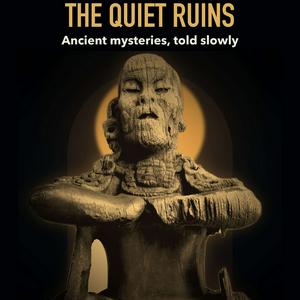
Lost cities, buried evidence, and the questions archaeology still can't answer.
Each episode takes one ancient mystery and follows the evidence: no aliens, no cover-ups, no invented certainties. We keep apart what the evidence shows, what it allows, and what people simply made up, and every episode lists its sources.
Made to be listened to. Put it on while you work, drive, or fall asleep.
Episodes are narrated with AI-generated voices. The research, sources and script are reviewed by The Quiet Ruins.
Sitio web del podcastEscucha The Quiet Ruins, Historia para Tontos Podcast y muchos más podcasts de todo el mundo con la aplicación de radio.net
Descarga la app gratuita: radio.net
- Añadir radios y podcasts a favoritos
- Transmisión por Wi-Fi y Bluetooth
- Carplay & Android Auto compatible
- Muchas otras funciones de la app
Descarga la app gratuita: radio.net
- Añadir radios y podcasts a favoritos
- Transmisión por Wi-Fi y Bluetooth
- Carplay & Android Auto compatible
- Muchas otras funciones de la app

The Quiet Ruins
Escanea el código,
Descarga la app,
Escucha.
Descarga la app,
Escucha.
 México

