

Escucha gratis este podcast en la aplicación: Descarga gratuita en la App Store
radio.net
Sleep timer
Favoritos
66 episodios
How Do Farmers Make Corn Mazes?
06/10/2026 | 10 minThis week on the Super Smart Farm Show, we're ready to get a little lost in order to find out how farmers create corn mazes each fall.
If you've ever found yourself in the middle of a corn maze, you may have had a few questions: Where am I? How did I get here? Where do I go next? But have you ever asked: How did the farmer create this maze? Corn doesn't naturally grow with winding paths and fun patterns. So how do farmers manage to turn a field of corn into a twisty, turn-y maze?
Join host Elmer and Frank the farmer as they take us down the path to the truth.
Do you have a question for the Super Smart Farm Show? Drop us a line at supersmart@lancasterfarming.com!
Thank You to Our Sponsor
Fulton Bank
For More Lancaster Farming Podcasts Click Here
In this episode of the Super Smart Farm Show, Elmer visits Farmer Frank to discover how farmers turn a corn field into a corn maze. Young listeners learn that creating a corn maze starts with choosing and carefully planning a design, then mapping the paths in the field using measurements, GPS, mapping equipment or other tools. The episode explains two approaches to growing the corn maze: planting only the areas that will remain in the maze or planting the entire field and later cutting the paths with tractors, mowers or specialized equipment. Kids also learn why timing, careful measurements and following the maze map are important to creating the twists, turns and dead ends that make a maze challenging. The show explores what happens to the corn after maze season, including harvesting it for livestock feed or selling it to other farmers, and explains how corn mazes can provide additional farm income while remaining part of a working farm. Elmer and Frank also discuss the history of modern corn mazes, including an early widely recognized Pennsylvania maze created in 1993 as a tribute to Field of Dreams. Interactive quiz questions reinforce lessons about corn maze design, farming equipment, corn production and crop use, giving kids a fun introduction to the agricultural planning behind a favorite fall farm attraction.Why Do Farmers Wake Up So Early?
29/09/2026 | 9 minThis week on the Super Smart Farm Show, it's time to rise and shine and talk about why farmers wake up so early in the morning.
Most farmers get their days started early — so early, in fact, that by the time you get to school in the morning, most farmers have already put in a couple of hours worth of work! But why do they get up at the crack of dawn? Does the early farmer catch the worm? Or is it because there are jobs on the farm that just can't wait?
Join host Elmer and Bessie the cow as they explain why most farmers are such early risers.
Do you have a question for the Super Smart Farm Show? Drop us a line at supersmart@lancasterfarming.com!
Thank You to Our Sponsor
Fulton Bank
For More Lancaster Farming Podcasts Click Here
In this episode of the Super Smart Farm Show, Elmer and Bessie the Cow explore why farmers get up early and how a farmer's daily schedule depends on animals, crops, weather and other farm responsibilities. Young listeners learn why dairy farmers milk cows on a regular schedule, often twice a day, and why feeding livestock, providing clean water, checking for illness or injury, and maintaining clean and comfortable living areas are important parts of morning farm chores. The episode also explains why fruit and vegetable farmers may start early to harvest, clean, sort, pack and deliver fresh produce to farmers markets, while some farmers choose to complete outdoor work in the cooler morning hours before afternoon temperatures rise. Elmer and Bessie also discuss the importance of sleep and rest, including how much sleep children and adults need compared with cows. Interactive quiz questions reinforce lessons about dairy farming, livestock care, farm chores, farmers markets, harvesting fresh produce, weather and farm schedules, giving kids a fun, kid-friendly look at what happens on a farm before the rest of the day begins.Why Is Some Wheat Planted in the Fall?
22/09/2026 | 10 minThis week on the Super Smart Farm Show, we're saying goodbye to summer and looking ahead to fall — and the crops that get planted when the weather cools down.
Most crops are planted in the spring and harvested in the fall. However, some types of wheat follow a different schedule: They're planted in the fall and harvested in the early summer. This kind of crop is called winter wheat. Why does it grow on a different schedule? Don't the crops wither in the winter weather? What's vernalization and what does it have to do with any of this?
Join host Elmer and Winnie the wheat as they discuss what makes winter wheat different.
Do you have a question for the Super Smart Farm Show? Drop us a line at supersmart@lancasterfarming.com!
Thank You to Our Sponsor
Fulton Bank
For More Lancaster Farming Podcasts Click Here
In this episode of the Super Smart Farm Show, Elmer learns about winter wheat, a wheat variety planted in the fall rather than the spring. With help from Winnie the Winter Wheat, young listeners learn how winter wheat grows after fall planting, becomes dormant during the winter and undergoes vernalization, a cold period that helps the plant produce grain when growth resumes in spring. The episode explores the differences between winter wheat and spring wheat, explains how varieties such as hard red winter wheat and soft red winter wheat are used to make flour for bread, cakes and cookies, and reveals why winter wheat is harvested in early summer. Kids also learn how winter wheat works as a cover crop, helping prevent soil erosion, add plant material and nutrients to the soil, and compete with weeds. Interactive quiz questions reinforce lessons about vernalization, soft red winter wheat and global wheat production, making the episode an engaging introduction to wheat farming, crop production, cover crops, soil health, plant dormancy and agricultural science.Do Pigs Actually Sweat?
15/09/2026 | 10 minThis week on the Super Smart Farm Show, we've got one scorcher of a question: Do pigs really sweat?
The phrase 'sweating like a pig' is sometimes used to describe someone who's heavily perspiring. But hang on. Do pigs actually sweat? If they do, do they really sweat a lot? And if pigs don't really sweat, where does that phrase come from?
Join host Elmer, Piper the pig and Farmer Wendy as they get to the bottom of this sweaty situation.
Do you have a question for the Super Smart Farm Show? Drop us a line at supersmart@lancasterfarming.com!
Thank You to Our Sponsor
Fulton Bank
For More Lancaster Farming Podcasts Click Here
In this episode of the Super Smart Farm Show, Elmer and Piper the Pig investigate the question, "Do pigs actually sweat?" Young listeners learn that pigs have some sweat glands but have a very limited ability to cool themselves through sweating, so they rely on shade, fresh water, cool surfaces, mud and good airflow to stay comfortable during hot weather. Piper explains how mud helps cool pigs as it evaporates from their skin, while also providing protection from the sun and biting insects, making heat management an important part of pig care and livestock welfare. The episode then takes a fascinating turn into history and language as Farmer Wendy explains the possible connection between the phrase "sweating like a pig" and pig iron, a type of iron made by pouring molten iron into molds shaped like a sow and her piglets. Elmer emphasizes that the exact origin of the expression is uncertain, giving kids a lesson in how historical questions don't always have definitive answers. With interactive quizzes, farm animal facts and kid-friendly explanations, this episode explores pig behavior, animal science, livestock care, heat stress, pig cooling methods, pig iron and the history behind common expressions.Why Do Some Fields Grow Different Crops Each Year?
08/09/2026 | 9 minThis week on the Super Smart Farm Show, we're having a field day while talking about why farmers like to move their crops around.
Keen farm observers may notice that farmers will sometimes move their crops around. A field that's growing corn one year will have soybeans next year and the old soybean field is now full of corn. Is there a reason for playing musical crops? And what does it have to do with the soil and weeds?
Join host Elmer, Sawyer the soil scientist and Marvin the marestail weed as they talk about crop rotation.
Do you have a question for the Super Smart Farm Show? Drop us a line at supersmart@lancasterfarming.com!
Thank You to Our Sponsor
Fulton Bank
For More Lancaster Farming Podcasts Click Here
In this episode of the Super Smart Farm Show, Elmer and Sawyer the Soil Scientist explain why farmers practice crop rotation and how planting different crops in the same fields from year to year can improve soil health and farm sustainability. Young listeners learn how crops have different nutrient needs, including how corn uses significant amounts of nitrogen while soybeans use nitrogen fixation to make atmospheric nitrogen available in the soil. The episode explores several benefits of crop rotation, including improving soil fertility, reducing soil erosion, disrupting crop pests and diseases, and helping farmers manage weeds through varied herbicides, tillage practices and cover crops. Marvin the Marestail Weed adds some humor while demonstrating how changing crops can make weed management more challenging for persistent weeds. The show also reveals that crop rotation has been practiced for thousands of years, with evidence of the practice dating to around 6000 B.C. in the Middle East. Through interactive quizzes and kid-friendly explanations, this episode teaches children about crop production, soil conservation, nitrogen fixation, pest management, weed control, sustainable agriculture and the science behind healthy farmland.
Más podcasts de Educación para niños
 Cráneo: Ciencia para niños curiososCiencias, Ciencias naturales, Educación para niños, Familia, Niños y familia
 Nat Theo Nature Lessons Rooted in the BibleCristianismo, Educación para niños, Niños y familia, Religión y espiritualidad
 Nature Loving Kids: Nature Life, Christian Kids, Animals for Kids, Christian Kid PodcastEducación para niños, Historias para niños, Niños y familia
 Camaleón: Animales para niños curiososCiencias, Ciencias de la vida, Educación para niños, Niños y familia
 Curious Kids Every Day: A Daily Educational PodcastEducación para niños, Historias para niños, Niños y familia
 Tumble en EspañolEducación para niños, Niños y familia
 Dime por quéEducación, Educación para niños, Historias para niños, Niños y familia, Superación personal
 Die Maus zum HörenEducación para niños, Niños y familia
 Rebel Girls: Growing Up PowerfulEducación, Educación para niños, Niños y familia, Superación personal
 National Park ScoutsArte, Educación para niños, Historias para niños, Niños y familia
Podcasts a la moda de Educación para niños

Acerca de Super Smart Farm Show
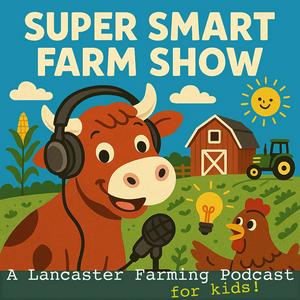
Kids have a lot of questions about farming, and the Super Smart Farm Show, Lancaster Farming's podcast for kids, has a lot of answers. Join us each week as we explore kid-friendly topics like why bees are important and why sheep need hair cuts. We here at the Super Smart Farm Show know it's fun to ask questions and wonder about the world we live in, especially when it comes to learning about how farmers feed and take care of us.
Sitio web del podcastEscucha Super Smart Farm Show, Cráneo: Ciencia para niños curiosos y muchos más podcasts de todo el mundo con la aplicación de radio.net
Descarga la app gratuita: radio.net
- Añadir radios y podcasts a favoritos
- Transmisión por Wi-Fi y Bluetooth
- Carplay & Android Auto compatible
- Muchas otras funciones de la app
Descarga la app gratuita: radio.net
- Añadir radios y podcasts a favoritos
- Transmisión por Wi-Fi y Bluetooth
- Carplay & Android Auto compatible
- Muchas otras funciones de la app

Super Smart Farm Show
Escanea el código,
Descarga la app,
Escucha.
Descarga la app,
Escucha.
Super Smart Farm Show: Podcasts del grupo
 México