

Escucha gratis este podcast en la aplicación: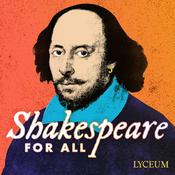 Descarga gratuita en la App Store
radio.net
Sleep timer
Favoritos
50 episodios
Titus Andronicus Part III
16/12/2024 | 41 minShakespeare wrote numerous plays and poems engaged with ancient Roman history. Shakespeare’s Renaissance culture had ancient Rome as its foundation stone. Roman language and literature were at the heart of English Renaissance education, and Rome was held up as a model for English civilization. But in Titus Andronicus, the earliest of his Roman works, Shakespeare crafts a bloody tale of violence and revenge that subjects this entire cultural edifice to searing critique. Are the violence and moral vacuums of this play a perversion of Roman values, or are they a central part of the classical tradition? In this course, you’ll learn the story and historical context behind Titus Andronicus, discover the classical sources that structure this play, and see how the play’s most controversial elements pose a serious question about the purpose of tragedy.
In Part 1, you’ll be guided through a detailed account of the story with commentary by Russ Leo, Associate Professor of English at Princeton University. This episode introduces the key historical, political, and literary contexts that shape the play’s questions and themes. This summary is told using the language of the play itself, placing key quotations in context to help you understand where these lines come from and what they mean.
Part 2 opens with a discussion of the place of Rome in Renaissance culture. It then analyzes the Roman classical sources – sources his audience knew well – that Shakespeare uses to construct his plot, and how Shakespeare’s use of those sources calls their moral values into question. It goes on to discuss the elements of the play that have generated most shock and revulsion – the graphic violence, the irreverent dark humor – and how they relate to the very purpose of theatre.
Part 3 features close-readings of several significant scenes that show how religion, race, and literary tradition function within the violent world of Titus Andronicus and sometimes provoke that violence.
Hosted by Simplecast, an AdsWizz company. See pcm.adswizz.com for information about our collection and use of personal data for advertising.Titus Andronicus Part II
16/12/2024 | 27 minShakespeare wrote numerous plays and poems engaged with ancient Roman history. Shakespeare’s Renaissance culture had ancient Rome as its foundation stone. Roman language and literature were at the heart of English Renaissance education, and Rome was held up as a model for English civilization. But in Titus Andronicus, the earliest of his Roman works, Shakespeare crafts a bloody tale of violence and revenge that subjects this entire cultural edifice to searing critique. Are the violence and moral vacuums of this play a perversion of Roman values, or are they a central part of the classical tradition? In this course, you’ll learn the story and historical context behind Titus Andronicus, discover the classical sources that structure this play, and see how the play’s most controversial elements pose a serious question about the purpose of tragedy.
In Part 1, you’ll be guided through a detailed account of the story with commentary by Russ Leo, Associate Professor of English at Princeton University. This episode introduces the key historical, political, and literary contexts that shape the play’s questions and themes. This summary is told using the language of the play itself, placing key quotations in context to help you understand where these lines come from and what they mean.
Part 2 opens with a discussion of the place of Rome in Renaissance culture. It then analyzes the Roman classical sources – sources his audience knew well – that Shakespeare uses to construct his plot, and how Shakespeare’s use of those sources calls their moral values into question. It goes on to discuss the elements of the play that have generated most shock and revulsion – the graphic violence, the irreverent dark humor – and how they relate to the very purpose of theatre.
Part 3 features close-readings of several significant scenes that show how religion, race, and literary tradition function within the violent world of Titus Andronicus and sometimes provoke that violence.
Hosted by Simplecast, an AdsWizz company. See pcm.adswizz.com for information about our collection and use of personal data for advertising.Titus Andronicus Part 1
16/12/2024 | 26 minShakespeare wrote numerous plays and poems engaged with ancient Roman history. Shakespeare’s Renaissance culture had ancient Rome as its foundation stone. Roman language and literature were at the heart of English Renaissance education, and Rome was held up as a model for English civilization. But in Titus Andronicus, the earliest of his Roman works, Shakespeare crafts a bloody tale of violence and revenge that subjects this entire cultural edifice to searing critique. Are the violence and moral vacuums of this play a perversion of Roman values, or are they a central part of the classical tradition? In this course, you’ll learn the story and historical context behind Titus Andronicus, discover the classical sources that structure this play, and see how the play’s most controversial elements pose a serious question about the purpose of tragedy.
In Part 1, you’ll be guided through a detailed account of the story with commentary by Russ Leo, Associate Professor of English at Princeton University. This episode introduces the key historical, political, and literary contexts that shape the play’s questions and themes. This summary is told using the language of the play itself, placing key quotations in context to help you understand where these lines come from and what they mean.
Part 2 opens with a discussion of the place of Rome in Renaissance culture. It then analyzes the Roman classical sources – sources his audience knew well – that Shakespeare uses to construct his plot, and how Shakespeare’s use of those sources calls their moral values into question. It goes on to discuss the elements of the play that have generated most shock and revulsion – the graphic violence, the irreverent dark humor – and how they relate to the very purpose of theatre.
Part 3 features close-readings of several significant scenes that show how religion, race, and literary tradition function within the violent world of Titus Andronicus and sometimes provoke that violence.
Hosted by Simplecast, an AdsWizz company. See pcm.adswizz.com for information about our collection and use of personal data for advertising.Shakespeare's Sonnets Part 3
20/11/2023 | 30 minPart 3 starts with a discussion of general reading strategies to help you discover the poetic techniques and insights of any individual sonnet. It concludes with a close-reading of three sonnets from Professor Michael Schoenfeldt that show the extraordinary range of tone, emotion, and perspective in Shakespeare’s poems. Speeches and performers: Sonnet 29, “When in disgrace with fortune and men’s eyes” (Ashley Byam) Sonnet 18, “Shall I compare thee to a summer’s day?” (Jeff Cornell) Sonnet 116, “Let me not to the marriage of true minds” (Amanda Harris) Sonnet 129, “Th’ expense of spirit in a waste of shame” (Amanda Harris)
Hosted by Simplecast, an AdsWizz company. See pcm.adswizz.com for information about our collection and use of personal data for advertising.Shakespeare's Sonnets Part 2
13/11/2023 | 25 minPart 2 focuses closely on the two major “characters” to whom the sonnets are addressed: a beautiful young man, and a woman described as black. You’ll learn how the speaker represents his relationship to these figures and his desire for them, and what significance those relationships might have had in Shakespeare’s culture, as Professor Michael Schoenfeldt discusses sexual identity and race in early modern England. Sonnets Included in Episode 2 Sonnet 20, “A woman’s face with Nature’s own hand painted” (Ashley Byam) Sonnet 147, “My love is as a fever, longing still” (Jeff Cornell)
Hosted by Simplecast, an AdsWizz company. See pcm.adswizz.com for information about our collection and use of personal data for advertising.
Más podcasts de Arte





Podcasts a la moda de Arte
 El poder de la mente subconsciente (Joseph Murphy)Arte, Economía y empresa, Empresa, Inversión, Libros
 El hombre más rico de BabiloniaArte, Economía y empresa, Empresa, Inversión, Libros
 The Slowdown: Poetry & Reflection DailyArte, Artes escénicas
 Comentando sobre o podcast Comentando sobre podcast robotizados pelo wha robotizados pelo WhatsAppArte, Libros
 Audiolibros en CastellanoArte, Libros
 The Magnus ArchivesArte, Artes escénicas, Ciencia ficción, Drama, Ficción
 Háganle como puedanArte, Artes visuales, Cultura y sociedad, Filosofía
 Martha Debayle en WArte
 OverdueArte, Humor, Libros
 El MahabharataArte, Libros
 Elisa QueijeiroArte
 The Run-Through with VogueArte, Moda y belleza
 Walk-In Talk PodcastArte, Artes visuales, Cultura y sociedad, Gastronomía, Lugares y viajes, Salud mental, Salud y forma física
 Ángeles y demonios. Dan Brown AudiolibroArte, Ficción, Libros
 GastropodArte, Ciencias, Gastronomía, Historia
 El principito - Audiolibros en castellanoArte, Libros
 Service95 Book Club With Dua LipaArte, Cultura y sociedad, Libros
 📚ESCUCHA TU SUBCONSCIENTEArte, Libros
Acerca de Shakespeare For All
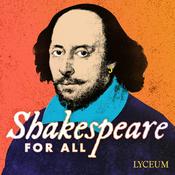
Shakespeare For All is an engaging, accessible introduction to the life and work of William Shakespeare, featuring world-class scholars and performers. You’ll learn who Shakespeare was and what historical events shaped his writing. You’ll be guided through his most popular poems and plays by leading scholars, actors, and interpreters of Shakespeare. And you’ll find the tools you need to become an interpreter of Shakespeare yourself and join in the ongoing global discussion his works have inspired. The first course offers a tour through Shakespeare’s moment in history and his life. You’ll also discover strategies for understanding Shakespeare’s stories, characters, and language across his plays. At the heart of the series are courses on Shakespeare’s most thought-provoking and beloved plays. Each begins with a detailed summary of the story. Then, a top Shakespeare scholar takes you on a deep dive into the play’s characters, language, and most important questions. Finally, you’ll hear Shakespeare’s language come to life, with original performances from professional Shakespearean actors. Shakespeare For All also features a course on Shakespeare's sonnets -- his sequence of 154 short poems that explore revolutionary new directions within the conventional poetry of love -- and a bonus course on Game of Thrones and Shakespeare, “The Wooden O and the Iron Throne." Except where otherwise noted, the texts used for this course are from Shakespeare’s Plays, Sonnets and Poems, from The Folger Shakespeare, ed. Barbara Mowat, Paul Werstine, Michael Poston, and Rebecca Niles. Folger Shakespeare Library. Shakespeare For All is a Lyceum original production. Team: Zachary Davis (Executive Producer) Zachary Davis is the president of Lyceum and host of Ministry of Ideas and Writ Large. He has a graduate degree from Harvard Divinity School and is the founder and organizer of the Sound Education conference. Jemma Deer (Associate Producer and Narrator) Jemma Deer is a Researcher in Residence at the Rachel Carson Center for Environment and Society, currently working on a book on extinction. She also hosts and produces EcoCast, the official podcast of the Association for the Study of Literature and Environment (ASLE). Maria Devlin McNair (Course Creator and Managing Producer) Maria Devlin McNair received her PhD from Harvard University in English literature with a specialization in Shakespeare and Renaissance Drama. She is a writer and Managing Producer for the Harvard Divinity School podcast Ministry of Ideas. She is currently developing a book project on ethics and Renaissance comedy. Jack Pombriant (Composer and Sound Designer) Jack Pombriant is the associate producer of Writ Large. He received his BM from Berklee College of Music, where he studied music composition and production. He is also a graduate of the Salt Institute for Documentary Studies, where he studied radio and podcast production.
Sitio web del podcastEscucha Shakespeare For All, Así las cosas y muchos más podcasts de todo el mundo con la aplicación de radio.net
Descarga la app gratuita: radio.net
- Añadir radios y podcasts a favoritos
- Transmisión por Wi-Fi y Bluetooth
- Carplay & Android Auto compatible
- Muchas otras funciones de la app
Descarga la app gratuita: radio.net
- Añadir radios y podcasts a favoritos
- Transmisión por Wi-Fi y Bluetooth
- Carplay & Android Auto compatible
- Muchas otras funciones de la app

Shakespeare For All
Escanea el código,
Descarga la app,
Escucha.
Descarga la app,
Escucha.
 México