

Escucha gratis este podcast en la aplicación: Descarga gratuita en la App Store
radio.net
Sleep timer
Favoritos
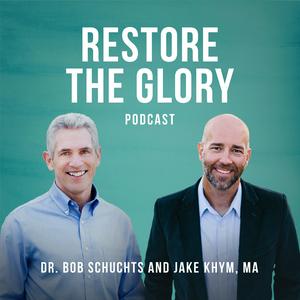
Restore The Glory Podcast
Jake Khym & Bob Schuchts
Último episodio
165 episodios
Restoring Our Image of God
14/10/2026 | 55 minThis week, Jake and Bob explore how our experiences with parents, caregivers, and other mentors shape the way we see God. Our relationships, especially those in childhood, can give us a beautiful image of the Father, but they also can leave us with distorted images that make it difficult to trust Him. Their conversation looks at the wounds that can shape our image of God, the subtle ways culture can influence those images, and the people God uses to help redeem them.
Key Points:
Our childhood relationships influence how we understand and experience God.
Parents are the first representatives of God for their children.
Distorted images of God can affect our trust in His presence, love, mercy, and providence.
The culture around us can subtly shape our understanding of what a father, mother, man, or woman should be.
Priests, mentors, teachers, coaches, grandparents, and other influential people can become powerful sources of healing through the way they love us.
A person's faithful relationship with God can communicate something of the Father's heart even when that person does not realize the impact they are having.
We can start to heal our image of God by recognizing our false beliefs or emotions and bringing them into the presence of Jesus.
When we renounce a lie or false belief, we also need to replace it by proclaiming the truth.
Healing our image of God does not require examining every wound at once but can happen through small, daily acts of trust and surrender.
Resources:
CCC Paragraph 239
CCC Paragraph 2779
Anatomy of A Wound Series
The Healing Process Series
Chapters:
00:00 Introduction
02:16 How Parents Shape Our Image of God
18:39 Seeing Beyond Distorted Images of God
25:55 How the Culture Shapes Our Image of God
33:47 The Influence of Your Parish Priest and Church Community
45:32 The Healing of Paternal and Maternal Images
Connect with Restore the Glory:
Instagram: @restoretheglorypodcast
Twitter: @RestoreGloryPod
Facebook: Restore the Glory Podcast
Never miss out on an episode by hitting the subscribe button right now! Help other people find the show and grow in holiness by sharing this podcast with them individually or on your social media. Thanks!Desires, Needs, and Wounds
30/09/2026 | 1 hThis week, Jake and Bob continue their conversation about the wounds that can form between parents and children. They discuss how legitimate human needs can become disordered when we no longer trust that those needs will be met and how these wounds can then quietly shape the ways we relate to our spouses, children, friends, and parents. Bob shares how his mother's childhood wounds affected him and how his own protective responses later surfaced in his marriage. Jake also reflects on his relationship with work, his struggle to receive help, and discovering the ways he unknowingly carried patterns from one generation to the next. Recognizing these patterns in our own lives can open the door to greater freedom, healing, and deeper relationships.
Key Points:
Sin is contrary to what it means to be fully human and can diminish our capacity to live according to our nature.
The family is the primary environment in which a child learns what it means to be human.
Wounds can come from things that should have happened but didn't or from things that should not have happened but did.
Healthy desire is an essential part of love and human maturation.
Human needs give rise to desires, while unmet and wounded needs can lead those desires to become disordered.
Wounds can move through generations as parents' unresolved wounds influence their children and those children later carry similar patterns into their own relationships.
We can also wound our parents when our own protective patterns cause us to withdraw, become overly busy, fail to communicate, or resist receiving their love.
Healing does not necessarily mean constantly digging into the past but can involve noticing subtle movements in the heart and giving the Lord permission to reveal what needs attention.
Resources:
Episode 125: Forgiveness & Transformation
Chapters:
00:00 Introduction
01:16 Becoming Fully Human
06:55 Our Families Form Us First
09:05 Understanding Desire, Needs, and Wounds
16:18 Examples of An Anatomy of A Wound
30:08 Seven Fundamental Needs
40:17 Wounding Our Parents
Connect with Restore the Glory:
Instagram: @restoretheglorypodcast
Twitter: @RestoreGloryPod
Facebook: Restore the Glory Podcast
Never miss out on an episode by hitting the subscribe button right now! Help other people find the show and grow in holiness by sharing this podcast with them individually or on your social media. Thanks!Honoring Your Family
16/09/2026 | 53 minThis week, Jake and Bob talk about the relationship between parents and children and what it means to honor one another while also being honest about the wounds we've experienced. They explore the dignity of parenthood, the responsibility parents have to create a loving and secure home, and their call to model honor by honoring their children first. They also discuss the honor our parents deserve, how to honor someone who has wounded us, and how to create healthy boundaries in family relationships.
Key Points:
Many times, in families, we must learn how to honor others while remaining honest about the ways they have wounded us.
Parents are a child's first representatives of God. But parents have their own wounds and sin and have the capacity to distort a child's understanding of God.
While children are called to honor their parents, parents are not meant to occupy the place that belongs to God alone.
Getting married involves a healthy separation from one's parents so that a new family can be established.
The honor owed to parents is connected to their dignity and role, even when they do not always live according to the dignity of that role.
Understanding the stories and wounds of both parents and children helps us to form healthier relationships with family members.
A child's wounds do not excuse disrespect, just as a parent's wounds do not excuse harmful behavior.
Forgiveness is essential to breaking the cycle in which parents and children continually wound one another.
Forgiveness does not mean returning to an unsafe relationship or abandoning the boundaries necessary to protect one's dignity and family.
Healthy boundaries can create enough space for love to remain without allowing unhealthy attachment or enmeshment to continue.
The amount of distance necessary in a relationship can change as circumstances, maturity, trust, and safety change.
Parents have a responsibility to pursue their own holiness and healing rather than expecting their children to compensate for their wounds.
Children are also called to examine their own hearts, repent of disrespect, and take responsibility for the ways they have wounded their parents.
Resources:
Submit a Question for a Future Show
Chapters:
00:00 Introduction
03:38 What Does the Church Say About Family Wounds?
11:15 What Does it Mean to Honor One Another?
19:35 Recognizing Our Own Parent's Imperfections
26:23 Forgiveness within Families
32:48 The Responsibility of Parents
38:01 The Responsibility of Children
42:36 Discernment in Setting Boundaries
Connect with Restore the Glory:
Instagram: @restoretheglorypodcast
Twitter: @RestoreGloryPod
Facebook: Restore the Glory Podcast
Never miss out on an episode by hitting the subscribe button right now! Help other people find the show and grow in holiness by sharing this podcast with them individually or on your social media. Thanks!Healing After Addiction w/ John Edwards
02/09/2026 | 1 h 2 minThis week, Jake and Bob welcome John Edwards (Just a Guy in the Pew) back to the show to continue his story of conversion and the long journey of healing that followed. John opens up about what happened after his powerful encounter with Christ in a jail cell, including the hard work of rebuilding trust with his wife and children, learning to be vulnerable, and surrendering control. He also talks about the struggle to reconcile with himself, especially the self-hatred and false identities that can remain even after receiving forgiveness from God and others. Through his story, John reminds us that conversion and healing is not a one-time event, but an ongoing invitation to allow Christ to transform every part of our lives.
Key Points:
Radical conversion does not instantly repair the relationships damaged over years of destructive behavior.
Simply stopping addictive behaviors is many times not enough for complete healing. This is because deeper wounds like selfishness and self-focus also need to be healed.
Life is not ultimately about ourselves but about loving and serving the people God had entrusted to us.
Self-reliance, control, and selfishness are not merely struggles unique to addicts but can quietly affect the lives of many people.
Vulnerability is not weakness but an act of courage that allows a person to acknowledge the truth about himself and receive help.
Reconciliation reveals God not as an angry judge waiting to punish us but as a loving Father who desires our good and wants to walk with us.
The reconciliation of our relationships requires us to examine our own responsibility rather than waiting for other people to change.
Reconciling with ourselves requires confronting the lies that attack our identity and continually renewing our minds with the truth of who God says we are.
Self-forgiveness is essential because refusing to receive God's forgiveness for ourselves can keep us bound to the identity of our past.
Resources:
Power Made Perfect by John Edwards
Just a Guy in The Pew Website
Redeemed Men's Retreat with the JPII Healing Center
Episode 149: Healing in Men (Part 1) w/ John Edwards
Chapters:
00:00 Introduction
02:10 John's Unmasking
07:18 The One Priest Who Changed His Life
12:06 From Self-Focus to Self-Gift
19:41 The Courage to Become Vulnerable
26:20 Reconciliation with God
33:51 Reconciling with Yourself
37:28 Breaking the Voice of Self Hatred
49:11 The Long Road to Rebuilding Trust
57:30 Finding Freedom from Addiction
Connect with Restore the Glory:
Instagram: @restoretheglorypodcast
Twitter: @RestoreGloryPod
Facebook: Restore the Glory Podcast
Never miss out on an episode by hitting the subscribe button right now! Help other people find the show and grow in holiness by sharing this podcast with them individually or on your social media. Thanks!Footholds
22/07/2026 | 47 minThis week, Jake and Bob discuss the subtle ways the enemy gains influence in our lives through the interpretations, judgements, and conclusions we draw in the ordinary moments of everyday life. They explore how these footholds can gradually become strongholds, why fear and shame often lie beneath our attempts to protect ourselves, and how distorted images of God shape the way we see the world. No matter where you may find footholds in your life, there is hope. Through simple acts of trust each day, we can learn to let God become our true stronghold.
Key Points:
The enemy often gains influence through subtle interpretations in everyday life rather than obvious temptations.
Strongholds are built through repeated agreements with lies, judgments, and false beliefs.
Fear frequently lies underneath anger and drives many of our defensive reactions.
Footholds become believable because they attach themselves to existing wounds and vulnerabilities.
Pride convinces us that we fully understand another person's motives or God's actions.
A lack of peace and the absence of the fruits of the Spirit can reveal areas of bondage.
Confession is a powerful place to bring our agreements with lies and receive grace.
Renouncing lies and proclaiming truth is a simple but effective daily practice to loosen the bonds of footholds.
Lasting freedom grows through repeated, small acts of trust that allow God to become our true stronghold.
Resources:
Healing Prayers and Renunciations Booklet
Chapters:
00:00 Introduction
00:41 How the Enemy Gains A Foothold
10:07 Anger, Fear and Speaking Truth
14:45 Fear: Emotion vs Wound
24:44 Recognizing Strongholds in Daily Life
33:28 Breaking Agreements and Experiencing Freedom
42:35 The Power of Small Acts of Trust
Connect with Restore the Glory:
Instagram: @restoretheglorypodcast
Twitter: @RestoreGloryPod
Facebook: Restore the Glory Podcast
Never miss out on an episode by hitting the subscribe button right now! Help other people find the show and grow in holiness by sharing this podcast with them individually or on your social media. Thanks!
Más podcasts de Cristianismo



Podcasts a la moda de Cristianismo







Acerca de Restore The Glory Podcast
A practical discussion where two former therapists share what they learned professionally and experienced personally about the healing and restoration of our God-given glory
Sitio web del podcastEscucha Restore The Glory Podcast, Latido y muchos más podcasts de todo el mundo con la aplicación de radio.net
Descarga la app gratuita: radio.net
- Añadir radios y podcasts a favoritos
- Transmisión por Wi-Fi y Bluetooth
- Carplay & Android Auto compatible
- Muchas otras funciones de la app
Descarga la app gratuita: radio.net
- Añadir radios y podcasts a favoritos
- Transmisión por Wi-Fi y Bluetooth
- Carplay & Android Auto compatible
- Muchas otras funciones de la app

Restore The Glory Podcast
Escanea el código,
Descarga la app,
Escucha.
Descarga la app,
Escucha.
 México