
Escucha gratis este podcast en la aplicación: Descarga gratuita en la App Store
radio.net
Sleep timer
Favoritos
300 episodios
Listener Questions: Atonement, Deism, and a Skeptic’s Take on Easter
26/10/2026 | 20 minDr. Craig answers listener questions from around the world. If Christ paid for every sin, why would anyone still face judgment? Could God have made the universe and simply moved on? What should we make of a skeptical historian who says the disciples must have seen something? Plus: when science and Scripture seem to collide, which gives way? Why did God allow Mark’s snake-handling passage into our Bibles? And will the wicked exist forever?Christianity on the Back Foot? (QoW #1014)
22/10/2026 | 18 minA listener writes that his faith is hanging in the balance. Wherever he looks, from natural theology to the resurrection, he thinks the scholarly consensus seems to be against Christianity, and online critics accuse Christian thinkers, Dr. Craig included, of intellectual dishonesty. Questions about James Tour and the origin of life have only deepened his doubts. Is Christianity a respected position in the academy? Would a naturalistic account of abiogenesis threaten the faith? And how can we tell legitimate theological development from ad hoc accommodation to science? Dr. Craig responds.Is William Lane Craig’s Molinism Incoherent? A Reply to Ryan Mullins
19/10/2026 | 28 minPhilosophical theologian Ryan Mullins argues that William Lane Craig’s version of Molinism is incoherent, and the charge comes down to one word: deliberation. If God already knows everything, can he really deliberate about which world to create? And if he can’t, is his choice truly free? Dr. Craig responds to Mullins’s critique, evaluates defenses offered by Tim Stratton and Reasonable Faith's own Tyson James, and explains why Mullins’s proposed fix would come at a steep theological price. Plus, a decades-old atheist argument from Dan Barker turns out to be the same puzzle in different clothes.What Does It Mean to Say that Some Worlds Are Infeasible for God? (QoW #1013)
15/10/2026 | 4 minIf nothing is impossible for God, how can some worlds be “infeasible” for Him? A listener named Howard presses Dr. Craig on a phrase that sounds like a limit on God’s power. Dr. Craig explains the Molinist idea behind it: true counterfactuals about how free creatures would choose narrow the range of worlds God can actually bring about. He then argues why this places no restriction on divine omnipotence.Eat My Flesh? Baptize My Baby? Dr. Craig Responds to Fr. Mike Schmitz, John Piper, and Kevin DeYoung
12/10/2026 | 33 minA viral clip from Fr. Mike Schmitz claims that Protestants who take Jesus’ words in John 6 seriously end up becoming Catholic. Dr. Craig explains why the bread of life discourse doesn’t require eating Christ’s literal flesh, and why that claim overlooks the many non-Catholic traditions that also affirm a real presence. He then weighs in on John Piper and Kevin DeYoung’s friendly exchange over baptizing infants, and asks whether baptism is really the new covenant’s counterpart to circumcision.
Más podcasts de Cristianismo









Podcasts a la moda de Cristianismo




















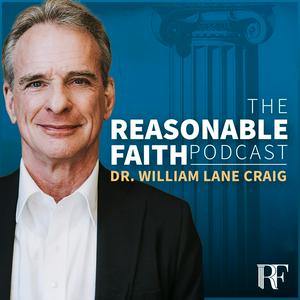
Acerca de Reasonable Faith Podcast
Reasonable Faith features the work of philosopher and theologian Dr. William Lane Craig, discussing the most important issues concerning the truth of the Christian faith today.
Reasonable Faith aims to to provide an articulate, intelligent voice for biblical Christianity in the public arena, to challenge unbelievers with the truth of biblical Christianity, and to train Christians to state and defend Christian truth claims with greater effectiveness.
Visit https://www.reasonablefaith.org for all of our debates, animated short films, interviews and lectures, articles, and more.
Sitio web del podcastEscucha Reasonable Faith Podcast, La Biblia en un Año (con Fray Sergio Serrano, OP) y muchos más podcasts de todo el mundo con la aplicación de radio.net
Descarga la app gratuita: radio.net
- Añadir radios y podcasts a favoritos
- Transmisión por Wi-Fi y Bluetooth
- Carplay & Android Auto compatible
- Muchas otras funciones de la app
Descarga la app gratuita: radio.net
- Añadir radios y podcasts a favoritos
- Transmisión por Wi-Fi y Bluetooth
- Carplay & Android Auto compatible
- Muchas otras funciones de la app
Reasonable Faith Podcast
Escanea el código,
Descarga la app,
Escucha.
Descarga la app,
Escucha.
Reasonable Faith Podcast: Podcasts del grupo
 México