
Escucha gratis este podcast en la aplicación: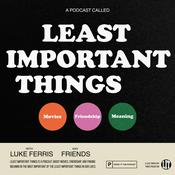 Descarga gratuita en la App Store
radio.net
Sleep timer
Favoritos
116 episodios
Lawrence of Arabia
20/10/2026 | 10 minHow can the most boring movie you've ever seen become one of the most awe-inspiring? Just 25 years and a bit of perspective.
In this episode, host Luke Ferris reflects on revisiting Lawrence of Arabia—the one film he famously fell asleep to as a child. He discusses its lasting impact on iconic modern filmmakers and how revisiting classic cinema with fresh eyes can offer unexpected comfort and perspective on restless nights. Ultimately, it celebrates movie epics, personal growth, and the timeless conversations between old and new stories.
---
Sources for this episode:
https://youtu.be/_AznzZAlwVA?si=WHldxfXbIbGgYlt7
https://youtu.be/HxejohkhRuQ?si=S0PSHCVI5E1mb30i
https://youtu.be/HLUe85q1hNM?si=zFVeQKQXLTuk2GDO
Send us Fan Mail
Catch new episodes of Least Important Things every Tuesday wherever you get your podcasts or on YouTube.
You can email the show at leastimportantthings@gmail.com or reach out via social media at the links below.
Theme song by John Ferris
Support Least Important Things on Patreon: https://www.patreon.com/LeastImportantThings
Follow Least Important Things:
Letterboxd
Instagram
YouTube
TikTok
Facebook
All content falls under fair use: any copying of copyrighted material is done for a limited, educational and “transformative” purpose, such as to comment upon, criticize, or parody a copyrighted work. Such uses can be done without permission from the copyright owner.Plane Movies
13/10/2026 | 16 minPlane travel is painful, but picking the right in-flight movie can turn a cramped cabin into the ultimate modern-day video store. In this essay episode, host Luke Ferris explores high-altitude cinematic comfort, the survival art of airplane movie marathons, and how a well-chosen double feature can help you endure even the most unbearable of seatmates.
---
Sources for this episode:
https://www.sciencefocus.com/the-human-body/why-do-i-always-cry-when-i-watch-films-on-a-plane
https://www.smithsonianmag.com/air-space-magazine/when-did-inflight-movies-become-standard-on-airlines-180955566/
https://youtu.be/hiobiVStUmw?si=L3ZAt5sLKpvtFcVw
https://youtu.be/oPXL4_eZ4-M?si=N4W5lRmWtKH1BYRH
https://www.youtube.com/watch?v=b24oG7qCwp4
Send us Fan Mail
Catch new episodes of Least Important Things every Tuesday wherever you get your podcasts or on YouTube.
You can email the show at leastimportantthings@gmail.com or reach out via social media at the links below.
Theme song by John Ferris
Support Least Important Things on Patreon: https://www.patreon.com/LeastImportantThings
Follow Least Important Things:
Letterboxd
Instagram
YouTube
TikTok
Facebook
All content falls under fair use: any copying of copyrighted material is done for a limited, educational and “transformative” purpose, such as to comment upon, criticize, or parody a copyrighted work. Such uses can be done without permission from the copyright owner.Action Movie Draft
06/10/2026 | 1 h 13 minFour men. Eight categories. Four created action movies. One draft.
It's the first-ever Least Important Things Action Movie Draft! Luke Ferris is joined by his LIT henchmen, Mike Wynne, Andy Warsen, and Zach Hall, to draft and build four perfect action movies.
Click here to play along.
Send us Fan Mail
Catch new episodes of Least Important Things every Tuesday wherever you get your podcasts or on YouTube.
You can email the show at leastimportantthings@gmail.com or reach out via social media at the links below.
Theme song by John Ferris
Support Least Important Things on Patreon: https://www.patreon.com/LeastImportantThings
Follow Least Important Things:
Letterboxd
Instagram
YouTube
TikTok
Facebook
All content falls under fair use: any copying of copyrighted material is done for a limited, educational and “transformative” purpose, such as to comment upon, criticize, or parody a copyrighted work. Such uses can be done without permission from the copyright owner.Best Fall Movies
29/09/2026 | 15 minThe smell of dead leaves, chili, football, fresh pencils, sweaters, and hot beverages.
Yes, it is Autumn, fall, or whatever you want to call it and Least Important Things is back for season five to give you some scenario-specific movie recommendations as we embrace the cozy season.
---
Catch new episodes of Least Important Things every Tuesday wherever you get your podcasts or on YouTube.
Support Least Important Things on Patreon
You can be part of the show by leaving a voicemail here.
You can email the show at leastimportantthings@gmail.com or reach out via social media at the links below.
Read our articles and learn more about the show at www.leastimportantthings.com
Send us Fan Mail
Catch new episodes of Least Important Things every Tuesday wherever you get your podcasts or on YouTube.
You can email the show at leastimportantthings@gmail.com or reach out via social media at the links below.
Theme song by John Ferris
Support Least Important Things on Patreon: https://www.patreon.com/LeastImportantThings
Follow Least Important Things:
Letterboxd
Instagram
YouTube
TikTok
Facebook
All content falls under fair use: any copying of copyrighted material is done for a limited, educational and “transformative” purpose, such as to comment upon, criticize, or parody a copyrighted work. Such uses can be done without permission from the copyright owner.Season Five Trailer
28/09/2026 | 1 minFind out what's coming in Least Important Things season five. Episodes drop every Tuesday starting September 29.
---
Catch new episodes of Least Important Things every Tuesday wherever you get your podcasts or on YouTube.
Support Least Important Things on Patreon
You can be part of the show by leaving a voicemail here.
You can email the show at leastimportantthings@gmail.com or reach out via social media at the links below.
Read our articles and learn more about the show at www.leastimportantthings.com
Send us Fan Mail
Catch new episodes of Least Important Things every Tuesday wherever you get your podcasts or on YouTube.
You can email the show at leastimportantthings@gmail.com or reach out via social media at the links below.
Theme song by John Ferris
Support Least Important Things on Patreon: https://www.patreon.com/LeastImportantThings
Follow Least Important Things:
Letterboxd
Instagram
YouTube
TikTok
Facebook
All content falls under fair use: any copying of copyrighted material is done for a limited, educational and “transformative” purpose, such as to comment upon, criticize, or parody a copyrighted work. Such uses can be done without permission from the copyright owner.
Más podcasts de Cine y Televisión







Podcasts a la moda de Cine y Televisión







Acerca de Least Important Things
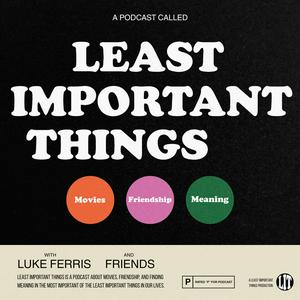
A podcast about movies, friendship, and finding meaning in the most important of the least important things in our lives.
Sitio web del podcastEscucha Least Important Things, Histeria Colectiva y muchos más podcasts de todo el mundo con la aplicación de radio.net
Descarga la app gratuita: radio.net
- Añadir radios y podcasts a favoritos
- Transmisión por Wi-Fi y Bluetooth
- Carplay & Android Auto compatible
- Muchas otras funciones de la app
Descarga la app gratuita: radio.net
- Añadir radios y podcasts a favoritos
- Transmisión por Wi-Fi y Bluetooth
- Carplay & Android Auto compatible
- Muchas otras funciones de la app
Least Important Things
Escanea el código,
Descarga la app,
Escucha.
Descarga la app,
Escucha.
 México