
Escucha gratis este podcast en la aplicación: Descarga gratuita en la App Store
radio.net
Sleep timer
Favoritos
260 episodios

262: Maria Malik: "Communicating with Authority Isn't Only Reserved for Extroverts"
12/11/2026 | 1 h 2 minIn this episode of I Have Some Questions..., Erik Berglund sits down with Maria Malik, founder of The Introverted Speaker, to challenge the assumption that confidence, authority, and influence belong to the loudest people in the room.
Maria shares her journey from growing up introverted and navigating intense cultural expectations to reclaiming control of her life and building a platform that helps others find their voice.
Together, Erik and Maria unpack the psychology behind public speaking fears, the surprising power of thoughtful questions, and how introverts can develop a commanding presence without pretending to be extroverts.
The big idea: Confidence isn't about becoming someone else. It's about removing what's preventing you from showing up as yourself.
👤 About the Guest
Maria Malik is a communication coach, speaker, author, and founder of The Introverted Speaker. With an audience of more than 250,000 LinkedIn followers, she helps professionals overcome communication fears, develop executive presence, and build authentic authority.
Her Speaker Authority Method combines mindset work, communication skills, and practical exercises to help people become more confident and influential.
🧭 Conversation Highlights
Maria describes her origin story: being quiet, repeatedly told to speak up, and using LinkedIn to reframe what “introvert” really means.
She explains why the “scripted life” feels tempting and what it takes to break out, especially when culture and expectations push you elsewhere.
Maria teaches fear as the core issue, including seven fear types, and how naming and practicing dismantles it.
She shares her Speaker Authority Method: Phase 1 mindset and fears, Phase 2 delivery and body language, Phase 3 presence and energy.
💡 Key Takeaways
Introverts don’t need to become extroverts to be powerful. Quiet confidence and deep listening can lead.
Fear has multiple forms. Identifying which one shows up for you makes targeted action possible.
Confidence improves through structure (like PRI: point, reason, impact) and repeated practice with feedback.
The hardest work is internal: when mindset shifts, body language and presence get easier.
❓ Questions That Mattered
How did Maria realize introversion was being treated like a problem, and how did that become her mission?
What keeps people stuck in a “scripted life,” and what internal tension is involved in breaking out?
If someone panics when they’re called on, what should they do in their nervous system, specifically in the first minutes?
How can introverts scale from “knowing what to say” to actually speaking well in the moment?
🗣️ Notable Quotes
“You don't have to be magically an extrovert to communicate well.”
“Before you get up on stage, start that clock early.”
“We focus so much on the self… we forget there’s an audience there.”
“Phase one is always the most difficult. That’s where we go into fears.”
🔗 Links & Resources
Follow Maria Malik on LinkedIn
Check out Maria’s Website: The Introverted Speaker
Quiet by Susan Cain261: Katie Morell: "Here's Why AI Won't Ever Replace Excellent Journalism"
11/11/2026 | 1 h 20 minKatie Morell’s “origin story” starts with being encouraged to journal by her Mom, then grew into going to journalism school at Michigan State, a detour into PR, a breakthrough into freelancing writing, and then finally where she is now, sitting at the helm of a boutique executive consultancy. We talk about how curiosity and strong questions translate into business impact, why AI changes the vehicle not the value, and why in-person off-sites create real energy, attention, and cohesion.
👤 About the Guest
Katie Morell is a strategic facilitator and executive advisor who helps leadership teams break circular debates and leave with clear plans. After 20 years as a journalist interviewing executives and founders, she now designs strategy sessions, off-sites, and executive roundtables for clients like Meta, Prezi, and Nextiva. She’s based in Bend, Oregon and co-leads a peer group for Bend-based business organization called Opportunity Knocks.
🧭 Conversation Highlights
Journalism as a mindset: curiosity, diligence, and asking questions people do not want to answer
Her career pivot: income anxiety after journalism school, then freelancing and a bridge into consulting and advising
Transferable skills for business: how facilitation blends interviewing with “holding space” and reading room energy
Why in-person off-sites still win: attention, body language, cohesion, and leader buy-in
💡 Key Takeaways
Curiosity plus doubt beats jaded certainty. The goal is to ask questions that make people pause and think.
Journalism skills travel: critical thinking and investigative habits work inside strategy, leadership, and teams.
AI may commoditize writing, but excellent research, fact-checking, and judgment still matter.
In-person matters when it’s intentional: leaders set the tone, distractions are reduced, and energy changes outcomes.
❓ Questions That Mattered
How do you maintain conviction without getting captured by your own viewpoint?
What makes a “good question” in facilitation, and how do you create space for input from others?
Is journalism best seen as a W2 job, or as a transferable skill set and mindset?
What will AI change in writing and journalism, and what will it not replace?
🗣️ Notable Quotes
“Journalists can’t do a good job without a million percent curiosity.”
“In person you can tell people’s body language.”
“The vehicle has changed, the journalists haven’t.”
🔗 Links & Resources
Follow Katie Morell on LinkedIn
Check out Katie's Website
The Human Connection Study by Jason Lauritsen260: "Practical Use Cases for ChatGPT's Dots" ft. Justin Coats
10/11/2026 | 55 minErik and Justin catch up on how voice-first AI agents like Dots (Q) are changing daily execution, then zoom out to the real adoption gap. They unpack why many MSPs and businesses are hesitant, what incentives are missing, and why the next wave is about layered context, specialization, and human guidance at scale.
🧭 Conversation Highlights
Erik demonstrates “Q” as a voice agent: drafting emails, building decks, creating shared folders, and even researching and scaffolding a repeatable pre/post survey system.
Justin explains how their agent setup uses specialized sub-agents, cloud virtual machines, and strict approval guardrails so the agent can work without going rogue.
They debate the real risk conversation: AI is reducing button-clicking work, but raising the value of taste, quality, and domain judgment, often creating demand for experts and fractionals.
Justin shares what he heard at an MSP/IT conference: most providers are not training teams on AI or supporting customers, mostly because the forcing functions are not yet landing.
💡 Key Takeaways
Voice agents are most valuable when you already have structured communication in your history, because the agent learns your context and style from that access.
Effective prompting often means going deep in context (layering information), not trying to “be clever” in the prompt.
AI lowers the cost of high-quality execution for the long tail of businesses, which shifts work from “who can click” to “who knows what good looks like.”
Adoption isn’t blocked by lack of interest. It is blocked by missing business incentives and lack of support infrastructure, especially among MSPs that lack training and a clear adoption roadmap.
❓ Questions That Mattered
How much context can you reliably articulate to an agent, and how much does the agent need access to your real communication history to succeed?
When businesses say they are “not doing anything with AI,” what are they actually missing that would create a real forcing function?
Will AI replace professionals, or does it mostly reallocate work toward higher judgment and specialized expertise?
How should teams standardize agent behavior so work stays secure, consistent, and scalable across staff and systems?
🗣️ Notable Quotes
“Three weeks in AI time is like it’s been a year.”
“Dots has access to my email… She sees every form of communication I have and hears it all.”
“Nearly every single one of them said I’m not doing anything with AI. My team has not had training.”
“The value of the human button clicking has gone down. What’s gone up is the value of quality, of style.”
🔗 Links & Resources
Listen To Other Episodes Co-Hosted With Justin259: "How Much of Your Potential do You Leave Unexplored?" (Reflections On Tony Dina)
06/11/2026 | 8 min🧠 Erik’s Take
Erik treats this as a short, experimental “recap episode,” and you can feel him steering the listener back to the core questions he keeps returning to: what parts of himself people are unconsciously running, what parts they admire without owning, and what it means to build environments that make honest expression possible. He also lingers on the AI thread with a grounded, human-first lens. The tech is useful, but it does not replace the lived experience of decision, relationship, and meaning. The fact that this version is a digital replication of his voice turns his reflection into a meta-echo
🎯 Top Insights from the Interview
The golden shadow idea: admiration can point to an inner quality that is present but not fully expressed.
“If you spot it, you got it” becomes a prompt to investigate what you actually want for yourself.
“Being found” reframes recognition as a duty to help the right people locate your gifts, not a bid for status.
AI can support reflection and pattern-finding, but it cannot have lived experience, feelings, or desires in the human way
🧩 The Personal Layer
Erik admits his admiration for a specific archetype of audacity, using it as a mirror rather than a scoreboard. He clarifies that resonance is not automatic proof that you already possess the same level of courage, but it is a useful data point about what you may be avoiding. He also contrasts “telling someone to express fear” with creating an environment that makes expression safe, which sounds like both leadership advice and self-compassion practice. Finally, the AI segment lands as a reminder that analysis is not the same thing as living. Even when tools help you see yourself more clearly,ï
🧰 From Insight to Action
When you admire someone, write down the exact trait you are reacting to, then ask what version you want to develop.
Audit your environment and expectations, including your own, and identify what makes honest expression feel risky.
Choose visibility with purpose: focus on being findable so your work reaches the people it is meant for.
Use AI as a reflective assistant, not a substitute for decisions you must still live through
🗣️ Notable Quotes
“If you spot it, you got it.”
“Being found was a sacred duty.”
“It’s one thing to ask someone to speak up. It’s another thing to make it safe enough that they actually will.”
“AI can generate language about those things, but he doesn’t believe that means it’s experiencing them.”
🔗 Links & Resources
Listen to Tony Dina's Episode258: "Is it Safe to Be Honest In Your Workspace?" (Reflections On Henna Pryor)
06/11/2026 | 7 min🧠 Erik’s Take
Erik found himself coming back to a single thread: trust is no longer something people simply grant. It is something they actively manufacture through patterns, signals, and repeated experiences. This conversation with Henna Pryor landed because it connected “communication” to a deeper leadership job: creating environments where people can safely practice being honest, then showing their work enough that credibility survives increased skepticism and AI-made polish.
🎯 Top Insights from the Interview
Birdsong leadership: safety is not a slogan, it is an atmosphere leaders consistently model.
Social muscle atrophy: people have less practice with uncomfortable conversations, so leaders must build repetition.
Trust is shifting toward verify-first discernment, so leaders need to expose reasoning, not just claim authority.
Cheap signals lose impact in an AI era, so costly, transparent signals and leading with the con can outperform polished performance.
🧩 The Personal Layer
Erik recognized how easily leadership becomes wishful thinking. Many leaders say they want candor, but do not reliably create the conditions for it. He also felt the tension of modern credibility, where even great communication can look manufactured. The episode reminded him that trust is built through how leaders prepare people to speak and how they handle the uncomfortable truths first.
🧰 From Insight to Action
Start small “practice reps” for hard conversations: add a short bad-idea brainstorm or a weekly “what didn’t go well” prompt to meetings.
When presenting decisions, lead with the con: name the downside, tradeoffs, and friction upfront before others surface it.
Show your work in plain language: explain how you arrived at the decision, including alternatives you considered and why you chose what you chose.
Use costly honesty intentionally: avoid pretending effort or originality you did not have, and consider human signals like a quick call or voicemail when the message matters.
🗣️ Notable Quotes
“Leaders have to chirp louder.”
“Verify first, and then decide whether to trust.”
“The person who names it first builds the trust.”
“If a solution costs more… say that.”
🔗 Links & Resources
Listen to Henna Pryor's Episode
Más podcasts de Administración






Podcasts a la moda de Administración
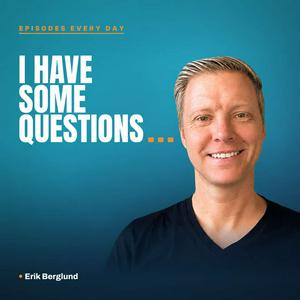
Acerca de I Have Some Questions...
Most people know the headline of a leader’s story. Few know the path it took to get there. This podcast goes beyond titles, book launches and business wins, to explore the lived journey behind the thought leader.Through deep, unhurried conversations, we uncover the moments that shaped them—the doubts, pivots, convictions, and quiet breakthroughs that built their body of work.Each episode features authors, coaches, executives, and bold thinkers who have forged their own path. Instead of rehearsed talking points, they’re invited into a space where thoughtful questions unlock something more human. The result is a layered conversation that reveals not just what they preach, but how they became the kind of person who can teach it.Because we believe the best stories aren’t always told—they’re revealed. And when brilliant people are given the right questions and the room to answer them fully, what emerges is insight you can feel, frameworks you can apply, and a deeper understanding of what it truly takes to lead, create, and contribute at a meaningful level.
Sitio web del podcastEscucha I Have Some Questions..., View From The Top y muchos más podcasts de todo el mundo con la aplicación de radio.net
Descarga la app gratuita: radio.net
- Añadir radios y podcasts a favoritos
- Transmisión por Wi-Fi y Bluetooth
- Carplay & Android Auto compatible
- Muchas otras funciones de la app
I Have Some Questions...: Podcasts del grupo
 México

