PodcastsArteBookRising

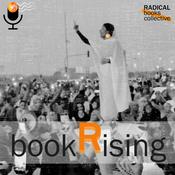
BookRising

Radical Books Collective
BookRising
Último episodio

50 episodios

  • BookRising

    Otoniya J. Okot Bitek: Against Forgetting

    30/03/2025 | 58 min
    Poet and writer Otoniya J. Okot Bitek joins Bhakti Shringarpure to speak about her novel We, The Kindling. A beautifully assembled symphony of women’s voices breathes life into the cruel, two-decades history of the war waged by the Lord’s Resistance Army in northern Uganda. Okot Bitek says that in a way she has always been working on this novel even if her first poetry collection might have been about genocide in neighboring Rwanda, and that it took her almost 15 years to be able to take stock of the difficult material emerging from this period. The question of form was crucial since Okot Bitek did not want to generate a portrait of battered and victimized women nor offer pornographic accounts of violence. Okot Bitek also discusses the dilemmas around bearing witness, doing justice to memory and the imperative to always move against forgetting and erasure.
    Otoniya J. Okot Bitek writes poetry and fiction. Her first collection, 100 Days, won the 2017 IndieFab Book of the Year Award for poetry and the 2017 Glenna Luschei Prize for African Poetry. Her second collection, A is for Acholi, won the 2023 Dorothy Livesay Poetry Prize. Her most recent collection of poetry, Song & Dread, is published by Talonbooks. Otoniya was born in Kenya to Ugandan parents and has lived in Canada for more than three decades. Her short story “Going Home” received a special mention in the 2004 Commonwealth Short Fiction Prize. We, the Kindling is her first novel.
    Bhakti Shringarpure is the creative director of Radical Books Collective.
    www.radicalbookscollective.com
    https://radicalbookscollective.substack.com/
  • BookRising

    Hamza Koudri: On Family, Dance and Anti-colonial Revenge in 1930s Algeria

    01/12/2024 | 42 min
    Writer Hamza Koudri joins host Bhakti Shringarpure from Algiers to talk about his debut novel Sand Roses. A historical novel about the semi-nomadic Ouled Nail group in Algeria, it focuses on the women who are trained as dancers—but are also forced into sex work by the community at an early age. The novel follows twin sisters, dancers Salima and Fahima, who eke out a living in the town of Bousaada at the height of French colonialism, and inadvertently find themselves at the center of the violence of the French army. Koudri belongs to a small but growing community of Algerian writers who have begun to embrace English language and culture. Even then, the concerns of his novel remain firmly Algerian as it is situated in a distinctly anti-colonial historical moment against the French while also excavating the forgotten history of the Ouled Nail community.
    In this conversation, Koudri speaks about the thriving Algerian literary scene and how a random podcast led him down a research rabbit hole about the Ouled Nail community. He discussed the limits and delimits of the representing violence, especially against women. Lastly, he talked about the actual desert curiosity that the novel is named after: a sand rose.
    This interview was originally published at The Polis Project. You can read and watch it here: https://www.thepolisproject.com/read/interview-hamza-koudri-sand-roses/
    Hamza Koudri is an Algerian writer whose debut novel Sand Roses was shortlisted for the Island Prize in 2022. He holds an MA in English Literature and Civilization and has been working in education and international development since 2008. He is based in Algeiers and currently serves as the Country Director with the British Council in Algeria.
    Bhakti Shringarpure is writer and editor who co-founded Warscapes magazine and is now creative director of the Radical Books Collective. She is the author of Cold War Assemblages: Decolonization to Digital and recently co-edited Insurgent Feminisms: Writing War.
  • BookRising

    What's Wrong With the New York Times' Best Books List?

    05/08/2024 | 53 min
    Ainehi Edoro (Brittle Paper) and Bhakti Shringarpure (Radical Books Collective) discuss about the controversial New York Times' "100 Best Books of the Century list." A grandiose list claiming to represent the world and a diversity of voices, it happens to have 66 books by American and primarily white writers and only two African books, four Asian books and only 13 translated works. Ainehi and Bhakti explore what this means for the representation of the last 25 years of publishing in English. Originally streamed on Instagram Live
    They ask:
    Why are lists so captivating yet controversial?
    How do lists shape our understanding of literary excellence?
    Why do only two African books make the list, and what does this say about cultural bias?
    How are culture and politics deeply entwined?
    What harm does such cultural erasure produce?
    What does it mean to leave out the entire Arab and Middle Eastern world of literature?
    How can we highlight more diverse voices in literature?
    Ainehi Edoro is an Assistant Professor of English at the University of Wisconsin-Madison where she teaches and researches on African literature, political theory, and literature in social media. Edoro is the founder and Editor of Brittle Paper (https://brittlepaper.com/), a leading online platform dedicated to African writing and literary culture.
    Bhakti Shringarpure is a writer, editor and the creative director of Radical Books Collective.
  • BookRising

    In Love and War: Collective Memory and the Self

    21/06/2024 | 1 h 5 min
    In Love and War: Collective Memory and the Self is our fifth conversation in a series centering the Warscapes anthology Insurgent Feminisms: Writing War (Daraja Press). Featuring Samina Najmi, Ubah Cristina Ali Farah, Beverly Parayno and Veruska Cantelli.
    Writing about war is often synonymous with writing about memory. Erasing narratives, stories and collective memory is the explicit agenda and the inevitable outcome of any war. And thus, writers counter, resist and seize back memory and along the way, shape the historical accounts of places and people that have experienced violence and trauma. The discussion explores the task of writers retrieving memories from war but through the double focus on gender and colonial pasts. They ask: what is the role of the imagination in writing against forgetfulness? How does form, style and aesthetics enter into the writing of trauma and violence? Where does imagination take you within the memory frame of your stories? How can imagination be a place to resist annihilation, how can imagination be a tool for liberation?
    Samina Najmi teaches multiethnic U.S. literatures at California State University, Fresno. A scholar of race, gender, and war in U.S. literature, she has edited or coedited four volumes and authored critical essays on works by Naomi Shihab Nye, Brian Turner, and Nora Okja Keller that consider their engagement with war from a feminist perspective. Her article, “Narrating War: Arab and Muslim American Aesthetics,” appears in the Cambridge History of Asian American Literature (2016). Samina has also published over thirty creative nonfiction essays, which often meld memoir with political commentary. These essays appear in Warscapes, The Margins, Asian American Literary Review, and elsewhere. Her memoir “One Summer in Gaza” was reprinted recently in Doubleback Review, and her essay on Aaron Bushnell’s self-immolation is forthcoming in The Markaz Review. Samina spent her childhood in England and grew up in Pakistan.
    Ubah Cristina Ali Farah was born in Verona to a Somali father and an Italian mother. She grew up in Mogadishu but fled to Europe at the outbreak of the civil war. She is a writer, an oral historian and performer, and a teacher. She has published stories and poems in several anthologies, and in 2006 she won the Lingua Madre National Literary Prize. Her novel Madre piccola (2007) was awarded a Vittorini Prize and has been translated into English as Little Mother (Indiana University Press, 2011). Il Comandante del fiume was published by 66thand2nd in 2014.
    Beverly Parayno is a second-generation Filipina raised in San Jose, California. She is the author of the short story collection WILDFLOWERS (PAWA Press, 2023), a 2023 Foreword INDIES Finalist and winner of a 2024 IPPY Bronze Medal. Parayno is a graduate of Vermont College of Fine Arts. She serves on the board of the San Francisco-based literary arts nonprofit Philippine American Writers and Artists (PAWA) and the Munster Literature Centre in Cork, Ireland. Parayno lives in Cameron Park, California, where she co-facilitates the Cameron Park Library Writers Workshop.
    Veruska Cantelli is Associate Professor in the Core Division at Champlain College. Before that, she was an Assistant Professor of Rhetoric and Interdisciplinary Studies at the Center for Global Communication Strategies at the University of Tokyo and also taught Comparative Literature at Queens College, CUNY with a focus on literature of war and women's autobiographies, particularly on non-western narratives of the self. She is the translator of Lettere Rivoluzionarie by Diane di Prima (2021), and the author of "The Dance of Bones: Tomioka Taeko's Stage of Reprobates" in Otherness: Essays and Studies (2021), "The Maternal Lineage: Orality and Language in Natalia Ginzburg's Family Sayings" for the Journal of International Women's Studies (2017) as well as several articles and interviews for Warscapes magazine. She is the...
  • BookRising

    Poetry of Witness

    11/06/2024 | 1 h 13 min
    Poetry of Witness is our fourth conversation in a series centering the Warscapes anthology Insurgent Feminisms: Writing War (Daraja Press). Featuring Otoniya J. Okot Bitek, Jehan Bseiso and Meg Arenberg.
    What is the poet’s role in the event of the erasure of an entire people? Even as we deem certain acts of violence as “unspeakable” and “indescribable”? As the refrain “no words left” rings in our ears, many of us find ourselves seeking solace or sense from poetic language. Poetry and poets have long been understood (and also wilfully misunderstood) for the ability to deploy resistance to silence and to complicity. More than ever, words matter and words provide witness. Meg Arenberg will speak with poets Jehan Bseiso and Otonya J. Okot Bitek about their respective writing practice, their sense of poetry’s role in a violent world, the value of poetry in the face of numbing horrors, and their specific work putting words to the unspeakable in Palestine and Rwanda.
    Otoniya Juliane Okot Bitek is an Acholi poet. Her 100 Days (University of Alberta 2016) a book of poetry that reflects on the meaning of memory two decades after the Rwanda genocide, was nominated for several writing prizes including the 2017 BC Book Prize, the Pat Lowther Award, the 2017 Alberta Book Awards and the 2017 Canadian Authors Award for Poetry. It won the 2017 IndieFab Book of the Year Award for poetry and the 2017 Glenna Luschei Prize for African Poetry. Otoniya’s poem “Migration: Salt Stories” was shortlisted for the 2017 National Magazine Awards for Poetry in Canada. Her poem “Gauntlet” was longlisted for the 2018 CBC Poetry Prize and is the title of her most recent work, a chapbook with the same title from Nomados Press (2019). She is an assistant professor of Black Creativity at Queen’s University in Kingston, which occupies the lands of the Anishinaabe and the Haudenosaunee people. Otoniya’s work has been published widely online, in print and in literary magazines.
    Jehan Bseiso is a poet, researcher, and aid worker. Her poetry has been published on several online platforms. Her co-authored book I Remember My Name is the Palestine Book Awards winner in the creative category (2016). She is the co-editor of Making Mirrors: Writing/Righting by and for Refugees (2019). Jehan has been working with Médecins sans Frontières/Doctors Without Borders since 2008.
    Meg Arenberg is an Assistant Professor of Comparative Literature in the Department of Humanities and the African Languages and Translation Program at the Africa Institute. She earned her Ph.D. in Comparative Literature from Indiana University Bloomington in 2016. Prior to joining the Africa Institute, she completed postdoctoral research positions in the Department of African, Middle Eastern, and South Asian Languages and Literatures (AMESALL) at Rutgers University, New Brunswick and the African Humanities Colloquium at Princeton University. Arenberg is a scholar of 20th and 21st-century African literatures with particular research interests in intertextuality, Kiswahili poetics, translation studies, and digital media.
    Buy the book: https://darajapress.com/publication/insurgent-feminism-writing-war

Más podcasts de Arte

Acerca de BookRising

Featuring progressive conversations about books, publishing, writing.
Sitio web del podcast

Escucha BookRising, Las meditaciones de Marco Aurelio y muchos más podcasts de todo el mundo con la aplicación de radio.net

Descarga la app gratuita: radio.net

  • Añadir radios y podcasts a favoritos
  • Transmisión por Wi-Fi y Bluetooth
  • Carplay & Android Auto compatible
  • Muchas otras funciones de la app

BookRising: Podcasts del grupo

Aplicaciones
Redes sociales
v8.8.6| © 2007-2026 radio.de GmbH
Generated: 4/4/2026 - 4:00:13 AM