

Escucha gratis este podcast en la aplicación: Descarga gratuita en la App Store
radio.net
Sleep timer
Favoritos
63 episodios

Open Position, Close Position, and Why It Only Matters When You Switch
14/09/2026 | 6 minStart Training Free: https://www.uremusic.com/flawless-free-trial
Close position means every voice sits inside an octave. Open position means one of them doesn't. That part takes thirty seconds to learn.
What matters is what happens when you switch. You're switching texture, and if you do it by accident the piece sounds unstable. Do it on purpose and it's a technique.
Two rules come out of this one. Keep your spacing consistent, and double the bass.
0:00 Close position and open position
1:39 Register, and why the same chord muddies low
2:00 Doubling the bass note
2:58 Consistent spacing, and what inconsistent sounds like
4:23 How much room the bass needs
5:43 Switching textures on purpose
6:25 More in the members library
These are excerpts from The Composers Studio Seminars, the live sessions I run with composers who are working on their own pieces.
The audio is what it is, because these are real sessions and not studio recordings.
Student work and student voices are never included in these videos.
More at uremusic.com
Courses: uremusic.com
Membership: uremusic.comEvery Piece Is Its Own Theory
14/09/2026 | 3 minStart Training Free: https://www.uremusic.com/flawless-free-trial
You can write from harmony, or you can write from sound. Both work.
If you write from sound, the analysis still has to happen. It just happens last, once the piece
is done and the intuition has nothing left to give.
Then you read your own first four measures and work out the rules you were already following.
That becomes the theory for that piece. The next piece gets a new one.
My composition instructor threw my theory book in the trash can over this. That story is in here.
0:00 Harmony first, or sound first
0:21 Reading your own first four measures
1:53 Why this comes last
2:00 My composition instructor and the trash can
3:07 Finishing the piece is the first one percent
3:44 More in the members library
These are excerpts from The Composers Studio Seminars, the live sessions I run
with composers who are working on their own pieces. The audio is what it is, because these
are real sessions and not studio recordings.
Student work and student voices are never included in these videos.
More at uremusic.com
Courses: uremusic.com
Membership: uremusic.comStop Trying to Master Ear Training
26/08/2026 | 5 minMost ear training tells you to get 100% before you move on. I think that rule is the reason your ear stopped improving.
When you repeat one drill until you score perfectly, you usually are not training your ear. You are teaching your brain to predict a sequence it has already heard. The score goes up. The skill does not.
What works better is uncomfortable: move through the material, do not stop for perfection, and come back around. The second pass catches what you missed. The third pass is where it becomes yours.
This is not a sales pitch. It is the thing I wish somebody had told me before I spent years grinding single drills.
0:00 The mistake I see in the comments
0:45 You are memorizing, not learning
1:17 Why ear training apps stop working
2:03 Take the whole thing, do not stop for scores
3:07 Why one lesson for a week burns you out
4:16 Do the math: 750 days
4:49 The time lapse, and why to keep going
Free audiation course, no cost and no trial nonsense: https://www.uremusic.com/audiation-inner-ear-training-for-musicians
Flawless Ear Training, the full 250 lesson course: https://www.uremusic.com/flawless-ear-training-audio-video
Composing Hour, Year 1, if you want the second and third pass built for you: https://www.uremusic.com/composing-hour-music-lessons
If this argument bothers you, tell me why in the comments. I read them, and they are where most of these videos come from.
#eartraining #audiation #musicpracticeThe Music Stuck in Your Head Is a Skill You Never Trained
21/08/2026 | 20 minAbout nine in ten people get songs stuck in their head every week. It's rare to have a truly silent mind, and only 1.5% are actually tone deaf. So what's the difference between an earworm and hearing music you haven't written yet? A trainable skill called audiation. The 60-second test is at 1:30. The five levels are at 5:30.
Learn audiation. The real, scientifically-proven skill of hearing music in your head with perfect clarity. This video breaks down 5 levels of audiation and gives you actionable exercises to develop this ability, whether you're a beginner or an experienced musician.
📍 WHAT YOU'LL LEARN:
✓ The 5 levels of audiation (playback → recall → editing → new music → fluency)
✓ Why you're not tone deaf—90% of people hear music in their head weekly
✓ The difference between memory and audiation
✓ Why ear training suddenly gets harder (and why that's a good sign)
✓ Step-by-step exercises to advance your audiation skills
✓ How to use audiation for better sight-reading, improvisation, and composition
Timestamps:
00:00 The Skill You Never Trained
00:40 The Song Stuck in Your Head
01:24 Audiation Is Real
03:44 Quieter than Real Music
07:23 The 60-Second Test
11:56 Your Ear Isn't Broken
13:48 Recall vs. Audiation
15:05 The Ear Training Floors
16:00 5 Stages of Audiation
17:19 Hearing and Writing Music Gap
17:55 Audiation Weekly Challenge
19:33 The Big Ear Training Mistake
20:17 You're Not Hallucinating Your Ear Training Progress
🎯 INCLUDED TESTS:
The video includes two practical tests to discover your current level. See where you start and get personalized exercise recommendations.
🎹 WHO THIS IS FOR:
- Musicians wanting to improve sight-reading
- Singers and composers working without an instrument
- Anyone who wants to develop perfect pitch
- Music students struggling with ear training
- People who want to understand the music in their head
⏱️ KEY CONCEPTS COVERED:
- Audiation vs. ear training (they're different skills)
- Internal sound quality and what "hearing it" really means
- The breakthrough moment when progress feels like regression
- How daily practice works anywhere—no instrument needed
- The three-floor model of inner hearing
Free course: https://www.uremusic.com/audiation-inner-ear-training-for-musicians
🎧 About This Channel
Ear training, audiation, and creative theory for musicians of all levels.
📚 Essential Resources
• Resource Guide
• Octave Registers by Number
• Newsletter
• UreMusic Homepage
• Books & Courses
👉 All links here: https://linktr.ee/uremusic
🎼 My Books
Full list → https://www.uremusic.com/books
💬 Work With Me
Consultation → https://www.uremusic.com/book-a-consultation
📌 Tags
#Audiation #EarTraining #MusicTheory #Composition
📢 Affiliate Disclosure
Some links may be affiliate links. Thank you for supporting the channel.
#audiation #eartraining #musictheory #musicskills #HearingMusic #sightreading #musicalmindreader #ComposerTips #musiciantips #musiclearningThe Ear Training Sleep Track I Broke (And What I Learned Fixing It)
17/08/2026 | 19 min▶ Listen to the full 10-hour track for free here: https://youtu.be/Axr-_z6FTqE
▶ Free download (Perfect Fifth, 1:58 hours): https://www.uremusic.com/sleep-free
▶ Flawless Ear Training, the complete course: https://www.uremusic.com/flawless-ear-training-audio-video
▶ Start the free audiation course: https://www.uremusic.com/audiation-inner-ear-training-for-musicians
▶ Read My Recommendations for Beginners: https://www.uremusic.com/blog/audiation-for-beginners-how-to-start-ear-training-from-scratch
I sell a sleep track for ear training. I put my own product under a microscope, and I found three things wrong with it — one bad enough that I rebuilt the whole thing and I'm giving the new one away free, no email, no gate.
This is dense and it runs about twenty minutes, so I'd rather you watched it properly than had it on in another tab. Everything I found is in here, including the two things that make me look bad: a file that quietly ran out forty-seven minutes early, and a synthetic drone I almost shipped underneath an ear-training track.
Along the way you'll get the actual research behind why sleep tracks work at all — Walker 2002, Antony 2012, the Göldi reversal that shows a cue that wakes you doesn't just fail, it damages the memory it was reactivating — and the four rules I now follow after years of breaking two of them.
One risk I didn't cover in the video, and should have: if you sleep with any continuous sound — mine or anyone else's — it raises the level at which you wake up to everything, not just the track. That's the mechanism, not a side effect. Don't use it if you're the person who needs to hear a smoke alarm or a child at night, and if you want the single best fix for that risk, look up a 520 Hz low-frequency smoke alarm. In the research, it wakes sleeping adults four to twelve times more reliably than the standard high-pitched kind, regardless of what's playing in the room. That's true whether or not you ever touch my track, and it costs you nothing to check tonight.
The 1:58 version is a free download — Perfect Fifth first, in a louder and a quieter mix. The full ten-hour version is free to listen to on the channel, or available to buy if you want the file. Major Third goes up next week, Major Sixth the week after.
Chapters
0:00 Intro
0:10 Three things wrong with my own sleep track
0:42 Quick favor before I start
1:10 Finding one — 47 minutes of silence
1:56 What a sleep track is actually supposed to do
2:12 Walker 2002 — sleep finishes the learning
3:34 Antony 2012 — the whispered cue
4:46 The big one — my track vs. deep sleep
6:07 The confession — I guessed right
7:06 Why not ride the sleep cycles
8:20 Finding two — what was hiding inside the rain
10:27 Finding three, and the claim I won't make
12:18 The reversal — when a cue wakes you
13:18 The one almost nobody in music knows
14:32 Four rules for any sleep track
15:48 How the rebuild satisfies them
16:52 The offer — free download
18:21 How to use it safely
19:15 Close — the five minutes that matter most
▶ From the album Sleep Sounds for Musicians: https://www.uremusic.com/intervals-for-sleep-meditation-and-study
▶ Flawless Ear Training, the complete course: https://www.uremusic.com/flawless-ear-training-audio-video
Más podcasts de Comentando la música
 John Summit - Experts Only Radio
 In the Groove, Jazz and BeyondComentando la música, Música
 Pasquale Rotella - Night Owl RadioComentando la música, Música
 PopcastComentando la música, Entrevistas musicales, Música
 🎙️ Lounge King Presenta... La Era Lounge - inicios.Comentando la música, Música
 Techy Tekki Trance, Techno, and Euphoric HardstyleArte, Artes escénicas, Comentando la música, Música
 Músicos de SillónArte, Comentando la música, Cultura y sociedad, Música
 2024TikTok音乐排行榜|海外版抖音最火热门Comentando la música, Música
Podcasts a la moda de Comentando la música
- 🎙️ Lounge King Presenta... La Era Lounge - inicios.Comentando la música, Música
 Tumbando CorridosComentando la música, Música
 Chiptune / Tu connais cet album ? - La Music BoxComentando la música, Música
- In the Groove, Jazz and BeyondComentando la música, Música
 CD BurnersComentando la música, Entrevistas musicales, Historia de la música, Música
 Nueva MúsicaComentando la música, Música, Noticias, Noticias de entretenimiento
 Analytic Dreamz: Notorious Mass EffectComentando la música, Música, Ocio, Videojuegos
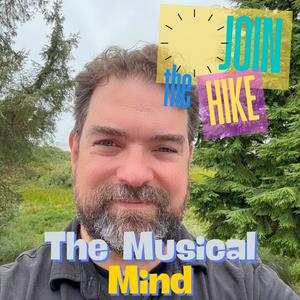
Acerca de The Musical Mind: Join the Hike
Join the Hike as we talk about musical concepts, including audiation, ear training, composition, theory, and much more!
Sitio web del podcastEscucha The Musical Mind: Join the Hike, John Summit - Experts Only Radio y muchos más podcasts de todo el mundo con la aplicación de radio.net
Descarga la app gratuita: radio.net
- Añadir radios y podcasts a favoritos
- Transmisión por Wi-Fi y Bluetooth
- Carplay & Android Auto compatible
- Muchas otras funciones de la app
Descarga la app gratuita: radio.net
- Añadir radios y podcasts a favoritos
- Transmisión por Wi-Fi y Bluetooth
- Carplay & Android Auto compatible
- Muchas otras funciones de la app
The Musical Mind: Join the Hike
Escanea el código,
Descarga la app,
Escucha.
Descarga la app,
Escucha.
 México