

Escucha gratis este podcast en la aplicación: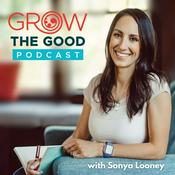 Descarga gratuita en la App Store
radio.net
Sleep timer
Favoritos
476 episodios
Mindfulness in Action: A Practice for Connecting to Nature
24/09/2026 | 17 minHow often are you outside without really being with the place you’re moving through?
In this Mindfulness in Action, I’m taking last week’s conversation about nature connectedness out of the theoretical space and into your body. You can do this practice while walking, running, riding, sitting outside, or even moving through your everyday life.
We’ll use our senses to notice the ground, air, smells, sounds, and beauty around us. Then we’ll move into awe, compassion, and meaning. You’ll notice what changes when we stop thinking of nature as something we use for a workout or an experience, and remember that we are part of the ecosystem too.
I’ll also invite you to find something old, like a tree, rock, mountain, or landscape, and let its scale give you perspective on whatever you’re carrying today.
You don’t have to stop training hard or pursuing big goals, but I’ll encourage you to learn how to do those things while staying connected to the world you’re moving through.
Key Takeaways
Nature connectedness is a relationship: We can shift from simply using the outdoors to noticing how we belong within it.
Your senses are a doorway to presence: Touch, smell, sound, sight, and the feeling of air can bring us back into the moment.
Awe changes perspective: Feeling small beside something ancient or vast can create space around our everyday worries.
Compassion can extend beyond people: Paying attention to another living thing can remind us that we’re part of a larger community.
The more you notice, the more you begin to notice: Connection grows through small, repeated moments of attention.
LINKS
- Nature Connectedness & Well-Being with Molly Peterson & Dr. Holli-Anne Passmore
- Mindfulness in Action: Grounding in Nature
- Movement, Nature, and Connection for Optimal Well-Being with John Ratey
--------------
The Grow the Good Podcast is produced by Palm Tree Pod Co.How Connecting With Nature Changes Your Well-Being
17/09/2026 | 26 minA lot of us spend time outside. We run, ride, hike, train, explore, and use nature as a place to play or pursue our goals. But does spending time in nature actually mean we’re connected to it?
This episode was inspired by something I heard during a recent breathwork session: many of us use nature without being in relationship with nature. That idea made me think about my own life as an athlete, and all the years I spent outside focused on intervals, performance, Strava times, and self-improvement without always noticing the world I was moving through.
In this solo episode, I explore the research around nature connectedness and the difference between simply being outside and actually feeling like you’re part of the natural world.
I talk about:
- Awe
- The “small self”
- Meaning
- Curiosity
- Sensory awareness
- Simple ways we can become more present outside without giving up our workouts or performance goals
I'm not encouraging us to slow down all the time. I'm talking about occasionally looking up, paying attention, and remembering that nature can be more than the backdrop for what we’re trying to accomplish.
What might change if we stopped only using nature, and started building a relationship with it?
LINKS
- Nature Connectedness & Well-Being with Molly Peterson & Dr. Holli-Anne Passmore
- Mindfulness in Action: Grounding in Nature
- Movement, Nature, and Connection for Optimal Well-Being with John Ratey
--------------
The Grow the Good Podcast is produced by Palm Tree Pod Co.The Courage to Quit with Lindsay Crouse
10/09/2026 | 57 minWhat if quitting was courageous? In this episode, I sit down with Lindsay Crouse, a former New York Times journalist and producer who spent 15 years at the Times, where she worked in Opinion and helped commission hundreds of short documentaries for Op-Docs. As an endurance athlete herself, Lindsay also became known for telling powerful stories about female athletes, pregnancy, sponsorship, and the hidden challenges women face in sport. Now, Lindsay has written a book about quitting.
We talk about why our culture celebrates pushing through at all costs, how perseverance can become a trap, and why quitting can sometimes be the wiser, braver, more values-aligned choice. Lindsay shares what led her to leave the Times, how motherhood changed her relationship with work and running, and why so many women in midlife start asking whether the lives they built in their twenties still fit who they are now.
I also share a story I haven’t really talked about before: the moment I decided to quit chasing sponsorships after pregnancy, even though I was still winning races. I had overcome so much, but the cycle of overdelivering, being unseen, and trying to prove my worth had become damaging to my mental health. Someone called it “positive quitting,” and that phrase has stayed with me.
This episode is for anyone who has been taught to never give up, but is starting to wonder whether continuing is actually helping or hurting. It’s about identity, motherhood, sport, learned helplessness, hope, sunk costs, fear, and the freedom that can come when we stop forcing ourselves to stay on a path we’ve outgrown.
Top 5 Takeaways
Quitting is not always failure: Sometimes quitting is the choice that allows us to preserve our energy, integrity, health, and future possibility.
Perseverance can become passive: Continuing is also a choice, even when it feels like the default.
Identity can keep us stuck: When we are known for something, it can feel terrifying to let it go, even if it no longer fits.
Women often feel pressure to “hold up the sky”: In sport, work, motherhood, and life, quitting can feel like confirming someone else’s bias instead of honoring our own truth.
Hope can be complicated: Optimism and hard work can keep us locked into paths where we no longer have real control or momentum.
LINKS
Learn more about Lindsay Crouse
Follow Lindsay on Instagram
Read The Case for Quitting: The Surprising Benefits of Opting Out
Listen to What It Really Means to Matter
Listen to Hope Is the Strategy: Burnout, Mattering, and Meaningful Work with Jen Fisher
--------------
The Grow the Good Podcast is produced by Palm Tree Pod Co.Squamish 50K: Racing to the Level of Who I Am Today
20/08/2026 | 29 minA couple of days ago, I finished my first ultra trail running race: the Squamish 50K. This episode is a reflection on what it took to get there, what actually happened out on the course, and what I’m still processing afterward. This wasn’t a fairy-tale race story. I came into it after broken ribs, sickness, a short training window, and a lot of uncertainty about whether my body would hold up.
I kept coming back to one idea: race to the level of my durability, not the level of my fitness. That was humbling. I had to go against old instincts from 20 years of mountain bike racing, let people pass me, manage pain, and accept that who I am today is not always the same as who I’ve been in the past. But I finished, my kids ran across the line with me, and I learned a lot about patience, limits, identity, and what it means to show up honestly.
This episode is for anyone who has had to meet themselves where they are, not where they wish they were.
Key Takeaways
- Race to the level of your durability, not just your fitness
- Who you are today matters more than who you’ve been
- Finishing can be meaningful without being glamorous
- Pain and suffering don’t need to be glorified
- Identity is allowed to shift
--------------
The Grow the Good Podcast is produced by Palm Tree Pod Co.Using Self-Talk for Mindset, Perception, and Expectations with Ethan Kross | REPLAY
13/08/2026 | 50 minThis week, I’m bringing back a conversation from the archives with Ethan Kross, one of the world’s leading experts on the conscious mind and the author of Chatter and Shift.
I wanted to replay this episode because it connects so strongly with what I’ve been exploring lately on Grow the Good: impatience, rushing, emotional regulation, mindfulness, and the way our inner voice can either help us move through challenges or keep us stuck in loops of overthinking.
Ethan’s work looks at the conversations we have with ourselves and how those conversations shape our health, performance, decisions, relationships, and well-being. In this episode, we talk about negative self-talk, chatter, emotion, mindfulness, problem-solving, and why creating psychological distance can help us work with our thoughts more effectively.
One of the tools Ethan shares is called distant self-talk: coaching yourself through a challenge the way you would coach a friend, even using your own name or the word “you” to create a little more space. That shift can help us move from being consumed by our thoughts to relating to them with more perspective.
This conversation is a great reminder that our thoughts are not always facts, and our inner voice does not have to be in charge. We can learn to work with it, redirect it, and use it as a tool for more clarity, resilience, and self-compassion.
KEY TAKEAWAYS:
The difference between self-control and willpower
What emotions are and how they shape our behavior
Problem-solving versus overthinking
Negative self-talk versus chatter
When mindfulness helps, and when reframing may be more useful
How distant self-talk can shift perspective
Why sleep and chatter are so closely connected
LINKS:
- Original conversation with Ethan Kross
- Learn more about Ethan's work
- Read Ethan's books "Chatter" and newly released, "Shift"
- Listen to Self-Talk for Performance: Mental Skills for Athletes
--------------
The Grow the Good Podcast is produced by Palm Tree Pod Co.
Más podcasts de Educación
 Estoicismo FilosofiaEducación, Superación personal
 Martha DebayleEducación, Superación personal
 CAMINO AL ÉXITO por BRIAN TRACYEducación, Salud mental, Salud y forma física, Superación personal, Tutoriales
 Inglés desde ceroAprendizaje de idiomas, Educación
 Aprendemos Juntos MéxicoEducación
- Psicología Oscura | Mente y ManipulaciónEducación, Superación personal
 El Podcast de Marco Antonio RegilEducación, Salud y forma física, Superación personal
 BBVA Aprendemos juntosArte, Ciencias, Cultura y sociedad, Educación, Filosofía, Libros, Matemáticas, Música, Naturaleza
 Seminario Fenix | Brian TracyCultura y sociedad, Economía y empresa, Educación, Empresa, Filosofía, Superación personal
 El arte de agradecerEducación, Superación personal
Podcasts a la moda de Educación
 Daily Easy English Expression PodcastAprendizaje de idiomas, Educación, Superación personal
 SELECCIÓN NATURALEducación
 EsquincastEducación, Superación personal
 Easy English for LatinosEducación
 El podcast de Acelera AcademyEducación
 El minuto que te reiniciaEducación, Espiritualidad, Religión y espiritualidad, Superación personal
 The Tony Robbins ChannelEconomía y empresa, Educación, Marketing
 Learn English | EnglishClass101.comAprendizaje de idiomas, Cultura y sociedad, Educación, Lugares y viajes
 Slow English Podcast | Your English ToolboxAprendizaje de idiomas, Carrera, Cursos, Economía y empresa, Educación, Superación personal
 Being Human with Leana DeebEducación, Religión y espiritualidad, Superación personal
 Adulting sin FiltrosEducación, Superación personal
 Cómo Crear Un PodcastEducación, Tutoriales
 Easy Italian: Learn Italian with real conversations | Imparare l'italiano con conversazioni realiAprendizaje de idiomas, Cultura y sociedad, Cursos, Educación, Lugares y viajes
Acerca de Grow the Good
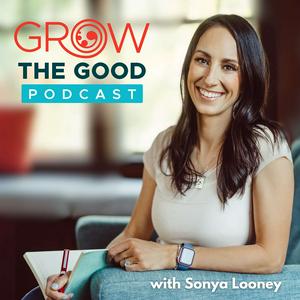
Grow the Good, formerly The Sonya Looney Show, is your guide to continual personal growth, meaningful connections, and positive impact in the world. Challenge the idea that you are broken or need fixing. Instead, discover how to cultivate the good that already exists within you and amplify the strengths and potential you may not yet realize you have. Grounded in the science of positive psychology and guided by the pillars of purpose, vitality, resilience, hope, and connection, each episode is packed with tools, stories, and evidence-backed insights to help you create a more authentic and flourishing life.
Sitio web del podcastEscucha Grow the Good, Estoicismo Filosofia y muchos más podcasts de todo el mundo con la aplicación de radio.net
Descarga la app gratuita: radio.net
- Añadir radios y podcasts a favoritos
- Transmisión por Wi-Fi y Bluetooth
- Carplay & Android Auto compatible
- Muchas otras funciones de la app
Descarga la app gratuita: radio.net
- Añadir radios y podcasts a favoritos
- Transmisión por Wi-Fi y Bluetooth
- Carplay & Android Auto compatible
- Muchas otras funciones de la app

Grow the Good
Escanea el código,
Descarga la app,
Escucha.
Descarga la app,
Escucha.
Grow the Good: Podcasts del grupo
 México