
Escucha gratis este podcast en la aplicación: Descarga gratuita en la App Store
radio.net
Sleep timer
Favoritos
382 episodios
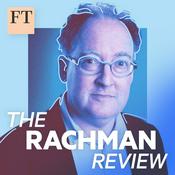
What the rise of the far right means for Germany and Europe
26/11/2026 | 30 minGermany has been one of Ukraine’s staunchest supporters since Russia’s full-scale invasion, but that support has become a wedge issue in German politics. The right-wing Alternative für Deutschland party, or AfD, has repeatedly called for an end to military support for Ukraine and a resumption of energy trade with Russia. As the AfD – and parties like it – gain influence in Europe, will support for Ukraine falter? Gideon speaks to Wolfgang Schmidt, who was in the German chancellor’s office under Olaf Scholz and oversaw Germany’s intelligence services, about the power of continuity in foreign policy, how Germany can adapt to new economic pressures, and why it’s too early to write Europe off.
Further Reading:
Germany’s spy agencies gain sweeping new powers
Russia is escalating conflict in Europe and in space, warns Friedrich Merz
The Rachman Review is presented by Gideon Rachman and produced by Mischa Frankl-Duval. Manuela Saragosa is the executive producer. Sound design by Breen Turner. Flo Phillips is the FT’s head of audio.
Read a transcript of this episode on FT.com
Hosted on Acast. See acast.com/privacy for more information.The Xi, Trump, Putin meeting and the dawn of a post-western world
19/11/2026 | 25 minXi Jinping hosted Donald Trump and Vladimir Putin in Shenzhen on Thursday for what he called a “groundbreaking” trilateral meeting. The symbolism of the presidents of China, Russia and the US sitting down together with Xi at the head of the table was extraordinary, but was there any real substance?
Gideon Rachman speaks to Professor Evan Medeiros of Georgetown University, formerly the head of China policy in the Obama White House. They discuss China’s efforts to portray Xi as at the centre of proceedings and the prospects for future US-China relations amid tensions over technology, trade and Taiwan.
The Rachman Review is presented by Gideon Rachman and produced by Mischa Frankl-Duval. Edwin Lane is the senior producer, sound design by Breen Turner. Flo Phillips is the FT’s head of audio.
Read a transcript of this episode on FT.com
Hosted on Acast. See acast.com/privacy for more information.After the US, how should middle powers work together?
12/11/2026 | 26 minThe world’s superpowers have become increasingly unpredictable. How should ‘middle powers’ such as Japan, Canada, Brazil and the UK react? Gideon speaks to Robin Niblett, warden of New College, Oxford, who is the former chief executive of Chatham House, and author of ‘After America: The End of the Old Order and the Rise of the Middle Powers'. They discuss how middle powers are co-ordinating on defence and trade, how necessity is drawing former rivals closer together, and why co-operation is worthwhile – even when it’s difficult. Clip: Face the Nation
Further reading:
Australia’s treasurer says middle powers should co-operate to avoid being hostage to geopolitics
Sorry Carney, the world does need a great power with better manners
Presented by Gideon Rachman. Produced by Mischa Frankl-Duval. The senior producer was Edwin Lane. Sound design is by Sean McGarrity and Samantha Giovinco.
Read a transcript of this episode on FT.com
Hosted on Acast. See acast.com/privacy for more information.Impeachments, Iran and the presidency: what’s next after the midterms?
04/11/2026 | 27 minDemocrats secured control of both chambers of congress in a stunning victory for the party, and a sharp rejection of President Trump’s Republican Party. Democrats won closely-watched senate races in Michigan and Maine, as well as in conservative strongholds including Texas and Kansas. Now that the results are (mostly) in, what should we expect during the next two years of American politics? Gideon speaks to Edward Luce, the FT’s US national editor, about how Republicans and Democrats will position themselves in the last years of the Trump presidency, who might run in 2028, and how, if at all, losing control of congress could hamper Trump’s foreign policy agenda. Clip: James Talarico
Further reading:
Democrats ready Trump probes and affordability measures
Republicans turn on each other after disastrous midterms
Stocks climb after Democrats’ midterms sweep
Presented by Gideon Rachman. Produced by Mischa Frankl-Duval. The executive producer was Manuela Saragosa. Sound design is by Samantha Giovinco and Breen Turner.
Read a transcript of this episode on FT.com
Hosted on Acast. See acast.com/privacy for more information.Can Netanyahu hold on to power?
29/10/2026 | 25 minBenjamin Netanyahu emerged from this week’s Israeli elections with a slender lead over his closest rival, Gadi Eisenkot, but his far-right coalition fell short of an overall majority. The prime minister’s performance was better than pre-election polls had predicted, and sets up weeks (or even months) of political gridlock in the country. Host Gideon Rachman speaks to Dahlia Scheindlin, a political analyst and columnist for Israeli daily newspaper Haaretz, about the role Arab parties could play in forming a government, what happens next, and Israel’s drift rightward. Clip: Sky News
Subscribe to Gideon’s show on Apple, Spotify, Pocket Casts or wherever you listen.
Further reading:
The fear factor giving Benjamin Netanyahu the edge
How Israel’s opposition fell short against Benjamin Netanyahu
Israel's Arabs seek a slice of power
Presented by Gideon Rachman. Produced by Mischa Frankl-Duval. Manuela Saragosa is the executive producer. Sound design is by Breen Turner.
Read a transcript of this episode on FT.com
Hosted on Acast. See acast.com/privacy for more information.
Más podcasts de Comentando la noticia









Podcasts a la moda de Comentando la noticia





Acerca de The Rachman Review
Gideon Rachman, the Financial Times chief foreign affairs columnist talks to the decision-makers and thinkers who are shaping world affairs. Hosted on Acast. See acast.com/privacy for more information.
Sitio web del podcastEscucha The Rachman Review, The Matt Walsh Show y muchos más podcasts de todo el mundo con la aplicación de radio.net
Descarga la app gratuita: radio.net
- Añadir radios y podcasts a favoritos
- Transmisión por Wi-Fi y Bluetooth
- Carplay & Android Auto compatible
- Muchas otras funciones de la app
The Rachman Review: Podcasts del grupo




 México