
Escucha gratis este podcast en la aplicación: Descarga gratuita en la App Store
radio.net
Sleep timer
Favoritos
The Economics Show with Soumaya Keynes
Financial Times
Último episodio
143 episodios
Why oil hasn’t ruined the global economy. With Rory Johnston
23/10/2026 | 29 minEight months ago, when the Iran war began, analysts worried that oil could go up to $200 per barrel. That’s a huge jump compared with about $70 before the conflict, and there were fears it would cause a huge shock to the global economy. Luckily, that hasn’t happened. But oil prices have been climbing again since July. Commentator and analyst Rory Johnston joins host Soumaya Keynes to talk through how high prices could still go and why what you pay at the pump doesn’t reflect the cost of unrefined oil.
Subscribe to Soumaya's show on Apple, Spotify, Pocket Casts or wherever you listen.
Presented by Soumaya Keynes. Produced by Katya Kumkova. Original music and sound design by Breen Turner. Manuela Saragosa is the executive producer. Flo Phillips is the FT’s head of audio.
Read a transcript of this episode on FT.com
Hosted on Acast. See acast.com/privacy for more information.Lessons in communication for Kevin Warsh. With Chris Giles
16/10/2026 | 27 minIt is not a calm time in the markets. Investors are losing their cool while bond yields rise along with inflation. So where are central bankers? Offering words of calm? Or adding to the anxiety? The Fed’s Kevin Warsh has been telling people they need to look to the data, not to him. But is it that simple? The FT’s Chris Giles joins host Soumaya Keynes to talk through what makes for good central banker communication – and what happens if the message gets lost.
Subscribe to Soumaya's show on Apple, Spotify, Pocket Casts or wherever you listen.
Presented by Soumaya Keynes. Produced by Katya Kumkova. Original music and sound design by Breen Turner. Manuela Saragosa is the executive producer. Flo Phillips is the FT’s head of audio.
Read a transcript of this episode on FT.com
Hosted on Acast. See acast.com/privacy for more information.The EU vs China: it’s complicated. With Bernd Lange
09/10/2026 | 22 minEurope has a China problem. Every single day, Europe buys a billion euros’ worth more stuff from China than it sells back. And the EU wants to stand up to Beijing over surging exports, which are challenging European industry. But China is also a vital market for European businesses and a crucial supplier of goods and raw materials. So how do you pick a trade fight with a country you depend on? Host Soumaya Keynes speaks to Bernd Lange, the German MEP who chairs the European parliament’s international trade committee, about what Brussels can do to level the playing field with China. Plus, with President Donald Trump rewriting the rules of global trade, how can the EU ensure the US plays fair too?
Subscribe to Soumaya's show on Apple, Spotify, Pocket Casts or wherever you listen.
Presented by Soumaya Keynes. Produced by Katya Kumkova. Original music by Breen Turner, sound design by Sean McGarrity. Manuela Saragosa is the executive producer. Flo Phillips is the FT’s head of audio.
Read a transcript of this episode on FT.com
Hosted on Acast. See acast.com/privacy for more information.Why Big Tech wants more economists
02/10/2026 | 31 minTech companies are hiring economists to study how AI is reshaping work and society. But what happens when the companies building the technology also produce the research into its effects? Host Soumaya Keynes talks to Ara Kharazian, chief economist at Ramp and Peter McCrory chief economist at Anthropic, alongside FT data journalist John Burn-Murdoch, about why economists are in such demand, what proprietary data can reveal about AI’s impact, and whether industry-backed research can avoid conflicts of interest.
Want more?
Are economists making themselves too useful in the AI boom?
Find John Burn Murdoch and Sara O’Connor’s The AI Shift newsletter here
Presented by Soumaya Keynes. Produced by Mischa Frankl-Duval. Original music by Breen Turner, sound design by Sam Giovinco and Sean O’Garrety. Manuela Saragosa is the executive producer. Flo Phillips is the FT’s head of audio.
Read a transcript of this episode on FT.com
Hosted on Acast. See acast.com/privacy for more information.How to be a middle power in a superpower world. With Jenny Bates
25/09/2026 | 31 minThe global economy is becoming increasingly hostile with tariffs, export controls and industrial policy being used as geopolitical weapons, while the world’s biggest powers compete for economic advantage. So where does that leave a middle power like Britain? Host Soumaya Keynes speaks to UK senior civil servant Jenny Bates, who’s just completed the Heywood Fellowship at Oxford university, where she got to think about Britain's place in the world and how it should adapt to a changing geopolitical seascape. They discuss what Britain can learn from historic partnerships and why closer co-operation between government and business could be crucial to navigating a more dangerous global economy.
Subscribe to Soumaya's show on Apple, Spotify, Pocket Casts or wherever you listen.
Further reading:
Mark Carney urges EU to cement trade deal as Ottawa seeks pivot from US
Ursula von der Leyen backs Canada’s ‘associate membership’ bid
Trump lays a new trap for Takaichi
Presented by Soumaya Keynes. Produced by Mischa Frankl-Duval. Original music and sound design by Breen Turner. Manuela Saragosa is the executive producer. Flo Phillips is the FT’s head of audio.
Read a transcript of this episode on FT.com
Hosted on Acast. See acast.com/privacy for more information.
Más podcasts de Comentando la noticia







Podcasts a la moda de Comentando la noticia


Acerca de The Economics Show with Soumaya Keynes
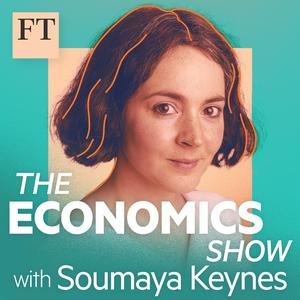
The Economics Show with Soumaya Keynes is a new weekly podcast from the Financial Times packed full of smart, digestible analysis and incisive conversation. Soumaya Keynes digs deep into the hottest topics in economics along with a cast of FT colleagues and special guests. Come for the big ideas, stay for the nerdery.Soumaya Keynes is an economics columnist for the Financial Times. Prior to joining the FT she worked at The Economist for eight years as a staff writer, where as well as covering trade, the US economy and the UK economy she co-hosted the Money Talks podcast. She also co-founded the Trade Talks podcast. Hosted on Acast. See acast.com/privacy for more information.
Sitio web del podcastEscucha The Economics Show with Soumaya Keynes, The Tucker Carlson Show y muchos más podcasts de todo el mundo con la aplicación de radio.net
Descarga la app gratuita: radio.net
- Añadir radios y podcasts a favoritos
- Transmisión por Wi-Fi y Bluetooth
- Carplay & Android Auto compatible
- Muchas otras funciones de la app
Descarga la app gratuita: radio.net
- Añadir radios y podcasts a favoritos
- Transmisión por Wi-Fi y Bluetooth
- Carplay & Android Auto compatible
- Muchas otras funciones de la app

The Economics Show with Soumaya Keynes
Escanea el código,
Descarga la app,
Escucha.
Descarga la app,
Escucha.
The Economics Show with Soumaya Keynes: Podcasts del grupo
 México