
Escucha gratis este podcast en la aplicación: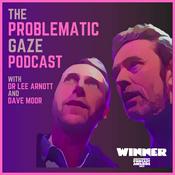 Descarga gratuita en la App Store
radio.net
Sleep timer
Favoritos
168 episodios
Casino Royale (2006): Daniel Craig, Bond Girls & a Very Gay 007 Ranking
20/10/2026 | 1 h 4 minDaniel Craig in tiny swimming trunks, a very dangerous poker game, and the important question: which James Bond is actually the sexiest?
Hello Gazers!
This week we're dusting off our tuxedos, ordering something shaken rather than stirred, and heading back to 2006 for Casino Royale, the film that reinvented James Bond for a new generation.
But was Daniel Craig's tougher, moodier and considerably more muscular 007 really a step forward? Or was he simply the same old Bond with a gym membership and a slightly more troubled expression?
First, we're revisiting the film itself, from Le Chiffre's high-stakes poker tournament and Bond's increasingly complicated relationship with Vesper Lynd, to some particularly uncomfortable encounters, spectacular action sequences and a memorable finale in Venice.
We explore how Casino Royale revitalised the franchise, the controversy surrounding Craig's casting, the film's critical and commercial success, and whether its grittier approach borrowed a little too enthusiastically from the Bourne films.
Then it's time for Culture Corner, where we're heading back to Britain in 2006.
It was the era of metrosexual men, lads' magazines, Top Gear and an increasingly confused national conversation about masculinity.
As traditional ideas about manhood collided with changing attitudes towards gender, class and sexuality, we ask whether Daniel Craig's more physically imposing but emotionally vulnerable Bond reflected a wider cultural shift.
And what better way to explore changing masculinity than by examining every James Bond?
From Sean Connery's unapologetic swagger and Roger Moore's raised eyebrow to Timothy Dalton's intensity, Pierce Brosnan's polished charm and Daniel Craig's brooding physicality, we're examining how each incarnation of 007 treated women, expressed masculinity and reflected the attitudes of his era.
Naturally, this leads to the most academically rigorous segment in the history of The Problematic Gays:
Our ranking of the James Bonds by hotness.
Yes, we're objectifying the world's most famous womaniser for a change.
We also discuss Bond girls, exotic locations, racial stereotypes, the franchise's enthusiastic product placement, and that famous moment when Daniel Craig emerges from the sea and suddenly becomes the object of everyone's gaze.
Has Bond genuinely evolved, or does Casino Royale simply package some very old-fashioned attitudes in a rather attractive new body?
We finish with our ratings for the film, our thoughts on the wider Bond franchise and the usual question:
Could you get away with it today?
And next time, we're heading somewhere rather less glamorous as we revisit Carrie (1976).
Subscribe to The Problematic Gaze for more classic film and television, cultural nostalgia, questionable attitudes and the occasional entirely unnecessary discussion about attractive men.
The name's Gaze. Problematic Gaze.
Click here to visit our YouTube site, The Gaze Channel, where you can watch video versions of our podcast.
Our YouTube site also contains playlists for each episode with provides wider context to each episode.
Click here to follow us on all our socials
And if our fellow Gazers want to comment on what they've heard in our episodes, or to suggest future topics, please email us at theproblematicgaze@gmail.com. We love hearing from you!
Hosted on Acast. See acast.com/privacy for more information.THE GAZETTE: Carrie, Reform Exposed, Celebrity Traitors vs Big Brother & Listener Mail
16/10/2026 | 33 minClick here to visit our YouTube Channel!
We're back! After a week off, we're reunited in the cellar at PG Towers, accompanied by Fontaine the dog, a little background building noise and the usual complete inability to stay on one subject for more than five minutes.
And what a lot we've got to catch up on.
First, we're opening the mailbag for your reactions to The League of Gentlemen, including a surprising connection to Roy Chubby Brown and some excellent suggestions for future episodes.
Could The Mighty Boosh be heading for The Problematic Gaze? And have we been overlooking the deeply questionable world of Mr Men and Little Miss?
Then it's time for a little reality television.
We're discussing The Celebrity Traitors, which doesn't seem quite itself this year, and Big Brother, which might finally have rediscovered its mojo. There's also the small matter of housemate Rob, who apparently cannot stop singing.
But the week's most extraordinary controversy comes courtesy of Doctor Who.
Yes, apparently even a preschool cartoon can provoke an internet meltdown.
We examine the outrage surrounding the BBC's The TARDIS Crew, where some online commentators have managed to discover a supposed “bisexual agenda” lurking in the programme's colour palette.
Because obviously that's what children are thinking about when they see a brightly coloured cartoon spaceship.
Back in the mailbag, we're talking about the wonderfully unsettling In Fabric, revisiting Tales of the Unexpected and its particularly disturbing episode The Flypaper, and returning to two subjects that simply refuse to go away: Britain's rudest place names and the controversial merits of rum and raisin ice cream.
We also clear up a little Dynasty trivia involving Catherine Oxenberg and Princess Diana, before checking in with The Great British Bake Off and looking ahead to Mike Flanagan's forthcoming adaptation of Carrie.
There's also a brief detour into an ITV investigation involving Reform UK, because apparently the real world is determined to remain every bit as peculiar as the television programmes we cover.
And there's plenty coming up at The Problematic Gaze.
Our next main episode is Casino Royale (2006), as we revisit Daniel Craig's first James Bond film and examine Bond girls, masculinity, sexuality and what happens when 007 himself becomes the object of the gaze.
Plus, there's more Dynasty on our YouTube channel, where we're celebrating the show's glorious camp appeal, outrageous glamour and magnificent shoulder pads.
So make yourself comfortable, ignore the building work and join us for another thoroughly rambling visit to PG Towers.
And don't forget to subscribe to The Problematic Gays for more Gazette catch-ups, listener correspondence, television recommendations and our weekly investigations into the films and programmes we once loved.
Now, has anybody seen Fontaine?
Click here to visit our YouTube site, The Gaze Channel, where you can watch video versions of our podcast.
Our YouTube site also contains playlists for each episode with provides wider context to each episode.
Click here to follow us on all our socials
And if our fellow Gazers want to comment on what they've heard in our episodes, or to suggest future topics, please email us at theproblematicgaze@gmail.com. We love hearing from you!
Hosted on Acast. See acast.com/privacy for more information.Dynasty: The Moldavian Massacre (1985) Joan Collins & 80s Excess
13/10/2026 | 1 h 11 minWatch our 'Dynasty and the 80's' YouTube playlist! Click here
Shoulder pads, champagne, catfights and a royal wedding that ends in a bloodbath.
Hello Gazers!
This week we're heading back to the gloriously excessive 1980s for Dynasty, the American primetime soap that gave us Joan Collins, spectacular wealth, magnificent bitchiness and one of the most outrageous cliffhangers in television history.
And naturally, we're asking: Could you get away with it today?
Created by Richard and Esther Shapiro and produced by Aaron Spelling, Dynasty ran from 1981 to 1989, turning the fabulously wealthy Carrington family into an international television phenomenon.
We revisit John Forsythe as Blake Carrington, Linda Evans as Krystle and the incomparable Joan Collins as Alexis, whose arrival helped transform the show's fortunes and made shoulder pads practically compulsory.
We also share our own memories of watching Dynasty, its extraordinary appeal to gay audiences and why all that glamour, melodrama and barely disguised hostility became such irresistible camp entertainment.
Over in Culture Corner, it's time to get rich.
We're exploring the world of Ronald Reagan's America, the rise of the yuppie, conspicuous consumption and the fascination with money, status and designer everything.
Was Dynasty celebrating the excesses of 1980s capitalism, or quietly revealing the greed, misery and dysfunction beneath all that fabulous wealth?
We also revisit the show's extraordinary commercial success, from merchandise and spin-offs to The Colbys.
Then it's time for our main event.
The Moldavian Massacre.
We're concentrating on the infamous 1985 royal wedding cliffhanger, when a celebration in the fictional kingdom of Moldavia takes a rather unexpected turn.
It's one of the most memorable endings in soap history — but does the episode itself live up to its reputation?
Along the way, we're discussing:
Alexis versus Krystle: the catfights, rivalries and changing expectations of women on television.
Steven Carrington: homosexuality in mainstream American television during the 1980s.
Dominique Deveraux: Diahann Carroll's arrival and the significance of a powerful Black character in the Carrington universe.
Mental illness and melodrama: the show's more questionable portrayals of psychological distress.
Rock Hudson and AIDS: the controversy surrounding his appearance on Dynasty and the tabloid hysteria of the era.
The Moldavian Massacre: a royal wedding, armed attackers and a cliffhanger that left audiences wondering who had survived.
We also ask whether the show's endless displays of wealth, gender stereotypes and wildly implausible storylines make it hopelessly dated — or whether that's precisely why it's still so entertaining.
Because underneath the diamonds, designer dresses and enormous hair, Dynasty tells us rather a lot about the decade that created it.
And despite its many problematic moments, we both have enormous affection for this wonderfully ridiculous television institution.
So pour yourself something expensive, adjust your shoulder pads and join us for a trip back to Denver.
It's time to get Dynasty-fied.
Subscribe to The Problematic Gays for more classic film and television, forgotten cultural history, nostalgic nonsense and our continuing investigation into whether the entertainment we once loved could get away with it today.
Click here to visit our YouTube site, The Gaze Channel, where you can watch video versions of our podcast.
Our YouTube site also contains playlists for each episode with provides wider context to each episode.
Click here to follow us on all our socials
And if our fellow Gazers want to comment on what they've heard in our episodes, or to suggest future topics, please email us at theproblematicgaze@gmail.com. We love hearing from you!
Hosted on Acast. See acast.com/privacy for more information.The League of Gentlemen (2000): Could Royston Vasey Exist Today?
06/10/2026 | 55 minWatch our YouTube playlist to find out more aboutThe League of Gentlemen and life in 2000
Click here to watch our chosen episode of The League Of Gentlemen on I-Player
Hello, Dave? You're our wife now.
This week we're taking a local trip for local people as The Problematic Gays head to Royston Vasey for The League of Gentlemen.
We're focusing on Series 2, Episode 2 — “Lust for Royston Vasey,” first broadcast on 21 January 2000 — and asking how one of Britain's darkest, strangest and most grotesque comedies looks more than 25 years later.
We go back to the beginnings of Mark Gatiss, Steve Pemberton, Reece Shearsmith and Jeremy Dyson's creation, from Bretton Hall and the Perrier Award to BBC Radio 4 and television, and explore the influences behind Royston Vasey's peculiar mixture of Hammer Horror, The Wicker Man, British sitcom and pitch-black comedy.
Then it's time to meet the locals.
There's Herr Lipp and his deeply uncomfortable interest in Justin; Tubbs and Edward facing the horrors of the outside world; Alvin attempting to escape Sunny's increasingly elaborate sexual appetites; Pauline and Mickey at the Burger Me takeaway; the deeply unpleasant Pop and his sons; Mr Chinnery doing terrible things to another unfortunate animal; and Val and Harvey's spectacularly dysfunctional household.
And then there are two characters who have become particularly complicated.
We revisit Papa Lazarou, the grotesque circus master whose appearance became central to the controversy that saw episodes removed from Netflix in 2020, and ask what the character was intended to represent versus how that imagery reads today.
We also discuss Babs, Royston Vasey's transgender taxi driver, and how a character that could once be defended as being in on the joke becomes considerably harder to defend when the programme returned in 2017.
Over in Culture Corner, we're heading back to Britain in 2000: the Millennium Dome, New Labour optimism, devolution, changing ideas of Englishness and the arrival of a little reality show called Big Brother.
And naturally, we check the charts — because nothing captures the dawn of a new millennium quite like discovering Bob the Builder at number one.
So, was The League of Gentlemen simply pushing the boundaries of turn-of-the-millennium comedy? Which jokes and characters still work brilliantly? And which parts of Royston Vasey are now problematic for very different reasons?
Despite everything, we're both giving the series a whopping 9/10.
Because this may be a local show for local people...
…but there's still nothing else quite like it.
Next time: Dynasty!
Click here to visit our YouTube site, The Gaze Channel, where you can watch video versions of our podcast.
Our YouTube site also contains playlists for each episode with provides wider context to each episode.
Click here to follow us on all our socials
And if our fellow Gazers want to comment on what they've heard in our episodes, or to suggest future topics, please email us at theproblematicgaze@gmail.com. We love hearing from you!
Hosted on Acast. See acast.com/privacy for more information.THE GAZETTE: Celebrity Traitors is back!!
02/10/2026 | 26 minHello Gazers! Welcome to our weekly Gazette!
We're still circling Jaws (1975) this week — although apparently the most contentious part of our entire discussion isn't the shark. It's coffee ice cream.
After our latest Jaws episode, we're debating whether Spielberg's classic really counts as a horror film and tackling the important culinary questions nobody else was brave enough to ask: is coffee a legitimate ice cream flavour? Does anyone still eat rum and raisin? And whatever happened to tutti frutti?
Our Jaws adventures also lead us into the glamorous world of copyright takedowns. We reminisce about previous encounters with the social-media copyright police and discover that apparently even 50-year-old mechanical sharks have lawyers.
Then it's time for a tour of Britain's rudest place names and the surprisingly innocent history behind some extremely unfortunate-sounding villages, roads and landmarks.
There's also a glorious Les Dennis story involving someone mistaking him for Amanda Holden's father before we get thoroughly overexcited about Celebrity Traitors. Richard E. Grant accidentally announces that he's a traitor, Ross Kemp reaches previously unexplored levels of suspicion, and we pick through the latest treachery, paranoia and questionable detective work.
We also check in on Big Brother and its latest eviction drama before taking time to remember Esther Rantzen and an extraordinary broadcasting career that stretched far beyond That's Life!. We reflect on her campaigning work and the lasting importance of Childline and The Silver Line.
Plus, listener mail takes us all the way to Australia for a brilliant Jaws memory.
And next week, we're going somewhere that makes Amity Island look positively welcoming...
Welcome to Royston Vasey.
Yes, The League of Gentlemen is coming to The Problematic Gaze.
Click here to visit our YouTube site, The Gaze Channel, where you can watch video versions of our podcast.
Our YouTube site also contains playlists for each episode with provides wider context to each episode.
Click here to follow us on all our socials
And if our fellow Gazers want to comment on what they've heard in our episodes, or to suggest future topics, please email us at theproblematicgaze@gmail.com. We love hearing from you!
Hosted on Acast. See acast.com/privacy for more information.
Más podcasts de Cine y Televisión









Podcasts a la moda de Cine y Televisión













Acerca de The Problematic Gaze
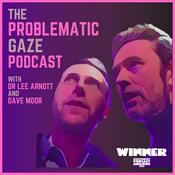
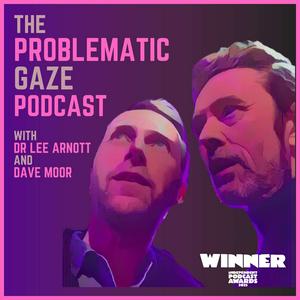
Winner - ‘Best History Podcast’ - Independent Podcast Awards 2025 ‘Top 30 Podcasts To Listen To Right Now’ - The Radio Times 2025Direct from PG Towers, join social historian Dr Lee Arnott and TV producer Dave Moor for a lighthearted look at the world of TV, Film and Popular Culture of yesteryear that has since been considered problematic. Each week we focus on a different piece of pop culture, and put it into context by looking at the news events and cultural landscape of the year it was released. Out and proud, Dr Lee and Our Dave present a humorous take on life as LGBTQ+ men of a glorious age, and present a digestible mix of academic social commentary, unflinching life lessons, media analysis, and hot takes on feminism, race, politics and cancel culture. Hosted on Acast. See acast.com/privacy for more information.
Sitio web del podcastEscucha The Problematic Gaze, The A24 Podcast y muchos más podcasts de todo el mundo con la aplicación de radio.net
Descarga la app gratuita: radio.net
- Añadir radios y podcasts a favoritos
- Transmisión por Wi-Fi y Bluetooth
- Carplay & Android Auto compatible
- Muchas otras funciones de la app
Descarga la app gratuita: radio.net
- Añadir radios y podcasts a favoritos
- Transmisión por Wi-Fi y Bluetooth
- Carplay & Android Auto compatible
- Muchas otras funciones de la app

The Problematic Gaze
Escanea el código,
Descarga la app,
Escucha.
Descarga la app,
Escucha.
 México