
Escucha gratis este podcast en la aplicación: Descarga gratuita en la App Store
radio.net
Sleep timer
Favoritos
303 episodios
Episode 302: Encore: A Bishop's Raw Story of Anxiety and Depression
27/10/2026 | 1 hWhen it's tough, you just work harder. Bishop James Conley lived by that rule until it cost him his sleep and his joy. What finally brought him back wasn't trying harder. It was surrender.
For the second of our three most-listened-to episodes, Dr. Greg revisits his conversation with Bishop Conley about asking the Pope's representative for a leave of absence, and what he gained by being willing to lose it all.
Key Topics:
Why "just try harder" can deepen anxiety and depression instead of curing them
Why the hardest part of asking for help can be the fear that you'll never be trusted again
Why the more you have to lose, the harder it is to be honest about what you're carrying
Why believing you're the only one struggling is what keeps you struggling alone
Why the answer to an anxious generation may be more play, not more screens
Why your weakness, not your talent, may be where God works most powerfully
Learn More:
Pastoral letters by Most Reverend James D. Conley, STL, Bishop of Lincoln: A Future with Hope (on mental health)
The Joy and Wonder of Catholic Education: Developing Authentically Catholic Schools
Resources recommended by Bishop Conley: Surrender Novena
The Anxious Generation by Jonathan Haidt
Catechesis of the Good Shepherd
Catholic Medical Association
Catholic Healthcare Leadership Alliance
Familiaris Consortio (The Christian Family in the Modern World)
Ex Corde Ecclesiae (On Catholic Universities)
Need help? Schedule a free CatholicPsych consultation
Want to help? Learn more about our Certification in Professional Accompaniment
Follow Us on Socials: Instagram | Facebook | YouTube | Twitter (X) | LinkedInEpisode 301: Encore: Do You Know There Are 5 Anxiety Languages?
20/10/2026 | 27 minWhich anxiety language do you speak? To celebrate 300 episodes of Being Human, we're bringing back one of your all-time favorites. Dr. Greg walks through the five anxiety languages (reactive, activated, minimizing, withdrawing, and impulsive) and shows why none of these parts is the enemy. Once they're let off the hook, they can become gifts.
Key Topics:
Why snapping at people, staying busy, or shrugging "this is fine" can all be anxiety, even if you'd never call yourself anxious
Why being "always on" can pass for ambition when it's really running from an inner voice that says you'll fail
Why pulling back and procrastinating are often your nervous system bracing for a threat, not laziness
How anxiety can look like ADHD: the half-organized closet, the car you can't drive, the bathroom you never finished
How each part, once it's let off the hook, can become alertness, motivation, peace, or spirit-led creativity
Learn More:
What's your primary anxiety language? Take the free Anxiety Languages Quiz: https://catholicpsy.ch/quiz
Catholic Mindfulness Virtual Retreat: eight weeks of daily videos to help you work with your anxiety language
Blog article: Is Mindfulness Safe for Catholics to Practice?
The 5 Love Languages by Gary Chapman
Previous episodes on parts work (IFS): Ep. #34: A New Theory! w/ a Catholic Lens
Ep. #35: Why Do I Feel Like I Have Conflicting Thoughts? w/ Dr. Peter Malinoski
Need help? Schedule a free CatholicPsych consultation
Want to help? Learn more about our Certification in Professional Accompaniment
Follow Us on Socials: Instagram | Facebook | YouTube | Twitter (X) | LinkedInEpisode 300: Being Human Together: Celebrating 300 Episodes and What God Can Do with a Little Faith
13/10/2026 | 1 h 17 minIt's pretty wild: Being Human has reached episode 300. Dr. Greg gathered his friends to celebrate, and the celebration quietly became an example of what this show has been saying all along — being human can't be done alone.
Dr. Greg is joined by Dr. Bryan Violette and his wife Teresa, along with Dr. Gerard McNicholas, to look back on 300 episodes of the podcast. Then a simple question about Teresa's new hobby opens into something far more personal, and gives a first taste of what comes next: Being Human Together.
Key Topics:
Why what you start in faith rarely turns out to be what you thought you were building
Why the thing you're most upset about is often standing in for a grief you haven't named yet
How a hobby you'd rather not talk about can be the most honest thing about you right now
Why the people closest to you can sometimes see your grief before you do
Why your favorite song can make you feel completely understood — and strangely alone when you share it
How art slips past the part of you that would rather explain a feeling than feel it
Learn More:
Past episodes remembered in this conversation: Where it all started: Ep. #1: The Beginning
Ep. #225: Humility, Time Travel and Philosophy with Peter Kreeft — Dr. Greg's favorite
Ep. #102: ADHD and Me, w/ Teresa Violette
Ep. #231: Music as Accompaniment: Matt Maher and a Mission to Heal through Song
Ep. #172: A Journey through Faith and Music with John Michael Talbot
Ep. #291: OCPD and Scrupulosity: How the Worship of Rules and Control Leads to the Loneliness of Certainty
Ep. #261: Narcissism and the Terror of Being Ordinary: Why Real Change Happens through Love not Willpower
The CatholicPsych Show — the live news show Dr. Greg and Dr. Bryan hosted
Dr. Greg on The Lila Rose Show
St. John Paul II's Letter to Artists
The Personalist Cure by Dr. Greg Bottaro
Missed the Summit of Integration? Catch the replays, including Christopher West's keynote on the Feast of St. John Paul II
Need help? Schedule a free CatholicPsych consultation
Want to help? Learn more about our Certification in Professional Accompaniment
Follow Us on Socials: Instagram | Facebook | YouTube | Twitter (X) | LinkedInEpisode 299: 10,000 Free Books and an 'Impossible' Edit: Launching The Personalist Cure
06/10/2026 | 1 h 9 minDr. Greg thought the draft was good. A year later, he called it "terrible." That's how a book ends up taking almost ten years to write.
With The Personalist Cure finally launching, Dr. Greg sits down with his good friend Dr. Bryan Violette for a conversation that circles back on itself the way John Paul II's own writing does. Along the way, they get to the heart of the book: the difference between love that controls and love that sets free.
Key Topics:
Why so much of what passes for love is really a compulsive effort to get your own needs met
What emancipating love looks like: willing the good of the other for their sake, even when it costs you
Why the love Jesus shows on the cross changes how you see every relationship in your life
What John Paul II meant by mutual submission in marriage — and why it's the opposite of control
Learn More:
The Personalist Cure by Dr. Greg Bottaro — the book behind this episode, almost ten years in the making
Join us at the Summit of Integration in Dallas, October 20–23, celebrating the Feast of St. John Paul II (virtual tickets available)
Need help? Schedule a free CatholicPsych consultation
Want to help? Learn more about our Certification in Professional Accompaniment
Follow Us on Socials: Instagram | Facebook | YouTube | Twitter (X) | LinkedInEpisode 298: Your Working Genius: Exploring What the Grind Reveals About Your Gifts
29/09/2026 | 48 minYou've been called lazy. Maybe you've been told you're just bad at your job. But what if that was never the problem at all — what if you've simply been sitting in the wrong seat?
Dr. Greg sits down with his good friend Dr. Bryan Violette to explore what the Working Genius reveals about the work that drains us. Along the way, they make the case that even the parts of us we're most embarrassed by are usually protecting something good: our dignity.
Key Topics:
Why the task that grinds you down says more about your gifts than about your character
Why "you're lazy" is usually the wrong story — and "wrong seat on the bus" is often the right one
What "adaptive narcissism" is actually protecting
Why shame doesn't produce lasting change — it just teaches you to hide better
Why "I'm not myself today" gets it wrong, and why curiosity about the part that just showed up works better
Why giving yourself away fills you up, even though handing over your coffee only leaves you with an empty cup
Learn More:
Join us at the Summit of Integration in Dallas, October 20–23, celebrating the Feast of St. John Paul II (virtual tickets available)
The 6 Types of Working Genius by Patrick Lencioni — the framework Dr. Greg and Dr. Bryan discuss throughout the episode
Gaudium et Spes — the Vatican II constitution behind "Christ reveals man to himself" and finding ourselves through a sincere gift of self
Previous episodes on parts work (IFS):
Ep. #34: A New Theory! w/ a Catholic Lens
Ep. #35: Why Do I Feel Like I Have Conflicting Thoughts? w/ Dr. Peter Malinoski
Need help? Schedule a free CatholicPsych consultation
Want to help? Learn more about our Certification in Professional Accompaniment
Follow Us on Socials: Instagram | Facebook | YouTube | Twitter (X) | LinkedIn
Más podcasts de Cristianismo






Podcasts a la moda de Cristianismo















Acerca de Being Human
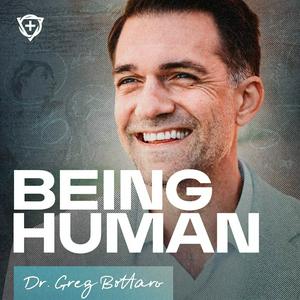
At the CatholicPsych Institute, we're doing something new when it comes to therapy. In the Being Human podcast, Dr. Greg Bottaro, Founder and Director of the CatholicPsych Institute, shares with you his vision for Catholic therapy and a revolutionary approach that is focused, finally, on what it means to be human.
Sitio web del podcastEscucha Being Human, The Bible in a Year (with Fr. Mike Schmitz) y muchos más podcasts de todo el mundo con la aplicación de radio.net
Descarga la app gratuita: radio.net
- Añadir radios y podcasts a favoritos
- Transmisión por Wi-Fi y Bluetooth
- Carplay & Android Auto compatible
- Muchas otras funciones de la app
Descarga la app gratuita: radio.net
- Añadir radios y podcasts a favoritos
- Transmisión por Wi-Fi y Bluetooth
- Carplay & Android Auto compatible
- Muchas otras funciones de la app

Being Human
Escanea el código,
Descarga la app,
Escucha.
Descarga la app,
Escucha.
 México