
Escucha gratis este podcast en la aplicación: Descarga gratuita en la App Store
radio.net
Sleep timer
Favoritos
107 episodios
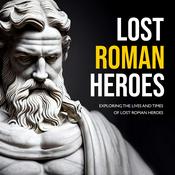
Lost Roman Heroes - Episode 107: Heraclius (Part 7 - Mission Impossible)
18/10/2026 | 45 minConstantinople held. The City had survived the Great Siege. But the war with Persia was far from over.
The Persians still had the overwhelming advantage in every way that mattered. Military, political, economic. What Rome had was an emperor, one army, and something it had not had in twenty years: hope.
This is the episode where Khosrow starts doing Rome's work for it. A general packed in salt and carried home to be abused in front of the men still holding armies. And a letter. One poisonous letter, written to the wrong man, carried by a courier who rode straight into the hands of the one emperor he should never have underestimated.
Then, in September 627, the Turks go home. And Heraclius, alone, two thousand miles from Constantinople, with no reinforcements coming and winter closing in, looks south at the Zagros mountains.
Every rule of ancient warfare said stop. Armies had campaigned between spring and autumn for four thousand years, for the simple reason that a man cannot eat scenery. Nobody takes an army into snow choked mountain passes in November.
He went anyway. And for six weeks the record goes dark, because the chronicler who had the report cut it out, literally deleting it from history.
Heraclius comes out of those mountains in Assyria, in the ruins of an ancient empire that had died over a thousand years before, and camps in its shadows on the plain of Nineveh on the Tigris, in modern Iraq, waiting for the Persian general Rahzadh, and for what he knew would be the last battle of the war. The one that would determine it all.Lost Roman Heroes - Episode 106: Heraclius (Part 6 - The Great Siege)
04/10/2026 | 47 minIn the summer of 626, two empires agreed to end Rome together.
Khosrow sent Shahrbaraz, his finest general, to the Asian shore. The Avar Khagan came down from the Danube with eighty thousand men, Slavs and Bulgars and Gepids among them. Between them they would crush Constantinople, and the list of Rome would finally be extinguished.
Inside the walls: twelve thousand soldiers with no emperor to lead them. Heraclius was two thousand miles east and had made a very cold calculation, that the City could stand without him.
What it had instead was a man almost nobody has heard of. Bonus appears in the sources like a figure stepping out of fog. No great backstory, no famous victories, just a title that meant substitute for the emperor, and forty days in which to earn it.
This is the story of those forty days. A moat, three walls and ninety six towers built by a man who never got the credit. A patriarch carrying an icon around the battlements. Ambassadors in pure silk, and what came back across the water in answer. Slav dugouts in the Golden Horn. A signal fire lit at exactly the wrong hour.
And a page missing from the only manuscript in the world that records it, taking four days of the greatest siege in Roman history with it.
Constantinople had never been breached. In August of 626 it came closer than it ever had, and the man who saved it, Bonus, did it with genius, cold calculation, nerves of steel and subterfuge worthy of his most ancient, and greatest, Roman ancestors.Lost Roman Heroes - Episode 105: Heraclius (Part 5 - The Ghost Army)
20/09/2026 | 1 h 4 minIn 625 the Persians sent three armies to finish him.
Shahrbaraz, Shahin, and Shahraplakan. Three converging forces, hunting one Roman emperor through the mountains of the Caucasus. Between them they had every advantage: numbers, supply, ground, and the certainty that they had him.
And what did Heraclius have? He had the last Roman army, THE GHOST ARMY, a very, very long way from home, and with nowhere to run. Wintering in Azerbaijan, between the Caspian and the Black Sea, as the snow fell, Heraclius shared his men's privations, and planned...
What follows is one of the most exceptional campaigns in Roman history. Unprecedented. Never repeated. Heraclius' army appears, strikes, and is gone before the enemy can form up. A force his enemies came to describe less like an opponent than a rumor. Always somewhere else, always behind them, never where the trap was laid.
And then, after it all, there is a bridge over the River Sarus, where an emperor of Rome does something no emperor has ever done before, and will never do again! It involves a GIANT and sole combat, with the fate of the Empire hanging in the balance...
The campaign that turned Heraclius from a survivor into a hunter.Lost Roman Heroes - Episode 104: Heraclius (Part 4 - The Gamble)
06/09/2026 | 48 minDEUS ADIUTA ROMANIS. May God help the Romans. Because everything else had already been tried.
The church gold is melted. The coins are struck. The army is waiting in Bithynia. And somewhere in the palace of Constantinople, a man who has lost almost everything has spent a long dark winter reading a dead emperor's manual.
Now it is time to find out if any of it works.
Heraclius is the first emperor in more than two centuries that will lead an army into the field, and not any army, this is the LAST ROMAN ARMY, and it looked like nothing Rome had ever put in the field before. Almost entirely cavalry. Twenty thousand exceptionally well trained men. And they faced four fully staffed, battled hardened Persian field armies led by four extraordinary generals. A hundred and sixty thousand Persians against twenty thousand Romans.
And if the Romans lost one battle, just one, they wouldn't just lose, ROME WOULD DIE.
Join us for episode 104, THE GAMBLE, where the Emperor will ride out from Constantinople, and he will not return, until he wins, or he dies.Lost Roman Heroes - Episode 103: Heraclius (Part 3 - Rock Bottom)
23/08/2026 | 43 minHe defeated Phocas. He was crowned emperor. He married the love of his life on the same extraordinary day. And then, for a decade, everything went wrong.
By 612 AD, Heraclius had lost Syria, lost Jerusalem, lost the True Cross, lost the Senate's dignity and his own. And then he lost the one thing that had nothing to do with Persia.
He lost Fabia.
The girl from Carthage. His anchor. His first love. Dead at the Blachernae Palace, leaving behind two infants who would grow up never knowing her. The funeral procession moved up Constantinople's great boulevard, the emperor walking alongside her open coffin, and something happened that day that no one who witnessed it ever forgot.
But grief was a luxury Heraclius could not afford. Because while he mourned, the Persian war machine kept rolling. Egypt fell in 619. The breadbasket of the empire, gone. Constantinople began to starve. And by that year the Roman Empire consisted of little more than Constantinople, scraps of Thrace and Greece, and a rump of Anatolia.
This was not defeat. This was not crisis. This was an extinction level event.
And so in the winter of 621, Heraclius did something the sources record with a kind of wonder. He withdrew from the affairs of state. He did not cower. He did not pray. He studied. Every breath, every day, feeding his mind on strategy, sketching diagrams, anticipating battles before they took place. And then he loaded what remained of the Roman army onto ships, sailed across the Propontis in secret, and began drilling twenty thousand men in the hills of Bithynia.
Then the Avars set a trap. The Emperor of Rome fled on horseback in mean and miserable clothes, his crown under his arm, seventy thousand civilians massacred behind him. The ransom to make it stop — nearly a billion dollars in today's money. His own son sent as a hostage to barbarians.
And still he did not give up.
He went back inside. And he kept planning.
This is Episode 103. This is what rock bottom looks like.
DEUS ADIUTA ROMANIS.
May God help the Romans.
Because everything else had already been tried.
Más podcasts de Historia










Podcasts a la moda de Historia
























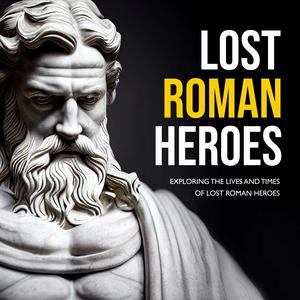
Acerca de LOST ROMAN HEROES
A father and son ancient history podcast that dives deep into the history of Rome, from its founding to its death, uncovering Rome’s greatest heroes along the way. We read the sources, share lost Romans' incredible stories, debate their legacy, and at the end of every episode we score our hero and decide whether they belong in the Hall of Heroes.
Sitio web del podcastEscucha LOST ROMAN HEROES, Historia para Tontos Podcast y muchos más podcasts de todo el mundo con la aplicación de radio.net
Descarga la app gratuita: radio.net
- Añadir radios y podcasts a favoritos
- Transmisión por Wi-Fi y Bluetooth
- Carplay & Android Auto compatible
- Muchas otras funciones de la app
Descarga la app gratuita: radio.net
- Añadir radios y podcasts a favoritos
- Transmisión por Wi-Fi y Bluetooth
- Carplay & Android Auto compatible
- Muchas otras funciones de la app

LOST ROMAN HEROES
Escanea el código,
Descarga la app,
Escucha.
Descarga la app,
Escucha.
 México