PodcastsAnimales y mascotasCanicross Conversations

Canicross Conversations

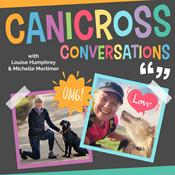
Michelle Mortimer and Louise Humphrey
Canicross Conversations
Último episodio

213 episodios

  • Canicross Conversations

    What To Do If Your Dog Goes Missing — Lost Dog Tracking (Episode 212)

    19/06/2026 | 48 min
    Louise and Michelle are joined by Jules, Team Coordinator for the Lost Dogs Tracking Network, Southern Counties. Jules talks through how she went from dog training and truffle-hunting to coordinating a team of scent-tracking dogs across Wiltshire, Hampshire, Berkshire and beyond. It's a genuinely fascinating (and at times emotional) listen covering how tracking dogs work, what to do in the first crucial hours after losing a dog, and why a cheap fabric collar in a sandwich bag could be the difference between finding your dog quickly or not at all. Equal parts practical advice and brilliant dog stories.
     
     
    Timings
    00:00 – How Jules got started From dog training and horses, to truffle-hunting dogs, to a "very naughty spaniel" who needed a job — Jules's route into lost dog tracking via Claire Brown, founder of the original West Yorkshire team.
    01:18 – Southern Counties coverage Jules is based near Andover, covering Wiltshire, Hampshire, Berkshire, parts of Surrey, and sometimes as far as Oxford and Gloucestershire. The network now has 11 teams nationally, with the goal of nobody being more than an hour from a trained tracking dog.
    03:34 – How the dogs actually track The difference between scent work (find this specific trained thing) and lost-dog tracking (match this scent, in a constantly changing environment). Jules compares it to medical detection dogs — same underlying skill, different application.
    06:23 – The scent article problem Why a single scent item (collar, blanket, bed) is usually easy in a one-dog household — and genuinely difficult with multiple dogs, especially if they've all been on the same walk. Includes the story of a successful track using a Christmas coat that had been in storage for months.
    08:22 – The first 48 hours Jules's team don't usually track immediately — most dogs return to the loss point on their own. Key advice: stay at the loss point, post once on social media (not repeatedly), register with DogLost and Drone SAR, and leave a worn item of clothing to draw the dog back in.
    10:46 – Owner panic and dogs returning to the car Louise shares her own "anger to panic" experience, and Jules confirms it's extremely common for dogs to return to the loss point or the car — often while panicked owners are out searching elsewhere.
    13:04 – How tracking dogs signal they're close A brilliant bit on individual dog "tells": Jules's collie freezes and stares from a distance, her spaniel switches from straight tracking to busy side-to-side hunting, and a team Labrador rears up to air-scent.
    16:38 – Catching a dog once it's found Often it's simply sitting quietly and letting the dog calm down enough to recognise its owner's scent — sometimes taking 40 minutes to an hour. Includes the story of a dog found after 10 days, who later joined the team as a tracking dog himself.
    17:00 – How lost dogs survive Water from streams and puddles, foraged fruit, and — for the hunting breeds — the odd self-caught pheasant or rabbit. Useful context for ground searchers working out where a dog might be.
    19:01 – The harder stories Jules is honest that outcomes are roughly 50/50 between reunions and dogs found deceased, usually from road or rail incidents — and why giving owners closure matters just as much as a happy ending. Also covers how individual dogs are matched to searches based on temperament and likely outcome.
    23:09 – "She's never done this before" Why owner honesty about recall and likely behaviour (hunting vs genuinely bolting in fear) changes the whole shape of a search — and why nobody should be embarrassed about a dog running off.
    25:49 – What makes a good tracking dog Trainability and temperament over breed — the team includes spaniels, labradors, münsterländers, collies, an Australian shepherd, and even terriers. Training takes roughly a year to 18 months through a structured three-level course with annual CPD.
    33:39 – Kit talk: harnesses and hi-vis Why standard canicross harnesses can choke a tracking dog (head down, pulling hard) and the benefits of a lower-sitting harness. Plus the now-famous detail from meeting Jules at Goodwoof — hi-vis coats with a different colour on each side, so handlers can tell at a glance which direction their dog went.
    40:08 – GPS trackers vs AirTags Jules's clear advice: get a proper GPS tracker (the team recommends Tractive), not an AirTag, which relies on nearby Apple devices and is useless in rural areas. Includes the story of a dog missing for 12 days over New Year whose AirTag never pinged once.
    42:08 – Microchips and collars A reminder to keep microchip details up to date — many dogs are found with no collar (slipped it in the house or garden) and an out-of-date chip means rescuers can't reach the owner at all.
    43:52 – Final advice Stay where you are. Don't shout and call repeatedly. Get help and split up sensibly. Try not to panic — and if your dog does go missing, it's not a reflection on you as an owner.
     
    https://northk9.co.uk/LDTN/
     
    https://www.southerncountieslostdogtracking.com/
  • Canicross Conversations

    Canicross Story: Building Community Through Canicross - Tails & Trails (Episode 211)

    12/06/2026 | 33 min
    This week Louise and Michelle are joined by SJ, founder of Tails and Trails, a canicross club based near Ludlow in South Shropshire. SJ's journey into canicross began not from a love of racing, but from a simple need: helping her rescue dog Rosie thrive. What started as a behavioural tool recommended by Dogs Trust became a decade-long passion, a business, and a thriving community.

    SJ talks honestly about starting with the wrong kit, the joy of introducing beginners to the sport, and why canicross can be genuinely life-changing for reactive dogs.

    Timings

    00:00 Introduction: Michelle introduces SJ and her rescue dog Rosie

    00:33 SJ's background: PE teacher, running, and her first dog Molly the mad cocker spaniel

    01:37 How Rosie came into SJ's life in 2014 via her sister at a London vet's

    03:43 Dogs Trust behaviourists suggest canicross as an outlet for Rosie's energy and reactivity

    04:12 SJ's first experience of canicross — starting from scratch with no prior knowledge

    05:45 First run with Rosie at the Salisbury rehoming centre — and the moment she "was absolutely off"

    06:20 Kit chat: SJ's honest admission about not having the right kit to start with

    08:57 Rosie at 13: she's hung up her canicross harness

    12:33 Moving to South Shropshire two years ago and using canicross to find friends and build community

    13:51 Setting up Tails and Trails: from casual group in Dorset to a proper canicross club with her coaching qualification.

    15:10 Summer running: early starts, shaded forest runs, dog-friendly water spots, and keeping the community together with guest speakers

    16:50 Racing: SJ's experience at CaniX and Canicross Midlands events — taking the group together so no one feels intimidated

    18:18 The range of dogs in her group: Vizslas, Labradors, Golden Retrievers, a Dachshund… and a marathon runner who wants to learn to run with his dog properly

    21:20 Why canicross works so well for reactive dogs

    25:31 What's next: restarting beginners groups in September, plus exciting news about a retail store selling Non-Stop Dogwear at the farm shop


     Tails and Trails website
    📍 Based near Ludlow, South Shropshire
  • Canicross Conversations

    The Dog Jog with Dr Janey Lowes of WECare Worldwide

    05/06/2026 | 52 min
    Louise and Michelle are joined by Dr Janey Lowes — a vet from the North East of England who, at 26, packed up her life and moved to Sri Lanka to help street dogs. What started as a year-long volunteering trip has become a decade-long mission, a team of 70, and Sri Lanka's only emergency hospital for street dogs.
     
    Janey shares the story of how WECare Worldwide grew from just her, a friend, and a tuk-tuk driver, to treating over 35,000 animals in the south of Sri Lanka. We talk about rabies, neutering programmes, rehoming, the economic crisis, and why putting dogs back on the street is often the kindest thing to do.
     
    And then there's the big one — The Dog Jog. Starting 12th October, Janey is running 600km from the top of Sri Lanka to the bottom, over 20–25 days, to raise over £1 million for a brand new hospital and vet nursing training centre.
     
    She's never run a half marathon. She's training in 37-degree heat and 94% humidity. And she is absolutely doing it anyway.
     
     
    Timings:
    01:21 How a surf holiday in Sri Lanka changed everything — and why Janey never came home 03:48 The scale of the problem — 3 million street dogs, 1 for every 8 people
    07:28 From 14 dogs in her house to Sri Lanka's only emergency hospital for street dogs
    09:56 How WECare grew from 3 people and a tuk-tuk to a team of 70
    13:47 Why street dogs don't always need a sofa — and why that took Janey a while to accept 20:50 The fundraising reality — nearly £1 million a year, and how they raise it
    29:02 The Dog Jog — 600km, 25 days, starting 12th October
    31:37 Training in 37°C heat, 94% humidity, and stopping every 100m to say hi to dogs
    36:56 The mental challenge — and why having community support matters so much
    44:59 Where to follow Janey and support the cause
     
    Find Janey: 
    Instagram: @JaneyTheVet
    Website: wecareworldwide.org.uk
     
    Want to support the Dog Jog or get involved? Get in touch and we'll figure something out together, especially if you fancy joining virtually in October!
  • Canicross Conversations

    Canicross Story: Mick, Rodney, Amber and Betsy (Episode 209)

    29/05/2026 | 35 min
    Michelle and Louise are joined by Mick for another real-life canicross story, this time with his three dogs: Rodney, Amber and Betsy. Mick shares how he came back to running after years away from it, starting with a muddy dog challenge and gradually finding his way into proper canicross kit, races and longer-distance adventures.
     
    Listeners will hear how each of Mick’s dogs has a completely different approach to running. Rodney, a standard poodle, is the powerful, enthusiastic runner who has taken on ultras; Amber prefers a steadier pace and has needed a more thoughtful approach; and Betsy, the working cocker spaniel, is stepping into longer distances with plenty of spaniel energy.
     
    The conversation covers beginner mistakes, choosing the right harness and bungee setup, the value of learning from other canicrossers, and how different dogs may need different kit, distances and expectations. Mick also talks about running ultras in Wales, preparing for future events, and making decisions as dogs get older or come back from injury.
     
    Michelle and Louise also offer practical advice on strength training, core work and consistency, especially for runners taking on trail and ultra distances.
     
    This episode is full of relatable moments for anyone who started canicross without knowing everything, learned along the way, and now runs because their dog makes it fun.
     
    Timings
    0.20 – introducing Mick, Rodney, Amber and Betsy
    1.04 – Mick’s running background and returning to running after school
    2.01 – starting canicross with Amber and discovering she did not love it
    3.12 – learning about proper canicross kit
    4.17 – Mick’s first canicross race experience and realising the kit was not right
    5.14 – upgrading to waist belts, bungee leads and better harnesses
    7.12 – Rodney’s harness journey and finding what works
    8.12 – standard poodles, muscle tone and Rodney’s enthusiasm for racing
    9.11 – Mick’s first proper canicross race with Murphy
    10.14 – vet-supported canicross after injury and building strength safely
    10.55 – hydrotherapy, older dogs and keeping them supple
    11.40 – running two dogs together
    12.43 – how dogs motivate and compete with each other
    13.21 – Mick’s ultra experiences with Rodney
    14.57 – preparing better for a second ultra
    16.10 – gradually building distance
    17.10 – strength training, core work and consistency
    19.00 – Louise’s advice on squats, lunges, calf raises and getting professional guidance
    20.19 – why strength work matters as runners get older
    22.11 – Mick’s goal for his next ultra
    22.40 – switching from Rodney to Betsy for longer-distance plans
    24.08 – Betsy’s first half marathon
    25.08 – gundog training, disc dogs and other activities
    27.01 – future races with Sporting Paws and local events
    28.04 – adjusting expectations as dogs get older
    29.49 – where to follow Mick online
    30.21 – why Mick prefers running with dogs
     
    Resources mentioned
    Sporting Paws
    Wild Deer Half Marathon
    Loggerheads, Wales
    Brecon ultra
    Preston Disc Dogs
    K9 Toss and Fetch

    Links mentioned
    Instagram: Chorley Canicrosser
  • Canicross Conversations

    Running with Endometriosis: Lyndsy and Indy (Episode 208)

    22/05/2026 | 41 min
    Michelle and Louise are joined by Lyndsy for an honest conversation about canicross, chronic illness and redefining what it means to be a runner.
     
    Lyndsy shares how she went from a love-hate relationship with running to finding a completely new sense of enjoyment through canicross with her Bernedoodle Indy. After years of feeling pressure around pace, personal bests and being at the back of the pack, running with Indy helped her discover a more supportive and joyful way to move. Their partnership has taken them from first-session nerves and downhill tumbles to weekly social runs and races.
     
    The episode also explores Lyndsy's experience of living with endometriosis, including the long road to diagnosis, the symptoms that were dismissed or mistaken for other conditions, and how chronic pain can affect exercise, confidence and everyday life. Lyndsy explains why movement can help, but also why listening to your body and adapting your plans matters.

     
    This is a powerful episode for anyone who has ever felt they are “not a runner”, anyone managing a chronic condition, or anyone who needs reminding that canicross is not just about speed, distance or results.
     
    Lyndsy forgot to mention in the episode that one thing that's been really important for her has been finding a Canicross belt that she's comfortable with. Obviously a lot of the pain caused by endometriosis is focused around the stomach and with the bloating and soreness that comes with it sometimes even the waistband of your clothes can be painful. So she would advise anyone with endometriosis to try a few different styles of belt to find one that works for them. 

     
    Timings
     
    0.00 – introducing Lyndsy and Indy
    0.34 – meeting Indy the Bernedoodle
    2.20 – Lyndsy's relationship with running
    3.40 – discovering canicross through Sporting Paws
    4.36 – first canicross session and falling in love with it
    5.37 – becoming “a runner”
    6.35 – why canicross feels different from traditional running
    7.49 – hills, confidence and running with a big dog
    9.10 – Lyndsy's endometriosis diagnosis journey
    10.39 – what endometriosis is
    13.20 – symptoms, A&E visits and being misdiagnosed
    15.27 – how endometriosis affects running
    16.18 – adapting canicross on difficult days
    17.30 – how dogs help motivation with chronic illness
    18.30 – surgery, treatment and symptom management
    20.09 – research and potential improvements in diagnosis
    21.30 – symptoms to look out for
    22.10 – symptom checkers and GP conversations
    23.06 – how to advocate for yourself at the doctor
    26.59 – the wellbeing benefits of canicross
    28.26 – why you do not have to be fast to belong
    33.12 – what Lindsay wishes she had known earlier
    35.47 – why open conversations matter
    36.08 – canicross as hope, movement and fun
     
    Resources mentioned
    Period symptom checker

    Lyndsy recommends the following Instagram accounts for general information on a range of menstrual health conditions and how to approach conversations with your doctor:
    https://www.instagram.com/gynaegeek?igsh=MThmemdia3U5cWFxeg==
     
    https://www.instagram.com/drnighatarif?igsh=MTEzd3V2eXd3ejdjYw==
     
    For details about what endometriosis is and to find sources of support - https://www.endometriosis-uk.org/
     
    Finally, after our chat, Lyndsy looked for any information about endometriosis and women's sport and found this article which touches on some of what we discussed - https://www.bbc.co.uk/sport/56276626
     
    And this one about endometriosis and running -https://www.runnersworld.com/uk/health/a43464680/endometriosis-and-exercise/
Más podcasts de Animales y mascotas
Acerca de Canicross Conversations
The leading podcast for all things canicross and cani-sports. Canicross instructors Louise and Michelle chat to various guests and experts, who love to run or compete with their dogs, about how to keep both dog and human happy and healthy.
Sitio web del podcast

Escucha Canicross Conversations, Mascotas SOS con MVZ Ernesto Ávila y muchos más podcasts de todo el mundo con la aplicación de radio.net

Descarga la app gratuita: radio.net

  • Añadir radios y podcasts a favoritos
  • Transmisión por Wi-Fi y Bluetooth
  • Carplay & Android Auto compatible
  • Muchas otras funciones de la app