
Escucha gratis este podcast en la aplicación: Descarga gratuita en la App Store
radio.net
Sleep timer
Favoritos
282 episodios
Can we separate pop from politics?
24/09/2026 | 56 minEd Sheeran says he tries to keep politics off the stage.
But politics gate-crashed his stadium tour anyway -- when the American rapper Macklemore was removed as a support act for delivering a pro-Palestinian speech.
Now Sir Bob Geldof, the man behind Live Aid, says Ed Sheeran's preferred silence isn't political.
Fame, he says, is a currency, and artists get to choose how to spend it
Is he right? Can any artist, whether a musician, a writer, or a painter, stay out of politics? Or is silence itself a kind of political statement too?
This week’s Moral Maze: Can we separate pop from politics?
Presenter: William Crawley
Panel: Andrew Copson, Ash Sarkar, Ella Whelan, Giles Fraser
Witnesses: Tom Phelan, Daniel Rachel, Angela McRobbie, Nick Asbury
Producer: Catherine Murray
Editor: Chloe Walker16/09/2026
17/09/2026 | 56 minLive debate examining the moral issues behind one of the week's news stories. #moralmazeHow should we respond to warnings of end times and catastrophe?
10/09/2026 | 56 minAmerica’s Vice-President, J. D. Vance, has been talking about the end of the world, saying he “wouldn’t be shocked” if the Anti-Christ was walking amongst us.
Most people are living incomparably better lives than generations ago - and history is full of warnings of apocalypse - so how should we respond to warnings of catastrophe and end times?
Do such warnings encourage moral behaviour? Do they spur people to take action on important issues - or can they lead to despair and paralysis.
Do thoughts of an end give life more meaning?
Should we take threats to the way we live as a warning to look after our loved ones - or is it an opportunity to think more widely and work out how to strengthen our community ties.
Which end of the political spectrum is more likely to resort to the language of doom-laden prophecy, and to what end?
What does this increasingly apocalyptic view of the world tell us about the world we live in, the problems we face, and the society we’ve become?
Witnesses: Leigh Price, Elizabeth Oldfield, Dr Ian Paul and Dr Daniel Nilsson DeHanas
Presenter: Michael Buerk
Panellists: Anne McElvoy, Matthew Taylor, Mona Siddiqui, Tim Stanley
Producer: Catherine Murray
Asst Producer: Jay Unger
Editor Chloe WalkerHow should we respond to rising mental distress?
03/09/2026 | 56 minA record one in seven people in England were prescribed antidepressants in the last year, according to NHS figures. More than nine million patients now take the drugs, and while they may be essential in many cases, the prevalence of mental ill-health – stress, anxiety, burnout – is a moral issue as well as a medical one. Why are more people, including under-18s, presenting to their GP with these conditions, and what should we do about it?
Many clinicians believe anti-depressants serve an important function, including in milder cases, particularly where access to talking therapies is limited. This, they say, is both a practical and compassionate response to suffering, and a respect for patient autonomy. However, there is disagreement among psychiatrists, some of whom argue that everyday stress is being patholigised. They see drugs as morally hazardous in certain cases, since they alter mental sates, blunt emotions and create dependence on the drugs themselves, reducing people’s long-term capacity to cope.
Beyond the clinical response, there are deeper questions to consider about our society and culture. NHS figures suggest patients in the most deprived areas were prescribed antidepressants 44% more than in the least deprived areas. Many mental health campaigners see the crisis as a social harm, caused by poverty, inequality and insecurity. They believe that rather than simply treating the symptoms of distress, we have a social responsibility to fix the structural causes: better housing, secure working conditions, and a fairer distribution of the resources people need to live dignified lives. For others, the crisis represents something even more fundamental: a loss of meaning, purpose, connection, and resilience.
How should we respond to rising mental distress?
Chair: Michael Buerk
Panel: Ash Sarkar, Giles Fraser, Anne McElvoy and Carmody Grey
Witnesses: Ellie Cannon, Joanna Moncrieff, Polly Mackenzie and Mark Vernon
Producer: Dan Tierney
Assistant producer: Peter Everett
Editor: Tim PembertonData Centres: Whose Thirst Comes First?
27/08/2026 | 56 minAI data centres are expanding across the UK and around the world. Tech giants and governments see them as essential infrastructure for future prosperity; the engines of economic growth, scientific innovation, improved healthcare and national security. Advocates believe they will bring about the next technological leap forward for humanity.
But there are always trade-offs. Critics point to the immediate environmental costs; the demand for electricity, water and land. They question whether the promised rewards justify the sacrifices, particularly for local populations who face the disruption of new developments while the economic benefits go elsewhere.
Are we, as a society, being swept along by an AI 'arms race' we didn’t consent to? Are we right to put faith in tech billionaires who prophesy a future of progress and human flourishing, or are we simply enabling more consumption? (Every video of Elon Musk as Austin Powers drinks around 4 litres of water). And even if AI promises to solve climate change and eradicate disease, how much are we willing to place on that bet today?
Chair: Michael Buerk
Panel: Giles Fraser, Mona Siddiqui, Andrew Copson and Ella Whelan.
Witnesses: Owen Espley, Michael Tobin, Carissa Véliz, Carlo Cordasco.
Producer: Dan Tierney
Assistant producer: Peter Everett
Editor: Tim Pemberton
Más podcasts de Cultura y sociedad










Podcasts a la moda de Cultura y sociedad



























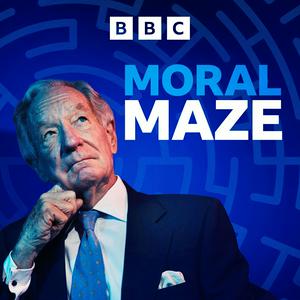
Acerca de Moral Maze
Combative, provocative and engaging live debate examining the moral issues behind one of the week's news stories. #moralmaze
Sitio web del podcastEscucha Moral Maze, No Son Horas y muchos más podcasts de todo el mundo con la aplicación de radio.net
Descarga la app gratuita: radio.net
- Añadir radios y podcasts a favoritos
- Transmisión por Wi-Fi y Bluetooth
- Carplay & Android Auto compatible
- Muchas otras funciones de la app
Descarga la app gratuita: radio.net
- Añadir radios y podcasts a favoritos
- Transmisión por Wi-Fi y Bluetooth
- Carplay & Android Auto compatible
- Muchas otras funciones de la app
Moral Maze
Escanea el código,
Descarga la app,
Escucha.
Descarga la app,
Escucha.
Moral Maze: Podcasts del grupo
 México