PodcastsEducaciónConsciousness and the Brain

Consciousness and the Brain

Bernard Baars, PhD | Nautilus Press Publishing Group
Consciousness and the Brain
Último episodio

28 episodios

  • Consciousness and the Brain

    #27 — Is Willpower Like Muscle Power? with Roy F. Baumeister

    27/3/2023 | 1 h 6 min
    How do we regulate our impulsive emotions, resist temptation, break bad habits, and come up to our best potential - and why do we sometimes run short? Is willpower anything like muscle power? 


    In this episode, we welcome prominent social psychologist Roy F. Baumeister, who has published some 700 scientific works, including 40 books. A recipient of many awards, in 2013 Roy received the highest award given by the Association for Psychological Science, the William James Fellow award, in recognition of his lifetime achievements.


    Roy has studied major aspects of the self, the pros and cons of self-esteem, and why it is so hard to do mentally effortful tasks, like studying long hours for a math exam. He is especially known for his work on willpower, self-control, ego depletion, and the dark side of self esteem — how these factors relate to human morality and life success, and can even trigger interpersonal violence.


    Talking Points


    0:00 - Intro 

    04:44 - Is mental effort (willpower) analogous to a muscle?

    09:32 - Eating glucose can help restore mental energy. 

    20:50 -  “Ego Depletion” is another useful analogy. 

    24:32 - The Practical Implications of Baumeister’s Work.

    34:27 -  Practice can make mental effort easier. 

    45:24 - Is Free Will an illusion? A scientific view. 

    54:46 - Self-esteem without achievement is a trap.


    Links


    — Website and Social Media —

    Website: https://bernardbaars.com/

    Twitter: https://twitter.com/BernardJBaars

    Facebook: https://www.facebook.com/BernardJBaars/

    LinkedIn: https://www.linkedin.com/in/bernardjbaars/

    YouTube: https://www.youtube.com/@BernardBaarsOnConsciousness

    Instagram: https://www.instagram.com/baarslab/?hl=en


    — Roy F. Baumeister —

    Personal Website: https://roybaumeister.com/

    Wikipedia: https://en.wikipedia.org/wiki/Roy_Baumeister

    Google Scholar: https://scholar.google.com/citations?user=ShSEUuoAAAAJ&hl=en

    Ted Talk: https://www.youtube.com/watch?v=FwlDLe6O7NE

    Books on Amazon:

    https://www.amazon.com/stores/Roy-F.-Baumeister/author/B001H6IAJY?ref=ap_rdr&store_ref=ap_rdr&isDramIntegrated=true&shoppingPortalEnabled=true
  • Consciousness and the Brain

    #26 — Smell, Taste & Consciousness with Dr. Stuart Firestein

    02/2/2023 | 1 h 31 min
    Neurobiologist Stuart Firestein, one of the world's leading experts on olfaction, joins Bernard Baars to discuss the similarities and surprising differences of smell and taste in relation to vision, hearing and somatosensory systems, like touch. The olfactory system presents us with alternative views of how sensory stimuli are parsed in the brain and how we integrate those into some sort of conscious worldview.

     
    Dr. Stuart Firestein specializes in the olfactory system ⎯ why and how our brains and noses sense smell. Stuart is the former chair of Columbia University's Department of Biological Sciences and a neurobiology professor, where his laboratory studies the vertebrate olfactory system, possibly the best chemical detector on the face of the planet.

     
    Stuart is devoted to the history, evolution, and future of science. Author of "Ignorance: How it Drives Science" and "Failure: Why Science is so Successful” (OUP), his books cast science as an unending quest to illuminate ignorance and failure as an essential component in that process.


    Talking Points

    0:00 - Intro

    3:59 - The Ups and Downs of Consciousness in Science 

    12:30 - Stuart’s Journey from Theater to Neuroscience

    19:14 - Is Olfaction an Idiosyncratic or Unique Brain System?

    25:30 - The Connection Between Smell, Memory & Emotion

    34:37 - The Immune System Recognizes a Repertoire of Molecules Just Like the Olfactory System

    42:51 - The Regenerative Capabilities of Olfactory Neurons

    51:48 - Are Olfactory Receptors Like Other Chemoreceptors?

    01:02:34 - The Integration of Olfactory Stimuli into a Chemical Panorama

    01:10:24 - Is Olfaction a Low- or High-Dimensional Input System?

    01:16:56 - How to Improve Science Learning

    01:22:25 - The Value of Ignorance and Failure in Science


    Producer: Natalie Geld


    Links

    — Website and Social Media —

    Website: https://bernardbaars.com/

    Twitter: https://twitter.com/BernardJBaars

    Facebook: https://www.facebook.com/BernardJBaars/

    LinkedIn: https://www.linkedin.com/in/bernardjbaars/

    YouTube: https://www.youtube.com/@BernardBaarsOnConsciousness

    Instagram: https://www.instagram.com/baarslab/?hl=en


    — Stuart Firestein —

    Website: http://stuartfirestein.com/

    Columbia University: https://www.biology.columbia.edu/people/firestein

    Ted Talk: https://www.youtube.com/watch?v=nq0_zGzSc8g

    Books:

    - Ignorance: How It Drives Science: Buy at Amazon

    - Failure: Why Science Is So Successful: Buy at Amazon
  • Consciousness and the Brain

    #25 — Human Consciousness and AI: What Does the Future Hold? with Susan Schneider and Rachel St. Clair

    02/1/2023 | 1 h 32 min
    In this episode, we examine Human Consciousness and AI, and particularly the popular idea that AI will become conscious at some point. 

    Because conscious brains are the product of enormous periods of evolution and environmental conditions that keep changing in basic ways, the popular idea that machine consciousness is just around the corner is questioned by Bernard Baars. But very important ethical and practical questions are already emerging today. 

    Social media has trouble distinguishing between human messages and bots, and we are already seeing AI being used in armed drones in a major European war in the Ukraine. All kinds of important ethical and practical questions are already facing the world. In some ways, this is like the early days of nuclear weapons - people around the world are wondering what the new technologies will bring. What does the future hold?

    AI technology is developing faster than most of us expected. The worldwide web has triggered a great information explosion that continues in wave after wave. Historically, information explosions are often very disruptive, as in the rise of the printing press, of radio and television, and now the spread of intelligent computers. Human beings need time to adjust to fast changes.

    So today, we will discuss the future of Artificial Intelligence in relation to human consciousness, including major ethical questions raised by philosophers and others. We also discuss some of the latest promising, and positive, scientific advances in AI. 

    Our special guest is Dr. Susan Schneider, Founding Director of the Center for the Future Mind at Florida Atlantic University, where she also holds the William F. Dietrich Distinguished Professorship. She is co-director of the MPCR Lab at FAU’s new Gruber Sandbox, a large facility which builds AI systems drawing from neuroscience research and philosophical developments.

    Susan recently completed a three year project with NASA on the future of intelligence. She now works with the United States Congress on AI policy. Susan is also an author, and her current book “Artificial You'' discusses the philosophical implications of AI, and, in particular, the enterprise of “mind design.”

    Also joining us today is postdoctoral fellow Rachel St. Clair, the founder and CEO of Simuli Inc., whose passion and goal is to help build beneficial AGI.


    Talking Points

    0:00 - Intro

    3:07 - How Our Understanding of AI is Changing Rapidly

    10:47 - Urgent Ethical Questions about AI-controlled Weapons

    16:20 - Dan Dennett's Position on Treating Humanoid AI as Counterfeits

    19:50 -  Can Computers Emulate Biological Brains?

    30:58 - Science and Philosophy Use the Same Words with Very Different Meanings.

    36:23 - Scientifically, the Cortex is the Organ of Consciousness.

    46:34 - Is Artificial General Intelligence (AGI) possible? How Do We Build AGI Safely?

    52:44 - Does "Conscious" AGI Need a Global Workspace Architecture?

    01:03:53 - Beyond Mind-Body Debates

    01:13:38 - Advances in Artificial Intelligence

    01:19:42 - Some Risks of Augmenting Human Abilities

    01:23:20 -  Thought Manipulation, Invasive Surveillance and Mass Deception

    01:27:10 - Closing Statements 

    Links

    — Website and Social Media —

    Website: https://bernardbaars.com/

    Twitter: https://twitter.com/BernardJBaars

    Facebook: https://www.facebook.com/BernardJBaars/

    LinkedIn: https://www.linkedin.com/in/bernardjbaars/

    YouTube: https://www.youtube.com/@BernardBaarsOnConsciousness

    Instagram: https://www.instagram.com/baarslab/?hl=en


    — Susan Schneider —

    Personal: https://schneiderwebsite.com/index.html

    Center for the Future Mind: https://www.fau.edu/future-mind/

    Susan's Latest Book "Artificial You": https://press.princeton.edu/books/hardcover/9780691180144/artificial-you

    Florida Atlantic University Profile: https://www.fau.edu/artsandletters/philosophy/susan-schneider/index/

    Twitter: https://twitter.com/drsueschneider

    Center for the Future Mind Twitter: https://twitter.com/CenFutureMind


    — Rachel St. Clair —

    LinkedIn: https://www.linkedin.com/in/rachelaileenstclair/

    Rachel's Startup Simuli, Inc.: https://www.simuli.ai/

    MPCR Lab Profile: https://mpcrlab.com/people/Rachel-St-Clair/

     
    Producer: Nat Geld
  • Consciousness and the Brain

    #24 — The Conscious Brain Evolved with David Edelman, Jay Giedd & Mark Mitton

    22/11/2022 | 43 min
    The home of the late Nobel Laureate, Gerald Edelman, is the setting for this elevated discussion on human consciousness. In this episode, Bernie is joined by Gerald's son and neuroscientist David Edelman, developmental neuropsychiatrist Dr. Jay Giedd, and professional magician Mark Mitton.

    What level of biology is relevant to the study of conscious processing? Is it a matter of molecules? Or cells? Or networks?


    Talking Points

    0:00 – The Biological Level of the Conscious Brain

    6:28 – Like Evolution, Consciousness is Highly Adaptive 

    12:27 – Like Magic, Inductive Science is Highly Adaptive and Full of Surprises

    18:05 – How Magic Plays With The Limited Capacity of the Conscious Brain

    23:18 – The Hippocampus and Amygdala are Two Evolved Structures of the Brain

    28:39 – Deception and Self Deception Create Mismatches Between Reality and Expectations

    36:25 – The Immune System and the Brain Are Both Highly Adaptable


    Links


    — Website and Social Media —

    Show Notes: Ep #24 Full Summary

    Website: https://bernardbaars.com/

    Twitter: https://twitter.com/BernardJBaars

    Facebook: https://www.facebook.com/BernardJBaars/

    LinkedIn: https://www.linkedin.com/in/bernardjbaars/

    YouTube: https://www.youtube.com/c/OnConsciousnesswithBernardBaars

    Instagram: https://www.instagram.com/baarslab/?hl=en


    — David Edelman, PhD —

    LinkedIn: https://www.linkedin.com/in/david-edelman-b5b16315/

    Twitter: https://twitter.com/doctorocto

    Elsevier: https://www.elsevier.com/connect/contributors/david-edelman-phd


    — Jay Giedd, PhD —

    University of California, San Diego: https://profiles.ucsd.edu/jay.giedd

    Doximity: https://www.doximity.com/pub/jay-giedd-md

    Brain and Behavior Foundation: https://www.bbrfoundation.org/about/people/jay-n-giedd-md-0


    — Mark Mitton —

    Personal Website: http://markmitton.com/index.html

    Twitter: https://twitter.com/mark_mitton?lang=en

    LinkedIn: https://www.linkedin.com/in/mark-mitton-4204696/

    Instagram: https://www.instagram.com/markmittonmagic/?hl=en
  • Consciousness and the Brain

    #23 — Global Workspace Theory (GWT) and Prefrontal Cortex: Recent Developments (Baars et al., 2021)

    18/10/2022 | 1 h 23 min
    We think of the cortex in terms of anatomical regions, but the cortex works as a whole. Static, gross anatomical divisions are superseded by the dynamical connectome of cortex.

    This holistic viewpoint is detailed in the recent paper in the Journal Frontiers in Psychology: Consciousness Research, titled "Global Workspace Theory & Prefrontal Cortex: Recent Developments" (Baars, Geld & Kozma, 2021), which we discuss in this episode. 
    A wide range of experimental and theoretical studies in the field of consciousness emphasize the complex and rapid interactivity of numerous regions and connectivities in the cerebral cortex. That dynamical view of the cortex should give us pause about proposing dichotomies that may not be in evidence. This paper aims to clarify some empirical questions that have been raised, and review evidence that the prefrontal and posterior regions of the brain support dynamic global workspace functions, in agreement with several other authors.

    Our special guest for Episode 23 is Dr. Robert Kozma, professor and director of the Center for Large-Scale Integrated Optimization and Networks (CLION) at the FedEx Institute of Technology, and professor of Mathematics in the Department of Mathematical Sciences at the University of Memphis. Ilian Daskalov, our student interviewer, joins us to explore this recent paper on GWT and Prefrontal Cortex.

    To follow along with this discussion, here is the link to the source paper: Baars, B. J., Geld, N., & Kozma, R. (2021). Global Workspace Theory (GWT) and Prefrontal Cortex: Recent Developments. Frontiers in Psychology, 12, 5163. https://doi.org/10.3389/fpsyg.2021.749868

    Talking Points
    0:00 – Intro

    4:04 – Divisions between PfC and other neuronal regions tend to be misleading.

    5:57 – Global Workspace Theory: An Overview

    10:23 – The Role of Metaphors in Science

    15:37 – Consciousness is the Dynamic Core of the Brain.

    21:44 – Unifying Principles of the Global Workspace “Family” of Theories

    30:59 – What is “Binding” and “Broadcasting” in the Brain?

    34:39 – What did Raccah et al. (2021) Get Wrong about GWT?

    43:22 – What is Neuropercolation Theory?

    58:12 – Conscious and Unconscious Metacognition

    01:07:07 – The Dynamical Connectome of Cortex

    01:12:01 – Functional Rich Clubs (FRICs) by Deco et al. (2021): Part of GW “Family”

    01:17:30 – Final Thoughts

    Links & Publications
    — Website and Social Media —

    Episode Summary: https://bernardbaars.com/episode-23

    Website:https://bernardbaars.com/

    Twitter: https://twitter.com/BernardJBaars

    Facebook: https://www.facebook.com/BernardJBaars/

    LinkedIn: https://www.linkedin.com/in/bernardjbaars/

    YouTube: https://www.youtube.com/c/OnConsciousnesswithBernardBaars

    Instagram: https://www.instagram.com/baarslab/?hl=en


    — Robert Kozma, Ph.D. —

    University of Memphis: https://www.memphis.edu/msci/people/rkozma.php

    CLION: https://www.memphis.edu/clion/

    IEEE: https://ieeexplore.ieee.org/author/37284339400

    Wikipedia: https://en.wikipedia.org/wiki/Robert_Kozma

    Google Scholar: https://scholar.google.com/citations?user=Nddbg2gAAAAJ&hl=en

    PubMed Publications: https://pubmed.ncbi.nlm.nih.gov/?term=Kozma%2C%20Robert

    Neuropercolation Theory (PDF): https://escholarship.org/content/qt2qn4778j/qt2qn4778j.pdf


    Link to paper by Deco et al. (2021): https://www.nature.com/articles/s41562-020-01003-6

Más podcasts de Educación

Acerca de Consciousness and the Brain

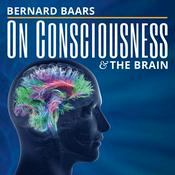
Open-minded conversations on some new ideas about the scientific study of consciousness and the brain. Join Bernard Baars - originator of Global Workspace Theory (GWT), acclaimed author in psychobiology and one of the founders of the modern science of consciousness - to explore the conscious brain.
Sitio web del podcast

Escucha Consciousness and the Brain, The Mel Robbins Podcast y muchos más podcasts de todo el mundo con la aplicación de radio.net

Descarga la app gratuita: radio.net

  • Añadir radios y podcasts a favoritos
  • Transmisión por Wi-Fi y Bluetooth
  • Carplay & Android Auto compatible
  • Muchas otras funciones de la app
Aplicaciones
Redes sociales
v8.4.0 | © 2007-2026 radio.de GmbH
Generated: 2/4/2026 - 2:08:35 PM