
Escucha gratis este podcast en la aplicación: Descarga gratuita en la App Store
radio.net
Sleep timer
Favoritos
59 episodios
The AI Consciousness Trap with Anil Seth
29/10/2026 | 1 h 7 minEven if we could build a conscious machine, should we? Neuroscientist Anil Seth says no - and he doubts we can.
This fall, the question of whether AI might be conscious left the philosophy seminar and landed on the business pages. Anthropic has written that possibility into the "constitution" it uses to train Claude, all on the eve of what could be the largest stock offering in history. Days before we spoke, Anil Seth, Ned Block and Giulio Tononi argued in Nature that today's AI is not conscious, and perhaps never will be.
We talk about why a chatbot fools us when a protein-folding model never would; why time, and the stuff we're made of, may matter more than any algorithm; why "Would you like me to do this next?" is the new infinite scroll; and how the idea of a mind in the machine helps keep the AI bubble inflated.
Guest:
Anil Seth - Professor of Cognitive and Computational Neuroscience at the University of Sussex, director of the Sussex Centre for Consciousness Science, and author of "Being You: A New Science of Consciousness."
Website: https://www.anilseth.com/
Being You: https://www.penguinrandomhouse.com/books/566315/being-you-by-anil-seth/
TED2026, "Why AI isn't going to become conscious": https://www.ted.com/talks/anil_seth_why_ai_isn_t_going_to_become_conscious
Nature, "Three reasons why AI is not conscious and perhaps never will be": https://www.nature.com/articles/d41586-026-03313-7
Noema, "The Mythology of Conscious AI": https://www.noemamag.com/the-mythology-of-conscious-ai/
X: https://x.com/anilkseth
Bluesky: https://bsky.app/profile/anilseth.bsky.social
Chapters:
00:00 Cold open & intro
01:54 Meet Anil Seth
02:45 The Nature comment and the Behavioral and Brain Sciences paper
04:31 Why talking machines fool us
08:19 The protein-folding test
12:21 Time vs. sequence: why a brain can't be paused
14:27 How did we get to be conscious? Animals, evolution and human exceptionalism
18:05 Beyond the brain: nerves, bodies and gut feelings
19:31 Intelligence isn't consciousness, and Descartes' long shadow
22:46 Useful models vs. the real brain
25:16 Scaling, energy and data efficiency
28:23 Learning from bats
29:18 Looking back in 10 years: deep mirrors
32:00 Demoting our own humanity
35:48 Lessons from the PC hype, and the erosion of science
38:39 "Would you like me to do this?" The new infinite scroll
40:19 Power users, Claude Code and neurosymbolic AI
43:30 How would we know if AI were conscious?
46:41 "Functional pain vectors"
49:25 Substrate, analog computing and computational functionalism
54:02 The rabbi's question: should we build conscious machines?
57:00 The costs of false caution: AI rights and parasocial risk
59:43 The Anthropic IPO and the AI bubble
01:01:38 Claude's constitution and the myth of agency
01:04:00 Local models, open weights and interesting times
01:05:43 Outro & links
Follow the Anthropic IPO, the 2026 midterms and more on the America 2.0 Live Trackers: https://trackers.america2.news/
Hear them daily on the America 2.0 Tracker Briefing: https://podcasts.apple.com/us/podcast/id6825877339
Dave Troy Presents is published by America 2.0. https://america2.newsThe Nerd Reich Redux with Gil Durán
07/10/2026 | 1 h 10 minTrying to explain American politics without the radicalized billionaires behind it is like trying to explain 9/11 without mentioning Al-Qaeda.
Gil Duran first joined us in March 2025, while he was still writing "The Nerd Reich: Silicon Valley Fascism and the War on Democracy." The book debuted at number three on the New York Times bestseller list in August and is still there. Along the way he was permanently banned from X for two words - "TLDR: fascism" - and reviewed by a fellow of the very think tank his book investigates.
We talk about what fascism means in 2026, and why the tech version promises not a return to a mythical past but an acceleration into a mythical future: Peter Thiel's Antichrist lectures, the "thermodynamic God," and the clash between tech religion and evangelical Christianity. We follow the money from crypto - "a weapon of mass corruption" - to the Trump family and back into Silicon Valley, and from Praxis and the network state to Kazakhstan and California Forever. And with the midterms a month away, Gil, a veteran Democratic communications strategist, explains why tech money is buying both parties.
Guest:
Gil Duran - independent San Francisco journalist and author of "The Nerd Reich" (Avid Reader Press, 2026); former communications strategist for Jerry Brown, Dianne Feinstein and Kamala Harris.
https://www.thenerdreich.com
https://www.youtube.com/@TheNerdReichNews
https://bsky.app/profile/gilduran.com
The America 2.0 Reading List: https://america2.news/the-america-2-0-reading-list/
Chapters:
0:00 Cold open: explaining 9/11 without Al-Qaeda
0:13 Intro
1:47 Welcome back, Gil
2:23 Number three on the Times list
5:13 The 40,000 words that got cut
7:15 A book in conversation: Applebaum, Michel, Silverman
9:07 Adventure capitalism and the long history of exit
10:33 Banned from X for "TLDR: fascism"
12:40 Fresh Air, and the outlets that won't touch it
14:31 The Bulwark review and the undisclosed tie
16:12 What is tech fascism?
20:38 Apocalypse on both sides
21:41 Thiel's Antichrist
23:12 It's a regime: crypto as a weapon of mass corruption
26:12 Buying the media, and Newsom's Silicon Valley Democrats
29:49 Praxis, Prospera and the network state abroad
33:03 Freedom cities, and a crypto city in Kazakhstan
35:13 California Forever and the miracle in Solano
38:12 Tennessee: Highland Rim and New Earth
40:42 From Solano to the data center fights
42:33 Will the AI money hold? S-1s and stranded assets
44:25 The doom machine markets itself
46:05 Why China has no AI apocalypse
49:29 If Charles Manson were a billionaire
51:46 Rival cults: evangelicals vs. the thermodynamic God
55:22 Yarvin's cathedral and the seizure of institutions
59:19 The midterms
1:02:09 Crypto money on both sides
1:04:11 What if the winners aren't seated?
1:06:23 Thiel in Nashville, and what's next
1:08:25 What you can do: ask your candidates
1:08:59 Outro and links
Dave Troy Presents is published by America 2.0. https://america2.newsDemocracy Without Politicians with Terry Bouricius
18/09/2026 | 1 h 11 minWhat if elections, which are a cornerstone of democracy, don't produce the outcomes that we desire?
Terry Bouricius spent twenty years as an elected lawmaker in Vermont - city council, then the statehouse - followed by a decade at FairVote trying to fix elections with better elections. Then he quit. Since 2005 he has been the leading American theorist of sortition: choosing the people who govern by lottery, the way we choose juries — a practice rooted in Athenian democracy.
This is a conversation about an idea most Americans have never encountered, and about why it keeps working wherever it is tried. Ireland used randomly selected conventions to settle same-sex marriage and abortion. Melbourne handed a stuck capital budget to 43 taxpayers chosen by lot. Connecticut is running the first statewide citizens' assembly in the United States right now. And the argument underneath it all is disarmingly simple: you can't lobby a jury. No donors, no primary, no next race, no way to know six months out whose ear to buy.
Recorded before the 2026 midterms. We close on elections themselves - and Bouricius, an election-reform veteran who says the machinery is sound, names the thing that actually frightens him.
Guest:
Terry Bouricius - former Vermont legislator, ten years at FairVote, originator of the multi-body sortition model, co-founder of Democracy R&D. His book "Democracy Without Politicians: Government By the People" (Routledge, 2026) is open access - the full text is free.
https://democracywithoutpoliticians.org
https://terrybouricius.com
https://democracycreative.substack.com
https://sortitionusa.org
https://democracyrd.org
Chapters:
0:00 Cold open: what if jurors were elected?
0:46 Intro
2:23 Twenty years in office, and why he left
5:40 What sortition actually is
5:53 Athens: a democracy because of the lottery, not the assembly
7:59 British Columbia, 2004: "This is what democracy looks like"
11:10 The 200-year project and the peeling strategy
14:19 Why left and right both nod along
15:43 You can't lobby a jury
17:25 More likely to die in office than lose an election
17:37 Plato's ship vs. the wisdom of crowds
18:21 A thousand assemblies, and Macron's climate convention
19:57 Connecticut: the first statewide assembly in the US
20:43 Aristotle: the lot is democratic, election is oligarchic
22:10 What Madison and the founders actually feared
26:09 "How many of us are renters?"
28:35 Cognitive diversity: why the room beats the experts
33:27 Designing against bribery and capture
35:09 Binding or advisory? Melbourne's budget
37:58 Ireland: marriage and abortion, decided by lot
40:00 The abuse survivor and the gay juror
44:47 Tribal loyalty: Obamacare, tariffs, switching sides
50:22 Groupthink, facilitators, and multi-body sortition
52:35 Agenda-setting: the wall, the bridges, the climate
55:33 AI: the bubble, and who gets to decide
58:29 Could AI agents replace a citizens' assembly?
62:09 What to do Monday: Sortition USA
63:10 The book is free
67:02 Are the midterms secure?
67:54 The refusal to seat: "a real possibility within two months"
69:59 Outro and links
Dave Troy Presents is published by America 2.0. https://america2.newsMidterms, AI, and MAGA with Dr. Jen Golbeck
08/08/2026 | 1 h 10 minHalf a percent doesn't sound like much. In a close midterm, it is everything.
Dr. Jen Golbeck has spent two decades as a computer scientist studying what the internet can figure out about you without being told — and she now spends her nights as a working journalist inside the most extreme corners of American politics. Both halves of that job point at the same machine: an economy built on collecting everything about everyone, and online communities that offer people the one thing they most want, which is belonging.
Dave and Jen talk about how far surveillance has actually gone, why she thinks the AI bubble is at its top edge, what a decade inside far-right forums has taught her about how ordinary people radicalize, what she saw on the street in Minneapolis during the ICE protests, and what is genuinely worth doing between now and November.
Guest
Dr. Jen Golbeck — Professor at the University of Maryland's College of Information and director of the Social Intelligence Lab. She writes the daily MAGAReport newsletter and reports for HuffPost and Esquire.
MAGAReport | UMD faculty page | HuffPost | Esquire: a weekend with the Proud Boys | TED: Is AI progress stuck?
Also mentioned: the Electronic Frontier Foundation's legislation tracker.
Chapters
00:00 - Cold open and intro
01:28 - Meet Dr. Jen Golbeck
03:52 - Surveillance, extremism, and the American ideal
06:07 - How bad has surveillance actually gotten
07:49 - The phone-number trick and the data-broker machine
10:01 - The TEDx talk that made the tech bros angry
13:46 - A 24-hour amnesty: 40 percent of the class confesses
17:05 - Data centers, bad neighbors, and democratic control
19:18 - The dot-com parallel: is this a bubble?
20:26 - Open source, local models, and the business-model problem
24:52 - Typing pools and the job-apocalypse story
27:37 - The antisocial internet: from privacy to radicalization
29:19 - A weekend with the Proud Boys in North Carolina
32:43 - The symbolic show of strength
36:56 - What cults know about belonging
38:58 - Minneapolis, ICE, and the feel of a civil war
44:26 - What the Charlie Kirk killing revealed
47:13 - Civil war, or Costco?
49:31 - The Facebook experiment: half a percent
52:09 - Citizens United, money, and media consolidation
56:07 - Into the midterms: troops, fraud claims, and lawsuits
58:59 - Why the election infrastructure should hold
1:02:00 - Flock cameras and warrantless tracking
1:03:24 - EFF's tracker: pick one thing and be annoying
1:08:33 - Outro and links
Dave Troy Presents is published by America 2.0. america2.newsThe Case for National Service with Scott Reich
02/07/2026 | 1 h 3 minScott Reich recently took the TED Democracy stage in Philadelphia to argue that a renewed ethos of service could help repair our fractured country. He joins Dave Troy for a conversation that runs from ancient Athens to a modern "GI Bill for civic service," by way of Robert Putnam, the 1917 baseball All-Star Game, and the simple, radical idea that citizens owe something to one another.
Reich and Troy arrived at similar conclusions by different paths: that social mixing across background, region, and class — not screens and headlines — is how a democracy rebuilds trust. Together they make a hopeful (and stubbornly non-partisan) case for citizenship as a practice, not merely a slogan.
(Production note: a couple of brief internet dropouts affected Scott's audio; we've worked around them.)
Guest:
Scott Reich - presidential historian and attorney; author of "The Power of Citizenship: Why JFK Matters to a New Generation" and the forthcoming "One Day in September: Baseball, Brotherhood, and the Birth of the All-Star Game"; board member of the JFK Library Foundation and a lecturer at the University of Pennsylvania.
https://www.scott-reich.com/
Chapters:
00:00 Cold open: why national service
01:18 Meet Scott Reich and the TED Democracy talk
04:34 Citizenship: rights, but also obligations
05:43 From "impossible" to practical: connection and service
07:45 The baseball "farm system": start with the young
10:18 What we stopped teaching: civics and Western civ
12:30 The proposal: a modern GI Bill for civic service
14:03 Ancient Greece and the making of a citizen
15:29 Mandatory or voluntary? Incentives over mandates
18:01 Reviving civic life: Peace Corps, clubs, and lost associations
19:55 The commoditization of youth sports
22:53 We've always argued: Adams, Jefferson, and healthy disagreement
24:49 "One Day in September": how Americans used to gather
29:02 Putnam, disinformation, and the loneliness crisis
30:29 Social mixing as national security
32:54 Cohorts across difference: rural Iowa to the Bronx
37:42 Service, not servitude: beyond the military
43:59 Overestimating the other side
46:05 Leaders as vehicles: JFK and the power of citizenship
50:22 What tragedy teaches: our capacity to unite
54:29 What can one person do? Small acts of citizenship
1:01:13 Outro and links
Host Dave Troy writes at https://america2.news and https://washingtonspectator.org
Dave Troy Presents is published by America 2.0. https://america2.news
Más podcasts de Comentando la noticia





Acerca de Dave Troy Presents
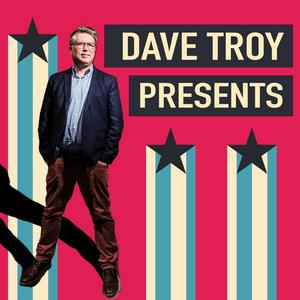
Dave Troy is a technologist, historian, and researcher who has studied disinformation and extremism online since the earliest days of the internet.
Sitio web del podcastEscucha Dave Troy Presents, The Matt Walsh Show y muchos más podcasts de todo el mundo con la aplicación de radio.net
Descarga la app gratuita: radio.net
- Añadir radios y podcasts a favoritos
- Transmisión por Wi-Fi y Bluetooth
- Carplay & Android Auto compatible
- Muchas otras funciones de la app
Descarga la app gratuita: radio.net
- Añadir radios y podcasts a favoritos
- Transmisión por Wi-Fi y Bluetooth
- Carplay & Android Auto compatible
- Muchas otras funciones de la app

Dave Troy Presents
Escanea el código,
Descarga la app,
Escucha.
Descarga la app,
Escucha.
 México

