PodcastsBasquetbolThe By Any Means Coaches Podcast

The By Any Means Coaches Podcast

By Any Means Coaches
The By Any Means Coaches Podcast
Último episodio

108 episodios

  • The By Any Means Coaches Podcast

    G-League Coach of the Year, Vitor Galvani, on Why Player Development Isn't Linear, G-League Practices, Being Where Your Feet Are and Much More

    20/04/2026 | 1 h 43 min
    In this episode, Tyler Clark and Coleman Ayers sit down with Vitor to dive deep into the realities of player development, coaching philosophy, and what it actually takes to build high-level athletes. The conversation explores how development is rarely linear, emphasizing the importance of adaptability, long-term thinking, and understanding each athlete as an individual rather than forcing them into a rigid system. Vitor shares insights from his own experiences working with players, highlighting how context, environment, and decision-making shape real growth far more than isolated drills or traditional methods.
    The discussion also touches on practice design, communication, and the balance between structure and freedom in training. Vitor breaks down how coaches can better create environments that encourage problem-solving, ownership, and creativity, while still maintaining standards and accountability. From rethinking skill development to building more effective learning environments, this episode offers practical and philosophical insights for coaches looking to elevate both their players and their approach.
    00:00 – Introduction to Vitor and his coaching background
     02:10 – Early influences and approach to player development
     05:30 – Why development isn’t linear
     08:15 – Individualizing training vs. system-based coaching
     12:00 – The role of environment in shaping players
     15:40 – Common mistakes coaches make in development
     19:20 – Balancing structure and freedom in practice
     23:10 – Encouraging decision-making and player ownership
     27:00 – Moving away from rigid, drill-based training
     31:45 – Communication and building trust with players
     36:20 – Creating competitive and engaging practice environments
     40:10 – Adapting to different types of athletes
     44:30 – The importance of long-term development over short-term results
     48:00 – How coaches can continue to improve and evolve
     52:10 – Final thoughts and key takeaways
    Coaching Resources
    BAM Coaches Platform: https://byanymeanscoaches.com/
    BAM Blueprint Book: https://byanymeanscoaches.com/blueprint-book

    If you enjoyed this episode, share it with another coach who’s serious about player development. Make sure to subscribe, leave a review, and stay connected with By Any Means Basketball for more insights on coaching, training, and building better athletes.
  • The By Any Means Coaches Podcast

    What Science Says About Shooting Through Fatigue

    17/04/2026 | 23 min
    In this solo episode, Coleman Ayers breaks down a fascinating research study on fatigue and shooting performance, turning complex science into practical takeaways for coaches. Using the study “Basketball Fatigue Impact on Kinematic Parameters and Three-Point Shooting Accuracy”, Coleman explores a question every coach has seen firsthand: why players miss more shots late in games. While traditional coaching often emphasizes “using your legs” or simply training through fatigue, this episode reframes the issue—highlighting that the real breakdown is not just physical, but coordinative.
    Coleman dives into how fatigue disrupts timing, rhythm, and sequencing across the body, leading to slower releases, flatter shots, and decreased accuracy. He then connects these findings to real-world player development, offering actionable ways to design better shooting drills. From cueing faster releases to using constraints like defenders and game-like scenarios, this episode provides a clear roadmap for helping players maintain rhythm and efficiency under fatigue—without relying solely on conditioning or outdated cues.
    Timestamps
    00:00 – Introduction and purpose of the episode
     01:09 – Overview of the fatigue and shooting study
     01:50 – Why players struggle to shoot late in games
     02:55 – Traditional approaches to training shooting through fatigue
     03:50 – Key insight: fatigue causes coordination breakdown, not just loss of strength
     04:25 – Study findings: drop in accuracy, slower release, flatter arc
     05:45 – Visualizing fatigued shooting mechanics
     06:30 – Common breakdowns: hitchy motion, deeper dip, arm-dominant shots
     07:24 – Power vs. coordination and their relationship under fatigue
     08:38 – Why common cues like “use your legs” can backfire
     09:55 – The problem with slowing down the shot under fatigue
     10:40 – Differences between rhythm shooters vs. power-based shooters
     11:30 – Adapting shooting solutions for different player archetypes
     12:25 – Importance of movement variability and adaptable shooting styles
     13:49 – Why shooting faster can restore natural rhythm
     14:25 – Managing early inconsistency when changing tempo
     15:13 – Building a base before adding fatigue constraints
     16:17 – Ways to safely introduce fatigue into training
     17:35 – Creating functional, game-representative fatigue
     18:15 – Importance of smart cueing during fatigue shooting
     19:09 – Effective cues: speed, effortlessness, and attacking the ground
     19:40 – Using defenders and constraints to naturally increase tempo
     20:37 – Positional differences and implications for training
     21:34 – Conditioning’s role in maintaining shooting performance
     22:15 – Using research to validate and refine coaching instincts
     23:00 – Final thoughts on developing better shooting under fatigue
    Coaching Resources
    BAM Coaches Podcast: https://byanymeanscoaches.com/resources
    BAM Blueprint Book: https://byanymeanscoaches.com/blueprint-book
    Call to Action
    If this episode helped you rethink how you train shooting under fatigue, share it with another coach or player who needs it. Be sure to subscribe, leave a review, and stay tapped in with By Any Means Basketball for more practical coaching insights backed by real research.
  • The By Any Means Coaches Podcast

    Stuart Armstrong on Talent Identification, Development, Ecological Dynamics and much more

    02/04/2026 | 1 h 8 min
    In this episode of the By Any Means Coaches Podcast, Tyler Clark sits down with Stuart Armstrong to explore one of the most misunderstood concepts in coaching: talent. Stuart breaks down why most systems confuse early ability with long-term potential, introducing his “talent equation” and the idea that unseen qualities, like: emotional regulation, resilience, and decision-making, are the real multipliers of development. The conversation challenges traditional talent identification models and pushes coaches to think beyond the “ripe banana” mindset of selecting athletes who are simply ahead early.
    The discussion then expands into practice design, coach education, and the ecological dynamics framework. Stuart shares how environments, not just instruction, shape learning, why “talent needs turbulence” (not trauma), and how coaches can better design sessions using variability, constraints, and athlete-centered feedback. From dismantling outdated drill-based approaches to developing intuition as a coach, this episode offers both philosophical depth and highly practical tools for coaches trying to bridge theory and real-world application.
    Timestamps
    00:00 – Introduction to Stuart Armstrong and his background in coach development
     03:50 – Defining talent vs. skill and why most systems misidentify talent
     08:00 – The “talent equation” and the importance of unseen attributes
     14:30 – “Ripe bananas” vs. long-term potential in athlete development
     19:40 – Does adversity shape talent? Understanding resilience and survivorship bias
     25:50 – “Talent needs turbulence” vs. the myth of “talent needs trauma”
     30:00 – Ethical considerations in pushing athletes and designing environments
     34:15 – The importance of “contracting” and setting expectations with athletes and parents
     36:30 – Where traditional coaching methods come from (education + military influence)
     39:00 – Why drills dominate coaching—and why they often fail
     41:00 – Fixing coach education: from rigid systems to context-based learning
     44:30 – Declarative vs. procedural knowledge in coaching development
     47:30 – Practice design across different sports and environments
     50:00 – First steps for coaches: variability, constraints, and adaptability
     51:00 – The “funnel of variability” and managing complexity in practice
     52:45 – “Think like a DJ”: manipulating constraints in real time
     53:00 – STEP framework: Space, Task, Equipment, People
     56:00 – How coaches develop intuition and better decision-making
     59:30 – Feedback in ecological coaching: implicit vs. explicit learning
     01:03:00 – Using questions and attention to guide athlete learning
     01:05:30 – The intention-attention loop explained
     01:08:00 – Internal vs. external focus and how it applies to skill development
     01:09:45 – Technique vs. skill: why context matters
     01:10:20 – Example of environmental influence on development (e.g., shooting adaptations)
    Coaching Resources:
    BAM Coaches Platform: https://byanymeanscoaches.com/resources
    Modern Basketball Blueprint: https://byanymeanscoaches.com/blueprint-book
    Listen to Stuart's Podcast:
    https://podcasts.apple.com/us/podcast/the-talent-equation-podcast/id1209549739

    If you enjoyed this episode, make sure to subscribe, leave a review, and share it with a coach who’s serious about improving their practice design and athlete development. For more resources and coaching education, check out By Any Means Basketball and stay connected with the podcast for future episodes.
  • The By Any Means Coaches Podcast

    Justin Cooper (@j.coophoops) on a Holistic Approach to Player Development, In-Season vs Off-Season Training, The Importance of Environment & More!

    23/03/2026 | 1 h 24 min
    In this episode, we sit down player development coach Justin Cooper to unpack what player development really means, beyond drills and workouts. Justin shares his holistic philosophy of meeting each athlete where they are, empowering them to take ownership of their growth, and blending live, constraint-based training with intentional technical work. From youth athletes to pros, he walks us through how he builds individualized plans rooted in reality, context, and honest conversation.
    We also dive deep into the contrast between in-season and off-season training, the emotional side of development, and how to align with head coaches while working in the private sector. Justin explains why “living in reality” is the foundation of in-season success, why micro-workouts are underrated, and why going live is essential for real growth. Whether you’re a trainer, team coach, or serious player, this episode is packed with actionable insight on how to structure workouts, build buy-in, and create environments that truly translate to game performance.
    Timestamps
    00:00 Weather talk, travel stories, and the infamous “free throw game”
     08:40 Introduction to Justin Cooper and his player development background
     09:29 What player development really means: meeting the athlete where they are
     11:47 Blending training styles: live play, constraints, and skill work
     13:47 In-season philosophy: living in reality and maximizing current role
     15:25 Aligning with head coaches and speaking the same language
     16:20 The importance of micro-workouts during the season
     18:57 Player ownership and identity shifts
     22:06 Managing emotions and controlling what you can control
     24:15 Off-season approach: vision, planning, and building buy-in
     26:40 Measuring progress without waiting for game results
     29:12 Ideal off-season ratios: live vs. on-air work
     31:39 Creating live environments with pros and managing risk
     33:25 Coaching the defense and structuring live reps
     35:15 The evolution of live training and player buy-in
     36:54 Recreating game environments with limited resources
     39:00 Teaching reads through guided defense and feel-based coaching
    Coaching Resources: https://byanymeanscoaches.com/
    BAM Blueprint Book: https://byanymeanscoaches.com/blueprint-book

    If you enjoyed this episode, share it with another coach or trainer who’s serious about evolving their approach. Make sure to subscribe, leave a review, and tag us with your biggest takeaway from the conversation. We appreciate you being part of the BAM Coaches community.
  • The By Any Means Coaches Podcast

    Jota Cuspinera on Spacing, Simplicity & Offensive Freedom

    16/03/2026 | 1 h 7 min
    In this episode, we sit down with one of Spain’s most respected basketball minds, Jota Cuspinera, widely regarded as a master of spacing and offensive structure. With experience ranging from youth national teams to the ACB League and serving as an assistant coach with Real Madrid, Jota brings a rare blend of high-level tactical knowledge and deeply thoughtful teaching methodology. But what makes him truly unique isn’t just what he teaches, it’s how he teaches it.
    Jota breaks down the three foundational spacing principles that shape all of his offensive philosophy and explains how simplifying language, not the game,  unlocks clarity and freedom for players. We dive into his question-based coaching method, how to build decision-makers instead of rule-followers, why the goal of offense is to create and enjoy advantage, and how true freedom comes from understanding what the ball wants to do. This conversation is a masterclass in offensive clarity, teaching, and the art of making complex basketball ideas simple.
    00:00 The closing gap between NBA and international basketball
     06:41 Jota’s background and coaching journey in Spain
     08:05 The origin story behind his three spacing principles
     10:00 Principle #1 — Don’t allow one defender to guard two offensive players
     11:18 Principle #2 — Avoid being in the same passing lane (and extending it to defenders)
     13:42 Principle #3 — Staying in the viewing angles of the ball on penetration
     15:30 Learning the rules like a master so you can break them like a genius
     16:49 Teaching spacing through questions instead of commands
     19:06 “What did you do? What happened?” — Developing player awareness
     24:19 Simplifying the explanation without simplifying the game
     29:21 The true goal of offense — Creating and enjoying advantage
     31:51 Teaching players to read what the ball wants to do
     35:21 Playing a mental game — “Pick your poison”
     41:03 Introducing tactics after spacing foundations are built
     42:52 You cannot see what you don’t understand
     44:14 Recognizing patterns and teaching players to see the game
    Coaching Resources: https://byanymeanscoaches.com/
    BAM Blueprint Book: https://byanymeanscoaches.com/blueprint-book
    If you enjoyed this episode, share it with a coach who’s looking to simplify their teaching and elevate their offensive clarity. Make sure to subscribe, leave a review, and let us know what stood out most from Jota’s approach to spacing and freedom in offense.

Más podcasts de Basquetbol

Acerca de The By Any Means Coaches Podcast

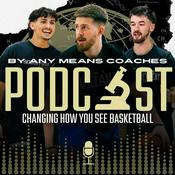
The By Any Means Coaches Podcast: Exploring the Science, Art, and Culture of Modern Coaching. The BAM Coaches Podcast takes coaches inside the evolution of player development. Grounded in modern skill acquisition science and Constraints-Led Approach but guided by balance and context. Hosts Coleman Ayers, Tyler Clark, and Alex Silva dive into how athletes truly learn - across cultures, systems, and environments. Each episode unpacks the intersection between science, experience, and intuition, equipping coaches to build players who think, adapt, and thrive anywhere in the world.
Sitio web del podcast

Escucha The By Any Means Coaches Podcast, Ritmo NBA - Álvaro Martín y muchos más podcasts de todo el mundo con la aplicación de radio.net

Descarga la app gratuita: radio.net

  • Añadir radios y podcasts a favoritos
  • Transmisión por Wi-Fi y Bluetooth
  • Carplay & Android Auto compatible
  • Muchas otras funciones de la app
Aplicaciones
Redes sociales
v8.8.12| © 2007-2026 radio.de GmbH
Generated: 4/23/2026 - 9:38:15 AM