
Escucha gratis este podcast en la aplicación: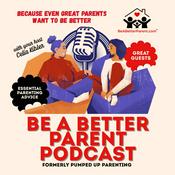 Descarga gratuita en la App Store
radio.net
Sleep timer
Favoritos
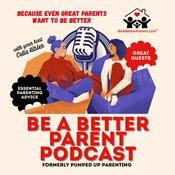
Be A Better Parent | For Every Child It Takes A Village... The Same Goes For Every Parent!
Celia Kibler
Último episodio
241 episodios
S9E32 (Mini-Series S2E1): Are They Helping You Parent or Scaring You Into Buying?
18/10/2026 | 49 minWhen parenting advice creates fear, guilt, and doubt… who’s really benefiting?
Parenting advice is everywhere. One person tells you what your child needs, another warns you about what could go wrong, and before you know it, you’re questioning every decision you make. But are these experts really helping you solve a parenting problem—or convincing you that you have one?
In the Season 2 premiere of the Raising Eyebrows Miniseries, Celia Kibler and Dr. Kailey Buller take a closer look at how fear, guilt, and anxiety can be used to sell parenting products, programs, and advice. From baby monitors and sleep products to parenting methods and developmental tools, they explore how marketing can make parents feel that they need more things to raise happy, healthy children.
Celia and Kailey discuss how some companies exaggerate potential problems or present situations as black and white, leaving parents feeling as though they’re doing something wrong if they don’t buy the recommended solution. They also talk about the pressure parents face when conflicting advice online makes it seem like there’s only one right way to raise a child.
But parenting isn’t one-size-fits-all. Every child is different, every family has its own circumstances, and what works for one household may not work for another. Celia and Kailey encourage parents to look beyond clickbait, consider the qualifications and experience behind the advice they receive, and recognize the difference between helpful guidance and fear-based marketing.
They also explore why the modern internet has become a kind of replacement village for parents who may not have the same access to family support and trusted guidance as previous generations. With so many voices competing for attention, finding reliable information can feel overwhelming.
Their reminder? You don’t need every product, program, or parenting trend to be a good parent. Children need love, connection, play, and caregivers who are doing their best—not parents who feel pressured to do everything perfectly.
In this episode, you’ll hear:
How fear and guilt can be used to sell parenting products and advice
Why some marketing creates problems parents may never have considered
How conflicting advice can increase anxiety and self-doubt
Why parenting products and tools should be considered in context, not treated as universal necessities
The difference between medical expertise and lived parenting experience
How to evaluate the credibility, qualifications, and motivations behind online advice
Why social media has become a substitute for the traditional parenting village
How simple play, connection, and everyday experiences support children’s development
Why less is more when it comes to parenting—and why perfection is an impossible standard
Celia and Dr. Kailey Buller aren’t telling parents to ignore every expert or dismiss every product. They’re encouraging you to think critically, ask questions, seek reliable information, and take what’s genuinely useful for your family.
So the next time you see a parenting post that leaves you feeling afraid or guilty, pause and ask yourself:
“Are they solving a parenting problem—or convincing you that you have one?”
You know your child, your family, and your circumstances best. Stay curious, do your research, and remember that there’s more than one way to be a great parent.
Welcome back to Raising Eyebrows Season 2—your weekly dose of sanity in a world of parenting clickbait!S9E31 (EP 209): Is Your Child's Pillow Affecting Their Sleep?
11/10/2026 | 27 minWhat if one small change to your child’s bedtime routine could make their sleep space feel more comfortable, calming, and inviting?
In this episode of the Be A Better Parent Podcast, Celia Kibler sits down with Brad Edward Zakrzewski, co-founder and CEO of DreamJellie, to talk about something parents may not think about very often: their child’s pillow. While we invest in mattresses, stuffed animals, and other bedtime comforts, the pillow itself can easily become an afterthought.
Brad shares how he and his co-founders came up with the idea for DreamJellie after noticing the worn-out pillows their own children were using. They wanted to create a pillow designed specifically for kids—one that combines comfort, support, durability, and a fun, squishy feel that children would actually love.
The conversation explores how a comfortable sleep environment and a consistent bedtime routine can work together to support better rest. Brad explains why DreamJellie uses natural Talalay latex, what makes the pillow different from traditional children’s pillows, and how its soft, responsive feel can make it a comforting part of a child’s nighttime routine.
Celia and Brad also discuss why sleep matters so much for the entire family. When children don’t get enough rest, they may become more irritable, emotional, or prone to tantrums—and tired parents can struggle, too. They talk about the importance of consistency, creating a calming environment, and sticking with bedtime routines even when the results aren’t immediate.
Whether you’re looking for ways to make bedtime more comfortable or simply want to rethink the everyday items your child uses, this episode offers a fresh perspective on an often-overlooked part of sleep.
In this episode, you’ll hear:
Why a child’s pillow deserves more attention
How the idea for DreamJellie came from Brad’s experience as a parent
What makes the DreamJellie pillow different from traditional kids’ pillows
How comfort items can become part of a consistent bedtime routine
Why sleep is connected to children’s moods, behavior, and well-being
How consistency can help families establish better bedtime habits
Why the DreamJellie pillow is recommended for children ages four and up
How to make bedtime feel more comfortable and inviting for your child
A special gift for our listeners!
Brad is offering 15% off your entire order at DreamJellie with the promo code BEABETTERPARENT15 at checkout.
Visit: https://dreamjellie.com/ and enter BEABETTERPARENT15 to receive your discount.
Remember, no single pillow can solve every sleep challenge, but thoughtful choices and consistent routines can help you create a more comfortable environment for your child.
Visit: https://TimeForSkool.com/ and take the Parenting Success Snapshot. This quick assessment will help you better understand your family’s unique strengths and challenges so you can begin identifying the parenting shifts that may create the greatest impact.S9E30 (EP 208): From Kidology to Speech Therapy: Finding My Career Path
03/10/2026 | 45 minWhat if confidence isn’t something our children need to have before they try but something they build because they were willing to try?
In this episode of the Be A Better Parent Podcast, Celia Kibler talks with Luba Patlakh, founder and CEO of Kidology, a pediatric therapy organization, speech-language pathologist, entrepreneur, and advocate for children’s development. Luba shares her journey from coming to America as a young immigrant to building a career centered around helping children discover their abilities and believe in themselves.
A major focus of their conversation is the relationship between courage, bravery, and confidence. Luba and Celia explore the idea that confidence doesn’t necessarily come first. Children—and adults—often have to be willing to take the first step, try something difficult, and even risk failing. Through those experiences, confidence begins to grow.
Luba also shares the story behind her book, Bobo Wears a Bow Tie, which was inspired by the encouragement and belief she received from her late mother. Bobo’s magical bow tie represents the mindset we can turn on when we face something challenging. Whether a child is learning to ride a bike, starting school, baking a cake, or working through a developmental challenge, the message is simple: believe in yourself and take the next step.
The conversation also touches on how children can internalize the words and messages they hear from others, how teasing and negative comments can affect their self-image, and why parents have such an important role in helping children feel capable, supported, and understood.
In this episode, you’ll hear:
Why confidence often comes after taking action, not before
The difference between courage, bravery, and confidence
Luba’s journey from immigrant child to speech-language pathologist and entrepreneur
The story behind Bobo Wears a Bow Tie
How Luba’s late mother inspired the message of believing in yourself
Why children need encouragement when they are struggling or ready to give up
How negative words and teasing can affect a child’s confidence
Why parents should prioritize their children’s development and emotional well-being
How taking small risks and trying again can build confidence over time
The goal isn’t to make sure our children never struggle. It’s to help them understand that struggling doesn’t mean they can’t do something. Sometimes, they simply need encouragement to take the next step.
As Luba’s story reminds us, confidence is built one step at a time.
To learn more about Luba and her work with children, visit KidologyInc.com.
Visit TimeForSkool.com and take the Parenting Success Snapshot. This quick assessment will help you better understand your family’s unique strengths and challenges so you can begin identifying the parenting shifts that may create the greatest impact.
To stay connected with Celia Kibler, visit BeABetterParent.com and explore the Be A Better Parent app and other resources designed to help you create a calmer, more connected family.S9E29 (EP 207): A Conversation with Andrea Olson
13/09/2026 | 58 minWhat if your baby could communicate when they need to pee or poop long before they can say, “I need to go potty”?
In this episode of the Be A Better Parent Podcast, Celia Kibler welcomes Andrea Olson, author of Go Diaper Free and The Tiny Potty Training Book, and an educator specializing in elimination communication (EC).
Andrea shares how she discovered elimination communication while preparing for her first child and how she went on to use the approach with all six of her children. Together, Celia and Andrea challenge some common assumptions about diapers and potty training while exploring a different way to think about how babies communicate their basic needs.
The conversation isn't about being a “perfect” diaper-free parent. Andrea explains that EC can be done part-time, used simply as an exposure technique, or adapted around a family's schedule and capacity. Parents who work or use daycare can still incorporate it into their routines.
In this episode, you’ll hear:
What elimination communication is and how it works
How babies can communicate their need to use the bathroom
Why certain moments—like waking up, after eating, diaper changes, and transitions—can be natural opportunities to offer the potty
How responding to a baby's signals can strengthen communication and connection
Why parents don't have to go completely diaper-free to benefit from EC
How working parents and daycare families can adapt the approach
Why parents may need to change their own habits when transitioning away from diapers
The importance of boundaries, guidance, and respectful parenting
Why parenting doesn't have to be a one-size-fits-all experience
One of the biggest messages Andrea shares is simple:
You don't have to do everything. Just start with one small thing.
For a newborn, that might mean offering the potty after waking. For an older, mobile baby, it might mean noticing when they're about to poop and giving them the opportunity to finish on a potty. For an older toddler, it may mean intentionally planning a potty-training experience.
The goal isn't perfection. It's paying attention, experimenting, and learning how your child communicates.
Celia and Andrea also talk about the pressure parents face to follow a specific parenting formula. Whether it's diapers, potty training, screen time, sleep, or other parenting decisions, parents can easily feel guilty when they don't follow what everyone else says they “should” be doing.
This conversation is a reminder that you know your family’s capacity best. You can learn, adjust, ask for help, and choose an approach that works for your child and your circumstances.
And perhaps most importantly, you don't have to parent alone. Having people who have been there before can make the learning process easier and give parents the confidence to try something new.
If you've ever wondered whether babies can really communicate their bathroom needs, felt overwhelmed by potty training, or simply want to explore a different approach, this episode is worth a listen.
Take one small step. You don't have to change everything at once.
To learn more about Andrea Olson and her work with elimination communication and potty learning, visit GoDiaperFree.com.
To stay connected with Celia Kibler, visit BeABetterParent.com and explore the Be A Better Parent app and other resources designed to help you create a calmer, more connected family.
Visit TimeForSkool.com and take the Parenting Success Snapshot. This quick assessment will help you better understand your family’s unique strengths and challenges so you can begin identifying the parenting shifts that may create the greatest impact.
You don't have to do it all. Just take the next step.S9E28 (EP 206): Are You Parenting Your Child or Your Childhood? Breaking generational cycles with Dr. Kalyani Gopal
06/09/2026 | 36 minHave you ever heard yourself say something to your child and suddenly thought, “Oh my gosh… I sound just like my mom or dad.”
Maybe it’s the way you respond when you’re frustrated, discipline your child, handle conflict, or think about what a “good” parent should be.
Sometimes, the patterns we bring into parenting started long before we ever had children.
In this episode of the Be A Better Parent Podcast, Celia Kibler welcomes Dr. Kalyani Gopal, a clinical psychologist with more than 35 years of experience working with families. Together, they explore how our childhood experiences, family relationships, and deeply held beliefs can influence the way we parent—and how unhealthy patterns can sometimes be passed from one generation to the next.
Because our children learn from more than what we tell them. They watch how we communicate, handle emotions, respond to conflict, and treat the people around us.
And sometimes, without realizing it, we repeat the very patterns we once promised ourselves we would never repeat.
In this episode, you’ll hear:
How childhood experiences can shape the way we parent
Why we sometimes repeat behaviors we swore we’d never use
How unhealthy family patterns can continue across generations
How triggers can cause us to fall back into familiar responses
Why awareness is the first step toward changing unhealthy patterns
How social media can influence our beliefs about parenting
Why asking for help and learning new skills is a strength
One of the most important reminders from this conversation is that you may have inherited certain patterns, but you don’t have to pass them on.
Breaking a generational cycle isn't about blaming your parents or becoming a perfect parent. It’s about recognizing what you carry from your past and learning to respond differently when those old patterns are triggered.
Dr. Gopal reminds parents that none of us come with a manual. We’re all learning, and asking for support is nothing to be ashamed of.
If you’ve ever recognized pieces of your own childhood showing up in your parenting, wondered why certain situations trigger strong reactions, or want to create healthier patterns for your children, this episode offers insight, compassion, and hope.
As you listen, ask yourself:
Am I parenting the child in front of me, or am I sometimes parenting from the childhood I experienced?
To learn more about Dr. Kalyani Gopal and her work, visit SafeCHR.org.
📖 Get Dr. Gopal’s book/workbook: Strong Roots, Safe Wings
To stay connected with Celia Kibler, visit BeABetterParent.com and explore the Be A Better Parent app and other parenting resources.
Visit TimeForSkool.com and take the Parenting Success Snapshot. This quick assessment will help you better understand your family’s unique strengths and challenges so you can begin identifying the parenting shifts that may create the greatest impact.
You don’t have to be perfect to break a cycle. You just have to become aware of it—and be willing to choose something different.
Más podcasts de Familia








Podcasts a la moda de Familia








Acerca de Be A Better Parent | For Every Child It Takes A Village... The Same Goes For Every Parent!
Being a parent is hard—in fact, it’s quite the adventure! For every child it takes a village, the same goes for every parent!
We all need questions answered, and we need to know stuff we don’t even know we need to know. Welcome to the Be A Better Parent Podcast, your essential resource for valuable advice and information that relates to you and your kids.
Join Celia Kibler, Family & Relationship Empowerment Coach & Author of RAISING HAPPY TODDLERS, with over 40 years of mom & professional experience. Celia offers the best advice that NO ONE ELSE GIVES YOU about raising kids in today's world.
Sitio web del podcastEscucha Be A Better Parent | For Every Child It Takes A Village... The Same Goes For Every Parent!, Papá Olofo y muchos más podcasts de todo el mundo con la aplicación de radio.net
Descarga la app gratuita: radio.net
- Añadir radios y podcasts a favoritos
- Transmisión por Wi-Fi y Bluetooth
- Carplay & Android Auto compatible
- Muchas otras funciones de la app
Descarga la app gratuita: radio.net
- Añadir radios y podcasts a favoritos
- Transmisión por Wi-Fi y Bluetooth
- Carplay & Android Auto compatible
- Muchas otras funciones de la app

Be A Better Parent | For Every Child It Takes A Village... The Same Goes For Every Parent!
Escanea el código,
Descarga la app,
Escucha.
Descarga la app,
Escucha.
 México